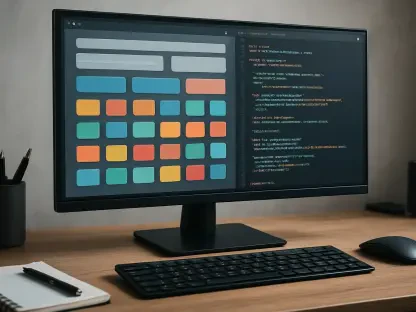

An autonomous agent’s decision to include a ghost-piece outline in a mobile game demonstrates an sophisticated understanding of touch-screen constraints and user experience needs. This evolution marks a significant departure from the static code completion tools of previous years, signaling a move toward fully independent development systems that operate directly on mobile hardware. Today, the Android platform has become a primary staging ground for these agentic pilots, which possess the capability to build, test, and deploy complex software without the requirement for a traditional desktop environment or a persistent cloud connection. By leveraging the open nature of the Android operating system, developers have created tools like Gotcha that move beyond simple suggestions to execute high-level project management. This shift effectively democratizes software creation, allowing individuals to transform a conceptual vision into a functional application by interacting with an AI that understands the nuances of mobile performance and design.
The Architecture of the Agentic Loop: Bridging Logic and Action
The current efficiency of these autonomous systems stems from a sophisticated “agentic loop,” a cycle of continuous action and reflection that replaces the old linear input-output model. In this framework, the AI does not simply output a block of code and wait for a human response; it actively observes the environment, formulates a multi-step plan, and executes changes while monitoring for immediate feedback. This level of autonomy is made possible by deep integration with Android’s Accessibility Services, which allows the AI to navigate the user interface with the precision of a human operator. By virtually “tapping” buttons and “scrolling” through menus, the agent can interact with various development tools and settings within the OS. This capability bridges the gap between abstract logical reasoning and the physical constraints of a mobile system, ensuring that the software remains aware of how its code translates into a functional user experience across different screen sizes and hardware configurations.
Underpinning this high-level navigation is a robust technical layer provided by Termux, a terminal emulator that establishes a comprehensive Linux environment directly on Android devices. This integration allows the agentic AI to run authentic shell commands, manage local file systems, and execute complex scripts in languages like Python or Bash just as one would on a professional workstation. Because the environment is genuine rather than simulated, the agent can handle real-world tasks such as installing dependencies, managing version control through Git, and setting up local servers for real-time testing. Furthermore, the modular nature of these agents allows them to toggle between high-performance cloud-based Large Language Models for complex reasoning and local LLM servers for tasks requiring absolute privacy or offline functionality. This flexibility ensures that the development process is not tethered to a single source of power, allowing for a versatile workflow that adapts to the specific technical needs of the project at hand.
Autonomous Execution: From Visual Concepts to Functional Games
The practical application of agentic systems is most visible in the rapid development of mobile games, where the AI must balance logic with visual aesthetics. When tasked with creating a mobile version of a classic title like Tetris, these agents do more than generate the basic mechanics of falling blocks; they independently decide to implement quality-of-life features that enhance the mobile experience. For instance, an agent might choose to add vibrant neon styling to improve visibility on smaller OLED screens or implement specialized touch controls that feel responsive rather than clunky. These choices reflect a cognitive shift where the AI acts as a creative partner that understands the platform’s unique limitations. By handling the heavy lifting of asset generation and UI layout, the agent allows the human user to focus on high-level direction. This collaborative process accelerates the transition from a blank screen to a polished product, proving that autonomous agents can navigate the complexities of design and engineering with minimal oversight.
A critical component of this autonomy is the agent’s capacity for self-correction during the build process, which eliminates the frequent roadblocks that typically derail novice developers. During the construction of a backend service or a game engine, errors such as port conflicts, server crashes, or missing libraries are common, yet these agents are equipped to identify the root cause of such failures without human intervention. If a local server fails to launch because a specific port is blocked, the AI can autonomously identify the conflicting process, terminate it, and restart the necessary services to keep the workflow moving. This ability to “self-heal” the development environment is what truly separates agentic AI from standard copilots. By managing the technical minutiae and infrastructure hurdles, the AI ensures that the creative flow remains uninterrupted. This resilience is essential for mobile-first development, where system resources are often more constrained and require a more proactive approach to managing the underlying software stack.
Vibe-Based Debugging: Aligning Physics and Intuition
As these agents tackle more ambitious projects involving 3D physics and complex game logic, they are pioneering a new interaction model known as “vibe-based” debugging. This approach allows users to provide feedback based on subjective feeling rather than technical specifications, such as noting that a physics-based projectile feels “too heavy” or that a character’s movement is “not bouncy enough.” In response, the agentic AI analyzes the underlying mathematical parameters—such as gravity constants, velocity scaling, and momentum transfer—to translate these vague human intuitions into precise code adjustments. This capability is particularly useful in creating clones of sophisticated titles like physics-based puzzle games, where the interaction between objects must feel natural to the player. By interpreting the user’s intent and refining the technical execution in real-time, the AI removes the need for the user to understand the physics engine’s API. This creates a seamless iterative loop where a developer can fine-tune the “feel” of an app through simple conversation.
The integration of agentic AI into the Android ecosystem effectively shifted the paradigm of mobile software creation from manual coding to high-level orchestration. This transition empowered individuals to bypass the traditional learning curves associated with syntax and environment configuration, focusing instead on the conceptual logic of their applications. In practice, this meant that the smartphone evolved from a mere consumption device into a fully capable development engine that handled everything from file management to complex debugging. The move toward local execution also addressed critical concerns regarding data privacy and latency, as the agent worked directly within the device’s secured boundaries. As the year progressed, it became clear that the next logical step for developers would be the refinement of multi-agent systems that collaborate on even larger architectural challenges. These advancements recommended a future where the distinction between professional and amateur developers blurred, as the ability to describe a vision became the only true prerequisite for building sophisticated software.