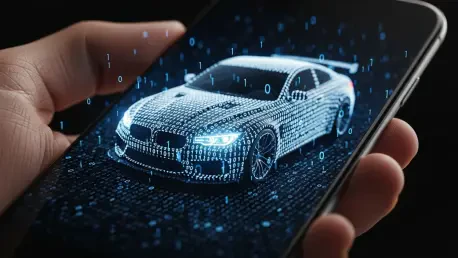

Once defined purely by their mechanical prowess and horsepower, modern vehicles have undergone a fundamental metamorphosis, evolving into sophisticated, data-rich connected platforms where software has become as critical as the engine itself. This profound transformation of vehicles into highly advanced, interconnected systems represents one of the most significant advancements in the entire history of the automotive sector. This comprehensive review will explore the remarkable evolution of automotive application technology, from its humble beginnings to its current indispensable role. It will analyze the key features and strategic categories that define the market, the stringent performance requirements unique to this domain, and the transformative impact this technology has had on the contemporary driving experience. The central purpose of this review is to provide a thorough and insightful understanding of the technology’s current capabilities and its immense potential for future development by analyzing the core principles that underpin the creation of successful and impactful automotive applications.
The Evolution from Niche Tool to Essential Component
Automotive applications have charted a remarkable journey, progressing from rudimentary diagnostic tools intended for mechanical enthusiasts into deeply integrated, essential components of the modern vehicle’s core value proposition. In their infancy, these apps were confined to a small audience, offering little more than the ability to interpret error codes from a vehicle’s onboard computer. Today, however, they are a central feature for consumers, often influencing purchasing decisions and shaping the entire ownership experience. This fundamental shift is propelled by an overwhelming consumer demand for the same digital convenience and seamless connectivity in their cars that they experience in every other aspect of their lives.
This evolution is further accelerated by the vehicle’s new and definitive role as a powerful, data-generating “computer on wheels.” Modern cars are equipped with a vast array of sensors that produce a continuous stream of data about performance, location, and operational health. The true relevance of automotive apps lies in their unique ability to serve as the crucial bridge between the driver’s interconnected digital life and the vehicle’s complex functionality. By translating raw data into actionable insights and convenient controls, these applications make car ownership significantly safer, more convenient, and more manageable through innovative and cost-effective software solutions that enhance the hardware they support.
Core Functionality and App Categorization
Strategic Application Types in the Automotive Market
To effectively and comprehensively address the diverse needs of modern drivers, the automotive application market has naturally segmented into several distinct and strategic categories. The most established of these are advanced Navigation and Journey Planning applications. These have evolved far beyond simple turn-by-turn directions to incorporate real-time traffic data, predictive routing based on historical patterns, and dynamic integration with services that locate parking or electric vehicle charging stations. Another critical category is Vehicle Management and Maintenance apps, which function as digital co-pilots for car ownership. These powerful tools empower drivers with proactive service reminders, fuel consumption tracking, and direct access to diagnostic information, effectively demystifying vehicle maintenance.
Beyond individual driver needs, the market also includes highly specialized Fleet Management solutions tailored for businesses. These B2B applications are engineered to optimize logistics, monitor driver behavior to enhance safety and efficiency, and manage complex vehicle maintenance schedules across dozens or even thousands of vehicles. Complementing these utilitarian categories are Connectivity and Entertainment apps, which focus on enriching the in-cabin experience. These applications are meticulously designed to integrate safely with vehicle infotainment systems, providing seamless and voice-controlled access to music streaming, podcasts, audiobooks, and hands-free communication, ensuring drivers can stay connected without compromising their focus on the road.
Essential Features for a Modern Driving Experience
The most successful and highly-rated automotive applications are consistently built upon a solid foundation of tangible, high-value features that solve real-world problems for the user. Among the most crucial of these are remote control and diagnostic capabilities. The ability to remotely start a vehicle to pre-condition the climate, verify that the doors are locked from afar, or check the fuel level or battery charge from a smartphone provides an unparalleled level of convenience and peace of mind. These features transform the relationship between the driver and their car, making it interactive even when they are physically apart.
Advanced navigation remains a cornerstone of the modern driving experience, but expectations have risen dramatically. Today’s leading apps offer not just accurate routing but also real-time traffic updates, dynamic rerouting to avoid congestion, and seamless voice command integration. This is supplemented by a suite of essential utility tools, such as locators for parking and fuel stations that often include real-time price comparisons, directly addressing common driver frustrations and saving them both time and money. Critically, these applications also incorporate emergency support features, such as one-touch access to roadside assistance or the ability to automatically share the vehicle’s location in the event of an accident, adding a vital layer of safety and security to every journey.
Key Trends Shaping the Development Landscape
The ongoing trajectory of automotive app development is being profoundly influenced by the ever-deeper integration of advanced technology into the very fabric of the vehicle. The primary and most impactful trend is the strategic utilization of the vast quantities of real-time vehicle data to provide drivers with predictive, actionable insights rather than just raw information. This involves processing telemetry data on speed, acceleration, and braking to offer personalized coaching on fuel-efficient driving habits or analyzing sensor readings to predict when a component might require maintenance before it fails. This data-centric approach elevates the app from a simple interface to an intelligent partner in the driving experience.
This reliance on data has consequently spurred a significant market shift away from standalone, single-purpose features toward deeply integrated and cohesive ecosystems. In this new paradigm, automotive applications no longer operate in isolation. Instead, they seamlessly interact with the vehicle’s core systems, the driver’s personal digital life, such as their calendar and contacts, and a wide array of external services, from smart home devices to digital payment platforms. The ultimate goal of this trend is to create a holistic and predictive user experience, where the vehicle can anticipate the driver’s needs—for instance, by automatically navigating to the location of their next calendar appointment while accounting for current traffic conditions.
Real-World Implementations and Use Cases
The practical application of automotive software technology spans across both the consumer and commercial sectors, delivering distinct but equally valuable benefits. For individual drivers, these applications offer a multitude of conveniences that simplify the complexities of car ownership and enhance the daily driving routine. A prominent use case is the ability to remotely precondition a car’s interior climate, allowing a driver to enter a perfectly cooled or heated cabin regardless of the weather outside. Similarly, apps that automatically track service intervals and allow for seamless scheduling with dealerships remove the mental burden of vehicle maintenance, while EV-specific apps provide critical information on battery status and charging station availability.
In the business-to-business realm, the technology’s impact is arguably even more transformative, particularly in the domain of fleet management. Commercial fleet management applications are widely deployed to achieve significant operational efficiencies and cost savings. These sophisticated systems use real-time GPS tracking and vehicle telemetry to optimize delivery routes, thereby reducing fuel consumption and labor hours. Moreover, they are used to monitor driver behavior, such as speeding or harsh braking, which helps improve safety standards and can lead to lower insurance premiums. By automating vehicle maintenance schedules based on actual usage, these apps also minimize vehicle downtime, ensuring that the fleet remains productive and profitable.
Navigating Unique Development and Design Hurdles
Automotive app development presents a unique set of challenges that are fundamentally different from those encountered in standard mobile app creation. On the technical front, developers face significant hurdles, including the need to ensure strict compatibility with the rigorous guidelines and technical requirements of platforms like Apple CarPlay and Android Auto. These systems are not merely extensions of their mobile counterparts; they impose severe restrictions on functionality and design to prioritize safety. Furthermore, these apps must be engineered to process a continuous stream of real-time sensor data without any risk of failure, as a software crash could disable the central infotainment screen and create a dangerous distraction. Designing for intermittent and often unreliable mobile connectivity is another key challenge, requiring robust offline capabilities.
However, the most critical and non-negotiable limitation is the absolute necessity for a safety-first user experience (UX). The primary design goal in this context is the minimization of driver distraction. This demands a departure from conventional app design, favoring minimalist interfaces with only essential information displayed in a clear, high-contrast format. Interaction targets, such as buttons, must be large and well-spaced to be easily tapped without precise aim. Ultimately, the development process must relentlessly prioritize passive and low-interaction input methods, placing a heavy emphasis on accurate, natural-language voice commands and emerging gesture controls to ensure the driver’s hands remain on the wheel and their eyes on the road.
The Future of In-Vehicle Application Technology
The forward-looking outlook for automotive applications points directly toward an era of even deeper system integration and highly proactive, intelligent assistance. Future developments will likely be centered on enhanced personalization powered by artificial intelligence and machine learning algorithms. These systems will learn an individual’s driving habits, daily routines, and personal preferences to anticipate their needs. For instance, a vehicle could learn a driver’s commute and automatically suggest an alternate route based on a traffic jam ahead, or precondition the cabin to their preferred temperature just before they typically leave for work, all without any direct user input.
In the longer term, the technology will evolve to include advanced gesture controls, allowing drivers to perform common actions like adjusting volume or answering a call with a simple wave of the hand, further reducing the need for physical or visual interaction with screens. A major focus will also be on achieving greater interoperability between proprietary systems from Original Equipment Manufacturers (OEMs) and third-party developers, fostering a more open and innovative ecosystem. The cumulative impact of these advancements will be the complete transformation of the vehicle from a simple mode of transportation into a fully-fledged personal mobility assistant that intelligently automates routine tasks and provides a truly seamless, safe, and connected journey.
Summary and Overall Assessment
This review has highlighted that successful automotive app development is a highly specialized discipline, meticulously defined by a tripartite focus on uncompromising safety, genuine utility, and seamless integration with the vehicle’s complex electronic architecture. The technology has matured significantly, moving well beyond its initial status as a novelty to become a critical and often deciding factor in the modern vehicle ownership experience. Its current state is robust and feature-rich, providing tangible value to drivers and businesses alike by making mobility more convenient, efficient, and secure than ever before.
The potential for future advancement in this domain remains vast and incredibly promising. The continued fusion of automotive engineering with cutting-edge software development promises a future where the application layer continues to fundamentally redefine the relationship between the driver and their vehicle. As these systems grow more intelligent and predictive, they will further enhance the driving experience, making it not only safer and more efficient but also more personalized and deeply connected to the driver’s digital life. Software, it is clear, is no longer just a feature in a car; it is rapidly becoming its very soul.