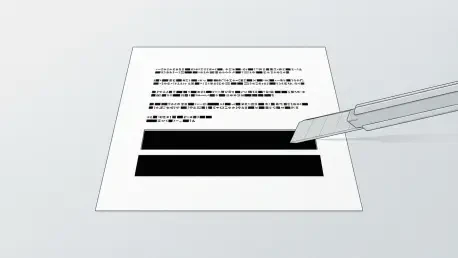

Implementing a responsive preview container requires high-precision coordinate mapping to ensure that physical pixel wipes occur exactly where the user intends. In 2026, the digital landscape has shifted toward a more proactive stance on data privacy, recognizing that traditional redaction methods are often inadequate. Pseudo-redaction—the practice of layering visual elements over sensitive text without removing the underlying data—remains a persistent threat. This flaw allows malicious actors to simply highlight and extract censored text from secured documents. As we navigate progress from 2026 to 2028, the demand for robust, client-side solutions has intensified. Developers are moving away from cloud-dependent tools, which introduce risks by requiring the upload of confidential files to third-party servers. By leveraging modern browser sandboxes, a zero-server sanitization engine provides irreversible protection without exposing data to the internet. This approach ensures that the document remains entirely within the user’s local memory throughout the entire process.
1. Recording Scaled Mapping Points and Hybrid Assembly Cycles
The first step in establishing a secure redaction workflow involves capturing user interactions with a high degree of mathematical accuracy. When a user selects a region of a document to hide, the coordinates must be recorded as normalized percentages—ranging from 0.0 to 1.0—rather than fixed screen pixels. This normalization is essential because the dimensions of a PDF page in the viewer often differ from its physical dimensions or the resolution of the user’s monitor. By storing these coordinates as relative values, the engine can accurately translate the redaction boxes across various devices and zoom levels. This precision prevents “slippage,” where a redaction box might be slightly offset in the final output, potentially leaving a sliver of sensitive data visible. Furthermore, these normalized points allow for consistent processing regardless of whether the user is working on a high-DPI desktop monitor or a lower-resolution tablet, ensuring that the intended area is always targeted for destruction.
Once the coordinates are established, the engine enters a hybrid assembly cycle to optimize both security and performance. Processing a multi-page document entirely as high-resolution images would result in massive file sizes and significant memory overhead. To solve this, the engine iterates through each page and applies a selective logic: pages without markings are cloned as lossless vector streams, while pages with redactions are marked for physical destruction. This dual-path approach maintains the vector crispness and searchability of non-sensitive pages while focusing heavy processing only where it is strictly necessary. By using libraries like pdf-lib to manage the document structure, the system can efficiently rebuild the file in the browser’s RAM. This hybrid model represents a sophisticated balance, ensuring that the final sanitized document is both lightweight for distribution and mathematically secure in its redaction, providing a seamless experience for the end user.
2. Rendering Graphics Buffers and Physical Pixel Destruction
To achieve true sanitization, the engine must move beyond the object-oriented structure of the PDF and into the realm of raw graphics buffers. For any page marked as “dirty” by the presence of redaction boxes, the system utilizes PDF.js to render the entire page content onto an HTML5 canvas element. This rendering process is configured with a scale factor of 2.0x, which translates to approximately 200 DPI. This specific density is chosen because it provides sufficient clarity for printing and high-resolution displays without overwhelming the browser’s memory management. By converting the page into a canvas buffer, the text glyphs, vector paths, and metadata are essentially “flattened” into a grid of pixels. At this stage, the document’s internal text objects no longer exist as searchable strings; they are merely visual representations within the canvas’s image data, which is the foundational step for irreversible data removal.
After the page is rendered into the graphics context, the engine performs the physical pixel overwriting that defines professional-grade redaction. Using the normalized coordinates recorded earlier, the system draws opaque rectangles—typically black or white—directly onto the canvas buffer. This is not an overlay in the traditional PDF sense; it is a direct manipulation of the pixel array where the original color data is permanently replaced by the solid color of the redaction box. Because the underlying pixels representing the sensitive text are overwritten in the canvas’s memory, the original information is destroyed at the binary level. Even if a sophisticated image recovery tool were used on the resulting output, there would be no “underneath” data to uncover, as those pixels were never saved in the first place. This method provides a level of certainty that simple visual masks cannot offer, making it a cornerstone of secure document management.
3. Page Reconstruction and Structural Sanitization
The transition from a manipulated canvas back into a standard document format requires a careful reconstruction process to ensure the final file remains functional and secure. The sanitized canvas, now containing the “burned-in” redactions, is converted into a compressed image format, such as a high-quality JPEG. This image is then embedded into a new, blank PDF page created by the pdf-lib library, which is sized to match the physical dimensions of the original document. By replacing the original complex page structure with a single flattened image, the engine effectively strips away all hidden layers, comments, and non-visible metadata that might reside in the original file. This structural sanitization is critical because it ensures that no “ghost” objects or lingering text fragments survive the export process. The resulting page looks identical to the original but is fundamentally different in its underlying architecture.
Removing the original text layer entirely is the only way to prevent the aforementioned copy-paste vulnerabilities that plague modern digital document sharing. In the reconstructed PDF, the page is represented only by the new image stream, meaning that there are no PostScript operators or font mappings for a PDF parser to interpret. This transformation converts the document from a structured text file into a collection of secure images, which is often referred to as “flattening.” While this does mean that the text on redacted pages is no longer selectable, it is a necessary trade-off for the absolute security required in sensitive environments. For organizations that need to maintain searchability on non-redacted pages, the hybrid pipeline ensures those pages remain in their original vector format. This combination of structural sanitization and selective flattening creates a final product that is resilient against both casual inspection and expert forensic analysis.
4. Local Export Protocols and Security Standards
The final phase of the redaction engine involves the serialization of the document and its secure export to the user’s local file system. Because the entire process occurs within the browser’s sandbox using TypedArrays and Blobs, the sensitive information never leaves the local machine. The engine compiles the individual pages—both the original vector clones and the newly reconstructed image pages—into a single binary array. Once the assembly is complete, a local Blob URL is generated, allowing the user to download the finalized, sanitized document immediately. This zero-knowledge architecture is a major leap forward from the cloud-based models of the past decade. It eliminates the need for expensive server infrastructure and, more importantly, it removes the legal and security liabilities associated with handling PII on third-party hardware. The speed of modern JavaScript engines ensures this process is near-instantaneous.
The implementation of a local-first redaction workflow demonstrated that security did not have to come at the cost of usability or performance. By shifting the heavy lifting of PDF manipulation to the client side, developers successfully removed the server from the privacy equation entirely. This shift ensured that unredacted data never touched a network, providing a foolproof defense against interception and unauthorized storage. The transition to these hybrid assembly methods established a standard where the physical destruction of sensitive data was the only acceptable outcome for corporate compliance. Teams that utilized these tools reported significant improvements in data handling confidence and a reduction in accidental disclosure incidents. Ultimately, the adoption of browser-based sanitization engines proved that modern web technologies were fully capable of handling complex document security tasks. These advancements allowed for a future where data privacy was maintained by design.