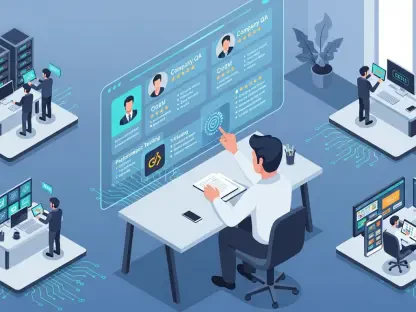

The proliferation of AI-powered developer tools has created a paradoxical challenge for the very engineering teams they are meant to assist: as each new tool is built for a different interface—a CLI, an IDE, or a web app—the underlying agent logic is often duplicated, leading to a fragmented and costly ecosystem. This creates a maintenance bottleneck, where simple updates require coordinated changes across multiple codebases. To solve this, two dominant architectural paradigms have emerged: centralized agents, which decouple logic into a single, reusable service, and embedded agents, which integrate logic directly into each client application. The choice between them has profound implications for scalability, maintenance, and the overall success of an AI tooling platform.
Understanding the Architectural Paradigms
At the heart of the architectural debate is the need to eliminate redundancy and create a consistent user experience. When building a suite of AI tools, engineering teams often find themselves rebuilding the same core functionalities—state management, model inference, and tool execution—for every new platform. This not only slows down development but also introduces inconsistencies that degrade the end-user experience. A centralized architecture, exemplified by solutions like the OpenAI Codex App Server, addresses this by creating a single, authoritative service that handles the agent’s “thinking” process. All clients, regardless of their environment, communicate with this central hub.
In contrast, the embedded model treats each application as a self-contained unit. While this approach can be faster for initial development, it inherently scatters the agent’s intelligence across different silos. This fragmentation becomes a significant liability as the number of tools grows. A simpler protocol, such as the Model Context Protocol (MCP), can help standardize tool exposure in some scenarios, but it often lacks the sophisticated session management required for complex, interactive applications. The decision between these models, therefore, is a strategic one, defining how an organization will build, maintain, and scale its AI-powered capabilities.
A Head-to-Head Architectural Comparison
Core Logic and State Management
The most significant divergence between the two architectures lies in how they manage the agent’s brain: its core logic and conversational state. A centralized model, as implemented in the OpenAI Codex App Server, decouples the “agent loop” into a dedicated, reusable service. This service uses a “Codex core” or “harness” to take ownership of critical operations like thread persistence, authentication, and tool execution. This allows for a much more sophisticated and consistent handling of user interactions.
To manage complex, multi-step conversations, the Codex App Server relies on a set of structured “conversation primitives.” An “Item” represents a single unit of interaction, like a user message or a tool’s output. A “Turn” groups all the items related to a single user command, and a “Thread” encapsulates the entire session history. This structured approach ensures that the conversational state is preserved and can be reconnected to from any client, providing a seamless user experience. In sharp contrast, an embedded model forces each client to manage its own state. The CLI has its session history, the IDE has its own, and the web app has yet another, making it nearly impossible to maintain a continuous and coherent conversation across different platforms.
Implementation and Integration Across Platforms
The practical realities of implementation further distinguish these two approaches. The centralized Codex App Server is designed for portability. For local development environments like IDEs, it is packaged as a binary that runs as a child process, communicating with the client extension via stdio and JSON-RPC. This setup allows the core agent logic to be updated independently of the client-side extension, ensuring that all users benefit from improvements without needing to update their IDE plugin. For web applications, the same binary can be run in a containerized worker, with a backend service proxying requests to ensure process persistence even if the user closes their browser tab.
An embedded agent, on the other hand, demands that the core logic be rebuilt and tightly coupled to each client’s specific technology stack. If the core agent logic needs an update—for example, to integrate a new model or fix a bug in the state management—every single client application must be rebuilt and redeployed. This not only multiplies the development effort but also creates a significant delay in rolling out critical updates and new features, hindering the platform’s ability to evolve quickly.
Maintenance, Scalability, and Technical Debt
From a long-term strategic perspective, the choice of architecture has a direct impact on maintenance overhead and technical debt. A centralized architecture dramatically simplifies maintenance. Because the agent logic lives in a single place, platform teams can update models, refine business logic, or patch security vulnerabilities once and have those changes instantly propagate to all connected clients. This model supports a diverse and growing ecosystem of tools by standardizing interactions through a common, well-defined protocol, making it easier to add new clients without re-engineering the core system.
Conversely, the embedded approach almost inevitably leads to spiraling technical debt. As the number of supported UIs grows, so does the amount of duplicated code. A bug fix must be implemented, tested, and deployed across every client, a process that is both time-consuming and prone to error. This fragmentation makes it incredibly difficult to maintain feature parity, ensure a consistent security posture, and innovate at scale. Over time, the cost of maintaining this fragmented system can easily outweigh the initial benefits of rapid, single-application prototyping.
Practical Challenges and Strategic Considerations
Despite its clear advantages in scalability and maintenance, the centralized model is not without its challenges. The primary hurdle is the significant upfront investment required to design and build the central server and its communication protocol. Defining the right level of abstraction is critical. A comprehensive, full-featured harness like the OpenAI Codex App Server is ideal for complex interactions but may be overkill for simpler use cases. In those instances, a lighter-weight protocol like MCP might be a more pragmatic choice, focusing solely on tool exposure without the overhead of sophisticated session management.
The embedded model’s primary challenge is its fundamental lack of scalability. While it may seem like the path of least resistance for a single tool, it creates an architecture that is brittle and difficult to evolve. The resulting fragmentation and redundancy make it exceedingly difficult to maintain feature parity across different developer toolchains. Furthermore, managing a consistent security posture becomes a nightmare when the core logic is scattered across multiple, independently deployed applications, each with its own set of dependencies and potential vulnerabilities.
Final Verdict: Choosing the Right Agent Architecture
The comparison between centralized and embedded agents reveals two vastly different strategic paths. The OpenAI Codex App Server demonstrated a centralized approach that provides a robust, scalable, and maintainable foundation for organizations building a comprehensive suite of AI-powered tools. By centralizing core logic and state management, it empowers platform teams to deliver a consistent and powerful user experience across a diverse range of clients. In contrast, the embedded model, while simpler to initiate for a single application, ultimately failed to scale, leading to high maintenance costs and significant technical debt.
For platform teams tasked with supporting multiple developer UIs—including IDEs, CLIs, and web applications—a centralized agent architecture stood as the recommended choice. It was particularly well-suited for complex, stateful workflows such as automated code review or site reliability engineering tasks, where session consistency is paramount. An embedded agent architecture, however, may have been a suitable option for a single, standalone tool with no plans for future expansion or for rapid prototyping where long-term maintainability was not a primary concern. To avoid the pitfalls of a fragmented system, architects were advised to define their core “conversation primitives” early in the development lifecycle, as this foundational decision proved critical to building a scalable and sustainable AI tooling ecosystem.