The difference between an application that flourishes and one that fades into obscurity can often be measured in milliseconds, a tiny fraction of time that holds immense power over user perception and loyalty. For one startup founder, this lesson was learned the hard way when their state-of-the-art fitness application began hemorrhaging users at an alarming rate. The culprit was not a flawed design or a lack of features but a consistent three-second delay that occurred every time a user attempted to log a workout. This seemingly insignificant pause was a critical friction point, driving users to competitors and threatening the app’s very existence. This scenario is not unique; it is a modern-day parable for countless developers grappling with the limitations of traditional infrastructure. The core issue lies in the invisible distance data must travel, and the solution is a paradigm shift in computing architecture that brings processing power from distant data centers to the very edge of the network, closer to the user than ever before.
This transformative approach, known as edge computing, is rapidly moving from a niche concept for tech giants to an essential strategy for any mobile application demanding speed, reliability, and a superior user experience. It addresses the fundamental bottleneck of latency—the delay between a user’s action and the app’s response—that centralized cloud models can no longer effectively solve. For developers and business leaders, understanding and leveraging edge computing is no longer an option but a critical component for building applications that can meet and exceed the expectations of a modern mobile audience. By fundamentally rethinking where data is processed, this technology offers a direct path to creating faster, more resilient, and more secure mobile experiences.
Is a Three Second Delay Killing Your User Base
The digital marketplace shows little mercy for slow performance, where user patience is a finite and rapidly depleting resource. A delay of just a few seconds, once considered acceptable, is now a primary driver of user abandonment. Consider the case of a mobile fitness app designed to provide real-time workout tracking and feedback. Despite its intuitive interface and robust feature set, engagement metrics plummeted. An internal analysis revealed a three-second lag between a user completing an exercise and the app confirming its completion. In that brief window of unresponsiveness, user frustration mounted, trust eroded, and the app was ultimately uninstalled. This is not an isolated incident; studies consistently show that as load times increase, bounce rates soar, directly impacting retention and revenue.
To combat this pervasive issue, developers are increasingly turning toward a decentralized model of data processing. Edge computing, in its simplest terms, is a strategy that relocates computational power from centralized cloud servers to locations physically closer to the end-user. Instead of sending every request on a long journey to a distant data center, critical tasks are handled by a network of local “edge nodes.” These nodes can be located in telecommunication towers, local data hubs, or even within the 5G network infrastructure itself. By shortening the physical distance data must travel, edge computing drastically reduces latency, enabling applications to respond almost instantaneously to user interactions. This architectural shift represents a fundamental solution to the performance bottlenecks inherent in the traditional cloud model.
The Core Problem Why Traditional Cloud Models Are Failing Mobile Users
The Achilles’ heel of the traditional, centralized cloud architecture is latency, the silent antagonist in the story of user engagement. Every time a user taps a button, uploads a photo, or requests information, a data packet embarks on a journey to a server that could be hundreds or even thousands of miles away. After the server processes the request, the data must make the return trip. This round-trip time, though measured in milliseconds, accumulates with every interaction, creating a perceptible lag that disrupts the user experience. For applications dependent on real-time feedback, such as mobile gaming, video conferencing, or augmented reality, this delay is not just an inconvenience; it renders the application functionally unusable.
This problem is significantly compounded by the inherent variability of mobile connectivity and the financial burden of high data usage. Users do not operate in a controlled environment with perfect Wi-Fi; they move through areas with spotty cellular service, navigate congested public networks, and face limitations from mobile data caps. An app that relies exclusively on a distant cloud server becomes sluggish or entirely non-functional in these common, real-world scenarios. Furthermore, constantly transmitting large amounts of data to and from the cloud consumes a user’s data plan and drains their device’s battery, creating additional points of friction. This dependency on a stable, high-speed connection alienates a significant portion of the user base and drives them toward more reliable and efficient alternatives.
Demystifying Edge Computing The Why and How for App Developers
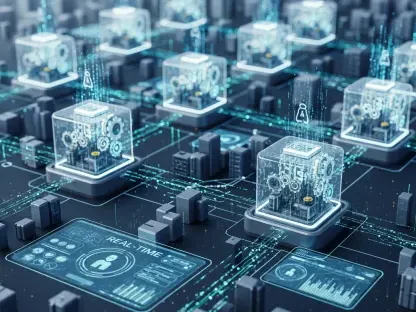
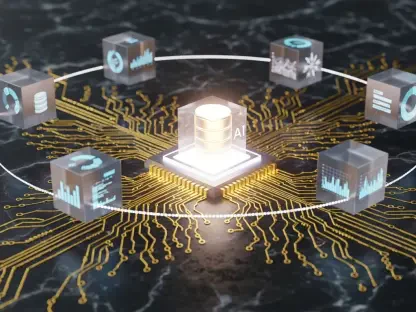
At its core, edge computing operates on a simple and powerful premise: it moves the data center to the user’s doorstep. Rather than centralizing all processing and storage in a few massive facilities, it distributes these capabilities across a wide network of smaller, localized nodes. This decentralized approach creates a tiered system where data can be processed at the most logical and efficient location. The mobile device itself can handle simple tasks, nearby edge nodes can manage more complex, time-sensitive operations, and the central cloud can be reserved for heavy-duty processing, long-term storage, and overarching data analysis. This creates a more intelligent and responsive application architecture.
The ecosystem of edge computing consists of three primary components working in concert. It begins with the user’s device, which serves as the initial point of data generation and interaction. The second layer is composed of edge nodes, the intermediate processing stations situated strategically within the network to minimize distance to the user. These nodes are the workhorses of the edge, executing tasks that require more power than the device can offer but need faster response times than the cloud can provide. Finally, the traditional cloud remains an integral part of the system, acting as a central repository and a hub for large-scale computations that are not latency-sensitive. This layered structure allows developers to orchestrate data flow intelligently, optimizing for speed and efficiency.
This architectural shift unlocks a trio of critical benefits that directly enhance the mobile app experience. The most immediate advantage is a dramatic reduction in response time, resulting in a snappier, more fluid user interface. Secondly, by processing data locally, applications can gain significant offline functionality, allowing users to continue interacting with key features even without a stable internet connection. Finally, edge computing inherently improves privacy and security. By processing sensitive information locally on an edge node instead of transmitting it across the public internet to a central server, the exposure of that data to potential interception or breaches is significantly minimized.
Edge Computing in Action Learning from Industry Giants
The practical application of edge computing is already widespread among the world’s most successful mobile applications, often working silently in the background to deliver seamless experiences. Netflix, a pioneer in this space, utilizes a vast content delivery network (CDN) with thousands of servers deployed deep within internet service provider networks globally. When a user streams a movie, the video content is served from a local cache server, potentially just a few miles away, rather than from a central data hub. This minimizes buffering and ensures high-quality playback. Similarly, in the competitive world of mobile gaming, titles like PUBG Mobile leverage edge servers to process player actions in real time. This ensures that a player’s commands are executed with minimal delay, providing the fair and responsive gameplay experience that is essential for user retention.
This principle of localization extends far beyond entertainment into the realms of e-commerce, social media, and logistics. Amazon’s mobile app processes search queries and generates personalized product recommendations at edge locations to deliver near-instant results, reducing friction in the shopping experience. Instagram pre-processes images and videos on nearby servers before a full upload to the cloud, making the sharing experience feel immediate and fluid. Ride-sharing services like Uber depend heavily on edge computing to perform the complex, real-time calculations required to match riders with the nearest available drivers. In each of these cases, moving computation closer to the user is not just a technical optimization but a core business strategy that directly translates to a superior and more competitive service.
From the Trenches Expert Advice and Measurable Results
For developers looking to integrate this technology, the consensus from industry experts is to adopt an incremental approach. A senior engineer at a leading mobile development firm advises, “Start small with edge computing—pick one feature like image processing or user authentication before expanding.” Attempting a complete architectural overhaul at once can introduce unnecessary complexity and risk. By focusing on a single, high-impact function—such as a feature that is notoriously slow or requires offline capability—a team can build expertise, validate the benefits, and demonstrate value with minimal disruption. This methodical strategy allows for a smoother transition and ensures that the investment in edge infrastructure delivers tangible results.
The performance gains from such implementations are not merely theoretical; they are quantifiable and substantial. One case study from a financial technology company revealed the transformative impact of this approach on its mobile trading application. Before implementation, the average time to process a transaction request, which involved multiple security checks and data validations with a central server, was 800 milliseconds. After migrating these critical validation processes to edge nodes located within their key markets, the company achieved a breakthrough. As their report stated, “Edge computing has reduced our app’s response time from 800 milliseconds to just 50 milliseconds.” This 93% reduction in latency not only improved user satisfaction but also increased transaction volume, as users could execute trades with greater confidence and speed.
Your Roadmap to Implementing Edge Computing
Embarking on an edge computing implementation requires a structured and strategic approach rather than a haphazard dive into new technology. The initial and most crucial step is to conduct a thorough audit of the application’s features to identify which are most sensitive to latency. Functions like real-time data visualization, interactive elements, or frequent server requests are prime candidates. Once these are identified, the next phase involves evaluating the various edge platforms available, such as AWS Wavelength, Google Distributed Cloud Edge, or Cloudflare Workers, and selecting one that aligns with the team’s existing technology stack and skill set. From there, development should begin with a limited-scope prototype, focusing on a single, well-defined function to test the architecture and measure performance gains before a broader rollout.
Choosing the right platform is a critical decision that will influence the entire development and deployment process. Major cloud providers offer robust, managed edge services that integrate seamlessly with their existing ecosystems, simplifying infrastructure management for teams. These platforms provide the tools to deploy code to multiple geographic locations, manage data synchronization, and monitor performance. However, developers must also anticipate and plan for the inherent challenges of a distributed system. Data synchronization across multiple edge nodes and the central cloud can be complex, requiring careful design to avoid conflicts and ensure consistency.
Perhaps the most important aspect of a successful edge strategy is the implementation of robust fallback mechanisms. An edge node may become unavailable due to network issues or maintenance, and the application must be designed to handle this gracefully. The ideal system ensures that if an edge request fails, the application automatically and seamlessly reroutes the request to the central cloud. While this may result in a temporary increase in latency, it guarantees that the application remains functional for the user. This principle of graceful degradation is essential for maintaining reliability and ensuring that the app never fails completely, thereby preserving user trust.
The Next Frontier What the Future Holds for Edge Powered Apps
The trajectory of edge computing is inextricably linked to the global expansion of 5G networks. While often marketed for its faster download speeds, the true revolutionary potential of 5G lies in its ultra-low latency and high bandwidth, which act as powerful catalysts for edge capabilities. This symbiotic relationship will unlock a new class of mobile applications that are currently constrained by network delays. As 5G becomes ubiquitous, the connection between a user’s device and a nearby edge node will become so fast and reliable that it will rival the speed of onboard processing, blurring the lines between local and remote computation.
Looking toward the horizon, this powerful combination of 5G and edge computing is set to redefine what mobile applications can achieve. Artificial intelligence models, which today often require powerful cloud servers, will increasingly run directly on edge nodes, enabling sophisticated, real-time analysis for applications in fields like personal health monitoring and augmented reality. As the infrastructure matures and becomes more widespread, the operational costs associated with edge computing are expected to decrease, making it accessible to a broader range of developers. This will pave the way for unprecedented app capabilities, from real-time collaborative design tools and immersive multi-user AR experiences to the intricate command-and-control systems required for autonomous vehicles and smart city infrastructure.
Ultimately, the conversation surrounding mobile application performance had fundamentally shifted. Success was no longer defined solely by elegant code or intuitive design but was now intrinsically tied to the physical laws of data transmission—the distance between computation and the user. The architectural decision to adopt a decentralized model was not merely a technical upgrade; it became a core strategic imperative for survival and growth in an intensely competitive landscape.
The companies that recognized this shift early and invested in bringing their services closer to the network edge discovered a profound competitive advantage. They delivered experiences that felt faster, more reliable, and more deeply integrated into the user’s immediate environment. For many, the implementation of edge computing was the critical intervention that transformed a struggling application into a market leader. It had been the definitive factor that determined whether a mobile app merely functioned or truly flourished in an ecosystem where every millisecond mattered.