
Navigating the Crowded Soundscape of Music Apps
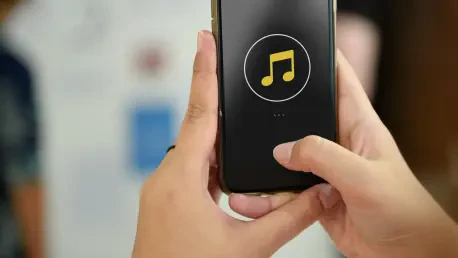
The relentless digitization of music has created a multi-billion-dollar global arena where new applications must fight for every second of a listener’s attention. With thousands of songs instantly accessible from a user’s pocket, the days of physical media and appointment-based radio listening are firmly in the past. This digital transformation has unlocked immense opportunities for developers and entrepreneurs aiming to launch their own music platforms. However, it has simultaneously cultivated an environment of extreme competition where market saturation is a constant challenge. To achieve chart-topping success, a modern music app must transcend the basic function of audio playback; it needs to curate a deeply engaging experience that strengthens the bond between users and the artists they admire. This analysis provides a comprehensive guide through the essential stages of development, from strategic conception to a market-ready product, examining the technical infrastructure, critical design philosophies, and nuanced details that distinguish a leading application from a fleeting competitor.
The Evolution of Digital Music Consumption
To accurately project future market trends and identify viable entry points, it is essential to understand the current landscape shaped by its digital pioneers. The global music application market comprises billions of users who engage in streaming, discovery, and social sharing on a daily basis. While established titans like Spotify and Apple Music command a significant share of the streaming sector, their dominance has paradoxically created a fractured market ripe with opportunities for specialized applications that address specific user needs. Market analysis indicates that the most successful new entrants from 2025 onward will likely be those that carve out a distinct niche. These opportunities span various sub-sectors, including advanced music creation tools for aspiring artists, social discovery platforms built on community curation, and dedicated applications serving specific genres or cultural communities. This context is critical, as user behavior continues to shift from passive consumption toward active participation. Today’s users demand more than a simple library; they seek to create, share content, and forge connections, opening lucrative avenues for apps centered on community, collaboration, and direct artist-to-fan monetization.
The Blueprint for Your App’s Success
Defining Your Niche and Core Purpose
Before any technical development begins, a successful music application requires a meticulously crafted strategic plan. A significant percentage of otherwise innovative app concepts fail due to an inadequate foundation in market and business planning. The initial and most critical step involves articulating a clear value proposition: what specific problem does the application solve? Whether the goal is to streamline the discovery of emerging artists, simplify the social sharing of playlists, or provide superior production tools for musicians, this core purpose must be unambiguous. Equally vital is the precise definition of the target audience. The preferences and behaviors of teenage pop enthusiasts, for instance, diverge sharply from those of seasoned jazz connoisseurs or electronic music producers. A deep understanding of user demographics—including age, musical tastes, technical proficiency, and social media habits—must inform every subsequent decision, from the feature set and user interface to the marketing and monetization strategy. A thorough competitive analysis is also imperative, not to imitate existing leaders, but to identify unaddressed market gaps and leverage them as a primary competitive advantage.
Crafting an Intuitive, User-Centric Design
In a market driven by passion, the user experience (UX) and user interface (UI) must honor and amplify the emotional connection users have with music. The visual design should function as a subtle yet elegant stage for the content, rather than a distraction. An overly cluttered interface can detract from the listening experience, making clean layouts, strategic use of negative space, and highly legible typography essential design principles. The color palette must be carefully chosen for its versatility, capable of complementing the vast and unpredictable range of album artwork that will populate the screen. Key design elements that consistently correlate with high user engagement and retention include large, easily accessible playback controls, high-fidelity displays of album art, and immediate access to core functions like search and playlist management. Furthermore, features that were once considered premium, such as a dark mode for low-light environments and intuitive gesture controls for track navigation, are now baseline expectations for any serious market contender. The most effective designs successfully accommodate both casual listeners seeking simplicity and dedicated audiophiles who desire rich metadata, all without alienating either demographic.
Engineering the Core Features and Technical Backbone
The technical architecture of a music app is the foundation upon which its entire user experience rests; it is where the application will either achieve seamless performance or fail under the strain of user demand. The audio engine is the heart of the platform, and market standards demand flawless, high-fidelity sound, uninterrupted streaming, and native support for a range of audio formats including MP3, AAC, and lossless options like FLAC. Non-negotiable features include persistent background playback and optimized power consumption to preserve device battery life. Beyond the audio player, a robust library management system is critical for user retention. Users expect the ability to create and modify playlists with ease, perform complex searches within their collections, and download content for reliable offline access. The backend infrastructure must be architected for massive scalability to handle petabytes of data, from audio files to user metadata and playlists. Consequently, leveraging enterprise-grade cloud services from providers like Amazon Web Services (AWS) or Google Cloud is not an option but a necessity. Moreover, music licensing and Digital Rights Management (DRM) are not peripheral concerns; the app’s entire architecture must be designed from its inception to enforce copyright, track royalties accurately, and protect intellectual property.
The Future of Music Tech What’s Next on the Playlist
The music technology sector is characterized by continuous and rapid evolution, propelled by both technological breakthroughs and shifting consumer expectations. The next generation of market-leading applications will undoubtedly harness emerging trends to deliver hyper-personalized and deeply interactive experiences. Artificial intelligence is already transforming music discovery with sophisticated recommendation algorithms, but its future applications extend into generative music composition and soundscapes that adapt to a user’s environment or mood. Concurrently, social listening features, which enable multiple users to experience music simultaneously in a shared virtual space, are gaining significant traction, effectively closing the divide between solitary consumption and communal enjoyment. Another major trend projected to accelerate between 2025 and 2029 is the deeper integration of the creator economy. Future platforms will provide comprehensive toolkits empowering independent artists to engage directly with their fanbase, monetize their work through multiple channels, and cultivate vibrant communities entirely within the app’s ecosystem, representing a paradigm shift beyond the conventional streaming-royalty model.
From Development to Deployment a Strategic Playbook
Constructing a technically sound application is only the first phase; successfully launching it into a saturated market requires a deliberate and well-executed go-to-market strategy. Prior to a public release, conducting rigorous beta testing with authentic music enthusiasts is an indispensable step. These early adopters will subject the application to real-world stress tests—simulating usage on unstable network connections, managing exceptionally large libraries, and operating on low-power devices—thereby uncovering critical bugs and usability issues that internal quality assurance might miss. A staged beta release, beginning with a small, controlled cohort of 50 to 100 users, allows for the collection of high-quality, actionable feedback without overwhelming development resources. For the official launch, generating market awareness is paramount. A multi-channel promotional campaign should commence weeks in advance, leveraging social media, music-focused publications, and digital influencers. Strategic partnerships with independent artists to feature exclusive pre-release content can create a powerful, mutually beneficial launchpad, driving genuine excitement and user acquisition while offering valuable exposure to emerging talent.
The Final Mix Your Path to a Chart-Topping App
The comprehensive examination of the music app market revealed that building a successful platform was less about accumulating the most features and more about deeply understanding the core desires of music lovers. The journey to market leadership that this analysis mapped out was one defined by meticulous planning, user-centric design, robust engineering, and a commitment to iterative improvement based on tangible user feedback. It was demonstrated that the most competitive applications were those that felt intuitive and invisible—seamlessly connecting users to the music that shapes their lives. While the market was undeniably competitive, the investigation affirmed that significant opportunities remained for applications built with genuine utility and exceptional care. The analysis concluded that an app’s development cycle did not end at launch; on the contrary, that milestone marked the beginning of the crucial work of listening to the user community, continuously refining the product, and remaining steadfast to the original vision. This unwavering dedication to the user experience was the ultimate differentiator that transformed a software product into an essential part of a person’s daily routine.