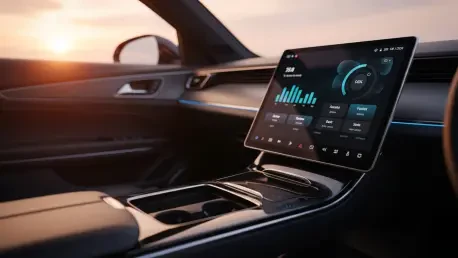

The high-pitched hum of a high-performance electric motor used to be the primary indicator of automotive excellence, but that mechanical benchmark has been quietly superseded by the glow of a seamless digital interface. The automotive industry is currently navigating a profound paradigm shift where the traditional focus on raw horsepower is being replaced by what many insiders call digital horsepower. Today, the car cabin is viewed as a sophisticated digital ecosystem rather than a simple passenger compartment. This transformation is driven by the integration of advanced sensors, high-speed connectivity, and complex assistance systems that turn the vehicle into a mobile living space. Key market players and tech giants are now competing to define this third living space, where user interface and experience design serve as the primary differentiators in a crowded global market. As regulatory bodies increasingly focus on driver distraction and software safety, the significance of a well-designed interface has never been higher, influencing everything from luxury brand identity to the basic utility of entry-level vehicles.
The Digital Cockpit: A New Era of Automotive Interior Design
This evolution signifies more than just a change in aesthetic; it represents a fundamental rewiring of the relationship between the driver and the machine. Designers are no longer just arranging physical knobs and dials but are instead orchestrating a complex symphony of visual, auditory, and haptic feedback. This digital-first approach ensures that the vehicle feels less like a tool and more like an intelligent companion. By prioritizing the fluidity of the interface, manufacturers can create an environment that feels premium regardless of the physical materials used.
Moreover, the interior is becoming a canvas for brand expression in ways that were previously impossible with static components. A software-defined interior allows for a level of personalization that mirrors the customizability of modern personal electronics. From the typography on the instrument cluster to the specific rhythm of the ambient lighting, every digital touchpoint is an opportunity to reinforce a brand’s unique identity. Consequently, the cabin has become the most critical frontier for consumer loyalty, as the quality of the software experience often outweighs traditional mechanical reliability in the mind of the modern buyer.
Key Drivers and Market Dynamics of the Smart Interior
Emerging Trends in Immersive Technology and Connectivity
The most significant trend shaping the modern cabin is the move toward experience-based luxury, where the fluidity of the interface defines the overall value of the vehicle. Consumers now demand a smartphone-like experience, expecting seamless integration of their personal digital lives through touch, voice, and gesture controls that respond with zero latency. Furthermore, the rise of context-dependent interfaces allows the cabin to adapt in real-time to the current environment. For instance, a vehicle might shift from a productivity-focused layout while parked at a charging station to a safety-centric heads-up display during high-speed travel on a congested highway.
The adoption of Extended Reality and Virtual Reality in the design phase is also accelerating at an unprecedented pace. These technologies allow designers to create emotionally resonant environments that feature dynamic ambient lighting and haptic feedback to build a stronger bond between the human and the machine. By simulating how a user interacts with the digital layer long before a physical dashboard is molded, companies can ensure that the emotional “feel” of the car is perfected. This shift toward immersive design ensures that every interaction, from adjusting the climate to navigating through a playlist, feels intuitive and rewarding.
Market Projections and the Economic Impact of Digital-First Design
The market for automotive UI/UX is projected to see exponential growth as software becomes the dominant component of vehicle cost and value. Performance indicators are shifting from 0-60 mph times to software latency and user engagement metrics. Industry data suggests that manufacturers investing in virtual prototyping and Over-the-Air update capabilities are seeing significantly shorter development cycles and reduced costs. By replacing expensive physical prototypes with high-fidelity digital models, companies can iterate in hours rather than weeks, allowing them to respond to market trends in real-time.
This shift toward Software-Defined Vehicles is expected to create entirely new revenue streams through subscription-based features and digital services. Instead of a one-time purchase, the vehicle becomes a platform for ongoing digital commerce, where users can unlock performance upgrades or new infotainment skins via a simple download. This transformation makes UI/UX the cornerstone of future automotive profitability, as the ability to keep a vehicle feeling “new” through software updates extends its lifecycle and increases its resale value. Manufacturers who fail to master this digital ecosystem risk being relegated to the role of simple hardware providers for more tech-savvy competitors.
Navigating the Complexities of Cognitive Load and Safety
As vehicle interiors become more feature-rich, designers face the critical challenge of managing cognitive load to ensure that innovation does not lead to danger. The primary obstacle is providing a wealth of information—such as navigation, infotainment, and driver assistance alerts—without overwhelming the operator. Finding the delicate balance between a minimalist aesthetic and functional complexity is a major hurdle for contemporary engineering teams. To overcome this, strategies include the use of eye-tracking technology to ensure that critical data is always in the line of sight, preventing the driver from looking away from the road for too long.
Implementation of active interiors is another way the industry is tackling this problem. In these systems, lighting and sound provide non-intrusive alerts that communicate information through peripheral vision or spatial audio. Additionally, the industry must address the hardware-software gap, ensuring that digital interfaces remain responsive throughout the vehicle’s ten-to-fifteen-year lifespan. This requires a forward-thinking approach to hardware architecture, where processing power is over-provisioned to handle future software demands without becoming obsolete.
Governance and Standards in the Age of the Connected Car
The regulatory landscape is rapidly evolving to keep pace with digital innovation, moving far beyond traditional crash-test standards. Significant laws now govern data privacy and cybersecurity, ensuring that the vast amounts of user data collected by the car cabin are protected from external threats. Standards for distraction management are being tightened by global safety organizations, mandating that certain complex UI functions be restricted while the vehicle is in motion. Compliance is no longer just about the physical integrity of the car; it now involves rigorous software certification and ensuring that updates do not compromise functional safety.
These regulations are forcing a standardized approach to how information is prioritized and displayed across the industry. While this creates a baseline for safety, it also pushes designers to find creative ways to innovate within a more structured framework. Manufacturers are now required to prove that their digital interfaces are as reliable as their braking systems, leading to a new era of software transparency and accountability. This shift ensures that the rapid pace of technological advancement is balanced by a commitment to public safety and data integrity.
The Future Road: Autonomous Living and Adaptive Ecosystems
Looking ahead, the evolution of UI/UX will be dictated by the transition toward autonomous driving, which fundamentally changes the occupant’s role. As the driver becomes a passenger, the cabin will transform into a fully immersive entertainment or productivity hub, where the windshield itself could become a high-definition display. Potential disruptors include Augmented Reality overlays that project navigation and points of interest directly onto the road surface and AI-driven personal assistants that predict user needs based on biometric data. The industry is headed toward a future where the vehicle is an extension of the user’s identity, capable of reconfiguring its physical and digital layout based on the occupant’s mood or activity.
Innovation in sustainable materials and integrated smart surfaces will further blur the line between the physical interior and the digital interface. Imagine wood or fabric surfaces that act as touch-sensitive controls, appearing only when needed and fading into the background when dormant. This convergence of hardware and software will allow for a “shapeshifting” interior that prioritizes comfort and utility in equal measure. As the vehicle becomes a sanctuary, the focus of design will shift from controlling a machine to managing an environment that nurtures and entertains its occupants.
Synthesis of the Digital Transformation in Automotive Design
The synthesis of automotive engineering and user-centric design principles demonstrated that the digital cockpit has successfully transitioned from a futuristic concept to a commercial necessity. Industry leaders recognized that virtual development tools were essential for maintaining a competitive edge, allowing for rapid iteration that physical manufacturing could not match. By prioritizing the emotional connection between the user and the interface, manufacturers were able to command higher price points and foster deeper brand loyalty. The focus on managing cognitive load proved that high-tech interiors could actually enhance safety rather than detract from it. Moving forward, the industry should focus on establishing cross-platform software standards to ensure that the car integrates perfectly with the wider internet-of-things landscape. Future development must also prioritize long-term software sustainability to prevent digital obsolescence in an aging fleet. Ultimately, the successful integration of these systems confirmed that the automobile evolved into a personalized sanctuary that seamlessly bridged the gap between our physical movements and our digital identities.