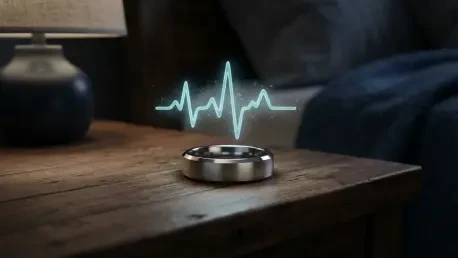

The miniaturization of health sensors has moved from the wrist to the finger, creating a high-stakes environment where software determines market survival. Building a device-agnostic ingestion layer protects a software investment against the risk of a single hardware partner failing or changing terms of service. As we move deeper into the current technological landscape of 2026, the industry has realized that the physical ring is merely a gateway to a much more valuable asset: the longitudinal health data it generates. Unlike smartwatches, which users frequently remove for charging or due to aesthetic preferences, smart rings benefit from an exceptionally high rate of nightly adherence. This consistent usage during sleep is critical because it provides a stable physiological baseline, free from the noise of daily physical activity. When a user remains still for hours, sensors can capture resting heart rate, heart rate variability, and respiratory patterns with a level of precision that is difficult to achieve during a midday workout. Consequently, the challenge for modern developers is no longer just about the hardware’s form factor, but about building a robust “plumbing” system that seamlessly moves sensitive data from the finger to the cloud and eventually into the hands of a clinical professional.
Bridging the Gap Between Data and Clinical Utility
The smart ring market has matured rapidly, with shipments expected to reach record levels as consumers demand more discreet ways to monitor their health. However, a significant gap remains between the massive amounts of data collected and the actual clinical utility of that information for the average user. While millions of people now wear rings that track every heartbeat and temperature fluctuation, the vast majority of this data remains siloed within proprietary consumer applications. In 2026, the industry’s focus has shifted from simple data collection to creating meaningful pathways that allow this information to flow into the broader healthcare system. Without these pathways, the data serves only as a novelty rather than a life-saving tool. Bridging this gap requires a sophisticated understanding of how clinicians interact with patient data, moving beyond flashy dashboards to integrated systems that speak the language of professional medical environments.
Understanding Market Dynamics and the Clinical Gap
The current trajectory of the wearable market suggests a fundamental shift toward the “Connected Health” model, where the value of a device is measured by its impact on clinical outcomes. Data suggests that while nearly eighty percent of wearable users are eager to share their health metrics with their primary care physicians, only a fraction actually succeed in doing so in a way that informs treatment. This “clinical gap” is largely a result of fragmented infrastructure; doctors do not have the time to look at several different consumer apps for every patient. To solve this, developers are increasingly focusing on the backend, ensuring that smart ring data can be normalized and transmitted via standards like FHIR (Fast Healthcare Interoperability Resources). By integrating directly with Electronic Health Records such as Epic or Cerner, the software ecosystem moves from a fitness tracker to a legitimate medical extension, providing clinicians with a continuous view of a patient’s health that was previously impossible to obtain outside of a hospital setting.
The economic potential of closing this gap is immense, particularly as healthcare systems transition toward value-based care models. In these models, providers are incentivized to keep patients healthy rather than just treating them when they are sick. A smart ring ecosystem that can alert a doctor to a sudden drop in heart rate variability or a spike in resting heart rate before a patient even feels symptoms is a powerful tool for preventative medicine. This proactive approach not only improves patient outcomes but also reduces the overall cost of care by preventing emergency room visits and hospitalizations. Therefore, the most successful ecosystems in 2026 are those that have prioritized the “clinical road” from the finger to the dashboard, ensuring that the data is not just accurate, but also actionable and accessible to the people who are trained to interpret it. The competitive advantage now lies in the ability to prove that a specific software layer can actually change a patient’s health trajectory.
Strategic Selection of the Development Build Path
One of the most consequential decisions in creating a smart ring ecosystem is the choice of the underlying development path, as this dictates the long-term flexibility and ownership of the data. Developers generally choose between integrating an existing ring via a third-party API, utilizing white-label hardware with a specialized Software Development Kit, or embarking on the long and expensive journey of custom hardware development. In 2026, many organizations have found that the middle path—using established hardware with a custom SDK—provides the best balance of speed to market and technical control. This approach allows the software team to focus on the user experience and data analysis while leveraging the proven reliability of existing sensor arrays. However, the risk of vendor lock-in remains a primary concern, which is why the most resilient ecosystems are built to be device-agnostic from the outset, capable of ingesting data from multiple hardware sources if a specific supplier fails.
Building a device-agnostic ingestion layer is a strategic insurance policy that prevents a company from being held hostage by a hardware manufacturer’s changing business terms or technical failures. If a hardware partner decides to increase their licensing fees or discontinues a specific model, a device-agnostic software stack can quickly pivot to a different ring provider without requiring a complete rewrite of the application’s core logic. This flexibility is also essential for catering to different market segments; a high-end titanium ring might be appropriate for a premium consumer subscription, while a lower-cost plastic version could be more suitable for large-scale employee wellness programs. By separating the hardware layer from the data processing and visualization layers, developers ensure that their software investment remains valuable regardless of which physical device is currently leading the market. This modular architecture is a hallmark of the most successful ecosystems currently operating in the health technology space.
Managing Technical Architecture and Bluetooth Connectivity
The reliability of a smart ring ecosystem is frequently tested in the early morning hours, during what is known as the “morning sync.” This is the critical window when the user wakes up and expects to see an immediate summary of their sleep quality and recovery status. If the connection between the ring and the smartphone is sluggish or fails entirely, the user’s trust in the device evaporates almost instantly. Achieving a flawless sync requires a deep mastery of Bluetooth Low Energy (BLE) protocols and an understanding of how modern mobile operating systems manage background tasks. Since rings lack screens and buttons, the software must handle all pairing and data transfer processes autonomously and invisibly. Developers must implement sophisticated retry logic and packet management to ensure that data is never lost, even if the connection is interrupted by the user moving out of range or the phone’s operating system aggressively reclaiming memory.
To maintain a persistent connection, developers in 2026 utilize specific operating system tools designed for critical peripherals. On Android devices, the CompanionDeviceManager is used to signal that the smart ring is a vital health tool, which prevents the system from killing the app’s background processes to save battery. Similarly, on iOS, the implementation of CoreBluetooth state restoration allows an app to be relaunched by the system to complete a data transfer even if the user has manually swiped the app closed. Beyond simple connectivity, the software must manage the ring’s internal clock and memory. Because these devices are so small, they have limited storage; the app must ensure that data is offloaded frequently enough to prevent overwriting. Furthermore, handling time zone changes during travel requires precise logic to ensure that a user’s sleep data remains chronologically accurate, preventing the confusing “missing days” or “overlapping nights” that plagued early wearable designs.
Transforming Raw Sensor Data into Intelligent Insights
The raw output of a smart ring is essentially a chaotic stream of infrared light reflections, accelerometer movements, and temperature fluctuations that mean very little to the average user. The true magic of a successful ecosystem happens in the cloud, where advanced algorithms transform these millions of data points into a handful of clear, understandable scores. In 2026, the industry has moved beyond simple “step counting” to a more holistic view of health, using AI to identify patterns that are invisible to the naked eye. The goal is to provide context to the numbers; telling a user their heart rate is sixty beats per minute is far less useful than telling them that their heart rate is ten percent higher than their personal average, potentially signaling the onset of a fever or excessive stress. This transition from raw data to personalized insight is what creates long-term user engagement and drives the commercial success of the software platform.
Leveraging AI for Signal Cleaning and Personalization
One of the primary technical hurdles in smart ring development is the inherent “noise” in the signal caused by the user’s movement or the ring shifting on the finger. Unlike a clinical pulse oximeter that is clipped tightly to a stationary patient, a smart ring must operate while the user is tossing and turning in bed. Advanced signal-cleaning algorithms are employed to filter out these motion artifacts, ensuring that the heart rate and oxygen saturation data are accurate. This process often involves using the ring’s accelerometer data to identify periods of movement and then using machine learning models to “subtracted” that noise from the photoplethysmography (PPG) signal. Once the data is cleaned, it must be personalized. A successful ecosystem does not compare a user to a generic population average; instead, it builds a multi-week rolling baseline of that specific individual’s “normal” state.
Personalization is the key to making health data meaningful because physiological markers vary wildly between individuals. For example, a resting heart rate that is perfectly healthy for a marathon runner might be a sign of bradycardia in a sedentary office worker. By establishing a personalized baseline, the software can detect even subtle deviations that might indicate a problem. In 2026, AI models have become so sophisticated that they can account for cyclical changes in a user’s health, such as the menstrual cycle or seasonal variations in activity levels. This prevents the “alert fatigue” that occurs when an app constantly flags normal fluctuations as emergencies. The software’s ability to understand the context of the user’s life—knowing when they are traveling, when they have changed their diet, or when they are under an unusual amount of work stress—is what separates a basic tracker from a true digital health companion.
Predictive Analytics and the Role of AI Coaching
The evolution of smart ring software has led to the development of predictive analytics, which can often identify signs of illness before physical symptoms appear. By correlating a rise in skin temperature with a decrease in heart rate variability and an increase in respiratory rate, these systems can provide an “early warning” for common viruses or even more serious conditions. In 2026, these predictive capabilities have become a standard expectation for premium smart ring users. However, providing this information requires a delicate balance; the app must be informative without causing unnecessary anxiety. This is where AI coaching comes into play, using Large Language Models to translate complex physiological data into natural language summaries and actionable advice. Instead of just showing a low “Readiness Score,” the app might explain that the user’s body is showing signs of strain and suggest a lighter workout or an earlier bedtime.
To maintain user trust, these AI coaches must operate within strict guardrails to ensure that they do not stray into the territory of unauthorized medical diagnosis. The most successful ecosystems use a “human-in-the-loop” approach for training their models, ensuring that the advice provided is backed by recognized physiological principles and current medical literature. This coaching layer is particularly effective for behavioral change, as it provides the “why” behind the data. When a user can see a direct correlation between a late-night meal and a disrupted night of sleep through a clear, conversational explanation, they are much more likely to modify their behavior. This feedback loop is the engine of the subscription-based business model, as it provides continuous value that goes beyond the initial novelty of the hardware. The AI does not just report on the past; it helps the user navigate toward a healthier future.
Navigating Regulatory Frameworks and Claims Creep
The legal landscape for smart ring software is a complex web of regulations that varies significantly depending on the claims the manufacturer makes. If a company markets its ring as a general wellness device that tracks “trends” in sleep and activity, it usually avoids the stringent oversight required for medical devices. However, the moment an app claims to “detect” a specific condition like sleep apnea or “diagnose” atrial fibrillation, it falls under the jurisdiction of regulatory bodies like the FDA in the United States or the EMA in Europe. This “claims creep” is a major risk for marketing teams who want to highlight the power of their AI but must avoid triggering Class II medical device requirements. In 2026, successful developers work closely with legal and clinical teams from the very beginning of the design process to ensure that their software remains on the correct side of the regulatory line.
Beyond clinical regulations, data privacy and security are paramount in the health technology sector. Since smart rings collect some of the most intimate data possible—including sleep patterns, heart rhythms, and potentially even pregnancy markers—the software ecosystem must be built with a “security-first” mindset. This involves implementing end-to-end encryption, ensuring HIPAA compliance in the US, and adhering to the strict data residency requirements of the GDPR in Europe. A single data breach can permanently destroy a brand’s reputation and lead to catastrophic legal penalties. Consequently, the architecture of a modern smart ring platform often involves complex “anonymization” layers where the identity of the user is separated from their physiological data in the cloud. This ensures that even in the event of a security incident, the sensitive health information cannot be easily traced back to an individual, thereby protecting both the user and the company.
Economic Realities and Sustainable Business Models
Developing and maintaining a smart ring ecosystem is a capital-intensive venture that requires a clear understanding of long-term economic realities. Many early entrants into the market underestimated the “Total Cost of Ownership,” focusing only on the initial development of the app and hardware. In 2026, stakeholders have realized that the launch of the product is only the beginning of the financial commitment. Operating a high-scale health platform involves significant ongoing costs for cloud infrastructure, data security audits, and continuous software updates to keep pace with new mobile operating system versions. To be sustainable, a smart ring company must move beyond the one-time sale of hardware and establish a recurring revenue stream that can support these ongoing operational expenses while funding the next generation of research and development.
Calculating the Total Cost of Ownership
A comprehensive analysis of the costs involved in a smart ring ecosystem reveals that the initial build phase typically accounts for less than half of the total expenditure over a three-year period. The remainder is consumed by maintenance, scaling, and the constant need for technical refinement. For instance, as the user base grows from thousands to millions, the cost of processing and storing high-frequency PPG data in the cloud scales exponentially. Furthermore, each time a major smartphone manufacturer releases a new version of their operating system, the smart ring app must be rigorously tested and updated to ensure that the “morning sync” and background processes continue to function correctly. This perpetual development cycle is a non-negotiable requirement for staying relevant in a competitive market, and companies that fail to budget for this “technical debt” often find themselves with a buggy, obsolete product within eighteen months.
In addition to technical maintenance, the cost of clinical validation and regulatory compliance adds another layer of financial complexity. If an ecosystem aims to be more than just a toy, it must invest in clinical trials to prove that its sensors and algorithms are accurate across diverse populations and use cases. These studies are essential for gaining the trust of the medical community and are often a prerequisite for high-value partnerships with insurance companies or large employers. In 2026, the most successful firms are those that viewed these costs not as an obstacle, but as a “moat” that protects them from lower-quality competitors. By investing in a robust, clinically-validated software stack, these companies have built a level of credibility that is difficult for newcomers to replicate quickly. This long-term financial perspective is what separates the industry leaders from the short-lived startups.
Aligning Revenue Models with Target Audiences
The choice of a revenue model is deeply intertwined with the software’s feature set and the target audience’s expectations. While many consumer-focused rings rely on a monthly subscription fee for “premium” insights, other players have found success in the B2B sector, partnering with corporations to improve employee wellness and reduce insurance premiums. In the Remote Patient Monitoring (RPM) space, the revenue model is often built around healthcare reimbursement codes, where the software must meet specific clinical standards to allow providers to bill for the monitoring service. Each of these models requires a different focus within the software ecosystem. A consumer app might prioritize a slick, gamified user interface to reduce churn, whereas a clinical RPM platform must prioritize deep integration with hospital workflows and the absolute accuracy of every data point reported to the physician.
In 2026, the emergence of “data-as-a-service” models has also provided a new avenue for growth, where anonymized, aggregated health data is used for large-scale pharmaceutical research or public health studies. However, this model requires a high degree of transparency and user consent to be ethical and legal. Regardless of the specific model chosen, the most successful ecosystems are those that provide a clear “value exchange” to the user. If a person is asked to pay a monthly fee, they expect the software to provide continuous, evolving value through new features, better insights, and perhaps even integration with other parts of their digital life, such as their smart home or nutrition logs. The alignment of the business model with the user’s health goals is what creates a sustainable ecosystem that can thrive in a crowded and rapidly evolving market.
Establishing Long-Term Value and Reliability
The successful deployment of these ecosystems relied on a multidisciplinary approach that integrated engineering excellence with a deep understanding of human physiology and clinical requirements. By prioritizing a device-agnostic architecture, developers ensured that their platforms remained resilient in the face of hardware volatility and shifting market trends. The focus on the “morning sync” and background connectivity established a foundation of trust with the user, ensuring that the device was viewed as a reliable companion rather than a finicky gadget. This reliability was the essential prerequisite for the more advanced AI-driven features that followed, as users only valued sophisticated insights if they were confident in the underlying data collection process. Moving forward, the most effective next steps for organizations in this space involve deepening their integration with clinical workflows and continuing to refine the “AI coach” to provide even more personalized, life-changing interventions.
Ultimately, the transition of the smart ring from a niche wearable to a critical component of the healthcare landscape was driven by the realization that data is only valuable if it reaches the right person at the right time. The industry moved toward a model where the software did the heavy lifting of interpretation, allowing users and clinicians to focus on action rather than analysis. Future considerations must include the expansion of sensor capabilities to include non-invasive glucose monitoring and more advanced cardiovascular metrics, all of which will require even more sophisticated software layers to manage. By maintaining a strict focus on the three pillars of reliability, actionability, and integrity, developers established a sustainable path for smart ring technology. The lessons learned during this period of rapid growth now serve as the blueprint for the next generation of connected health devices, where the boundary between the digital and physical worlds continues to blur in the service of better human health.