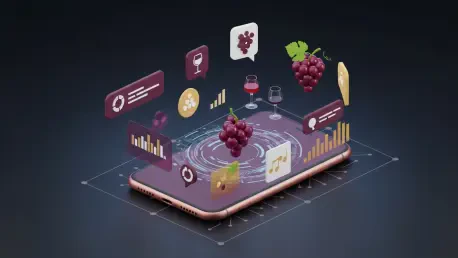

With the launch of its first dedicated mobile app, Virgin Wines is making a high-stakes play to redefine the digital wine-buying experience. By merging sophisticated artificial intelligence with the expertise of Masters of Wine, the company aims to move beyond transactional retail and into the realm of personalized curation. This strategic shift is designed to capture a younger, mobile-first demographic while providing long-term value to a loyal customer base that views wine as both a passion and a hobby.
The company’s digital transformation focuses on three core pillars: deep data analysis, user interactivity through a digital cellar, and the simplification of the often-intimidating wine selection process. By investing heavily in a bespoke platform, the goal is to create a seamless bridge between the convenience of mobile shopping and the expert guidance typically found in high-end specialty boutiques.
Developing a mobile retail platform often requires substantial capital—sometimes upwards of £700,000—and a year of development. How do you justify such a significant financial commitment, and what specific growth metrics are prioritized to measure the long-term return on this investment?
A financial commitment of £700,000 is undeniably significant, but we view it as a necessary foundation for the next decade of growth rather than a one-time expense. We spent the best part of a year in development because we refused to launch a generic interface; we wanted a “best in class” product that truly mirrors the sophistication of our portfolio. Our primary justification lies in the shifting behavior of our customers, who have been explicitly asking for an app to streamline their experience. To measure success, we aren’t just looking at immediate sales spikes, but rather at long-term retention rates and the frequency of engagement within the app compared to our traditional web channels. By providing a smarter, easier way to buy, we expect to see a higher lifetime value from users who find the mobile experience more intuitive and frictionless.
Integrating AI that tracks 300 stylistic markers, such as tannins and residual sugar, shifts the focus away from simple grape variety matches. How does this deep data analysis change the way recommendations are made, and can you provide an example of a surprising wine pairing this system might suggest?
The shift to deep data analysis allows us to move away from the “if you liked this Merlot, try this Merlot” logic, which is often too reductive for a true enthusiast. By having three Masters of Wine taste and map every bottle in our collection against 300 stylistic markers, our AI engine, Preferabli, understands the “DNA” of a user’s palate. This means we can identify the specific levels of acidity, body, or residual sugar a customer enjoys and find those same traits in unexpected places. For instance, a customer who regularly buys a crisp Sauvignon Blanc from Marlborough might be surprised when the app recommends a Portuguese Albariño. While the grape and region are entirely different, the underlying stylistic cues—the zestiness and mineral finish—are a perfect match, allowing us to guide customers toward new favorites they might otherwise overlook.
Younger demographics often engage with brands primarily through mobile interfaces rather than traditional websites. How does a dedicated app bridge the gap between attracting new, tech-savvy drinkers and maintaining loyalty among existing customers who may be used to more conventional shopping methods?
The app serves as a dual-purpose tool that speaks two different “languages” of retail simultaneously. For the younger, tech-savvy drinker, the app provides the high-speed, notification-driven environment they expect, allowing them to earn Virgin Points and receive targeted offers directly on their lock screens. At the same time, we have ensured that the core functionality remains simple and accessible for our long-standing customers who are transitioning from desktop browsing. By creating a more personalized environment than a standard website can offer, we provide a sense of “home” for the user’s wine journey. This sense of belonging and ease of use is what builds multi-generational loyalty, ensuring that as shopping habits evolve, our brand remains at the center of their digital life.
Providing a digital cellar where users can log tasting notes and build a personal library transforms wine buying into a hobby. How does this level of interactivity influence repeat purchase behavior, and what specific steps are taken to ensure the user experience remains intuitive rather than overwhelming?
The digital wine cellar is perhaps our most potent tool for driving repeat purchases because it turns a one-off transaction into an ongoing narrative. When a customer can log their own tasting notes, rate bottles, and see a visual history of their collection, they are much more likely to return to reorder a favorite or find something similar. We’ve focused on making this “personal wine library” feel like an extension of the user’s memory rather than a complex database. To prevent it from becoming overwhelming, we’ve kept the interface clean and focused on a few key actions: browse, rate, and reorder. By making the educational aspect of wine—learning about regions and varieties—feel like a natural part of the shopping process, we encourage users to treat the app as a hobbyist tool they want to open even when they aren’t actively buying.
Many consumers still purchase wine in supermarkets where expert guidance is often unavailable. How does a mobile platform provide a superior consultative experience compared to a physical retail environment, and what are the logistical challenges of delivering that expertise through a digital interface?
The supermarket experience can be incredibly alienating; you are often faced with hundreds of bottles on a shelf and no one to ask for advice, which leads to “safe” but uninspiring choices. Our app replaces that wall of glass with a curated, consultative experience that fits in your pocket, offering deep insights that a general supermarket floor worker simply wouldn’t have. The logistical challenge lies in translating the sensory expertise of a Master of Wine into digital data points that a machine can use to make accurate suggestions. We solved this by investing heavily in the “mapping” phase, ensuring that the 300 stylistic markers were accurately recorded for every single bottle. This ensures that the expertise isn’t lost in translation and that the digital “consultant” is actually more knowledgeable and consistent than a human might be in a busy retail setting.
Future updates may include social community features and label-scanning technology. What is the strategic timeline for implementing these tools, and how do you anticipate social interaction among users will impact the digital ecosystem and overall sales volume?
We are currently in a learning phase, gathering feedback from our initial rollout to dictate the exact timeline for these advanced features. However, the strategic goal is to transform the app from a retail platform into a social ecosystem where wine lovers can discuss their favorite finds. We know that wine is inherently social, and by allowing users to share experiences or scan a label to instantly see how it fits their taste profile, we create a much stickier environment. When users interact with each other and share recommendations, it builds a level of trust and excitement that traditional marketing cannot replicate. We anticipate that this community aspect will naturally drive sales volume, as peer-to-peer validation is one of the strongest drivers of discovery and purchase in the wine world.
What is your forecast for the future of mobile wine retail?
The future of mobile wine retail lies in total hyper-personalization where the distinction between “shopping” and “expert advice” completely disappears. I believe we will see a shift where apps don’t just react to what you’ve bought, but proactively predict what you will love with near-perfect accuracy, effectively acting as a private sommelier for every user. As augmented reality and label-scanning technology become standard, the physical bottle will serve as a gateway to a deep digital world of tasting notes, producer stories, and community reviews. Retailers who fail to invest in these high-touch, data-driven mobile experiences will likely struggle to compete with the convenience and tailored expertise that a well-designed app provides. Ultimately, the winners in this space will be those who can make the complex world of wine feel incredibly simple and personal for every individual drinker.