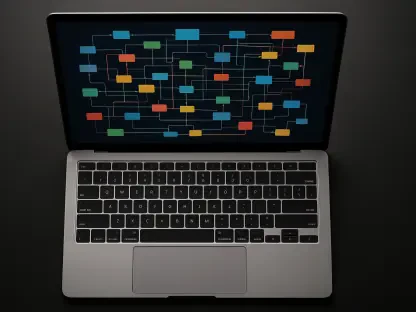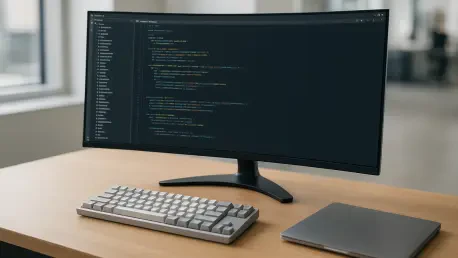

The proprietary Blocks compiler simplifies the build process by allowing developers to stack processors like Sass, TypeScript, and Tailwind without manual configuration. This innovation marks a significant departure from the days when setting up a local environment for a simple project felt like an insurmountable hurdle for beginners and a tedious chore for seasoned engineers. In the current landscape of 2026, the demand for immediacy in web development has pushed browser-based tools to evolve beyond simple code sandboxes. For over a decade, developers utilized these platforms primarily to showcase isolated CSS animations or minor JavaScript snippets, yet modern requirements demand a more comprehensive ecosystem. CodePen 2.0 addresses this shift by introducing a professional, file-based architecture that mirrors the complexity of local integrated development environments. This transition moves the platform beyond its identity as a playground into a production-ready workspace for professionals who require speed without sacrificing power.
Harmonizing the Editing Experience: Unified Development Workspaces
Streamlining the workflow within a unified environment is a cornerstone of this new architecture, effectively eliminating the friction that once existed between disparate editing modes. In previous iterations, users were often forced to navigate a fragmented interface, selecting specific editors for basic pens, complex projects, or framework-specific setups like those required for Vue or React components. The new system merges these separate workflows into a single, cohesive interface that treats every project with a high level of professional rigor. By removing these artificial barriers, the platform allows for a more fluid transition between different stages of the development cycle. A developer can start with a simple layout and gradually introduce more complex logic without ever needing to restart the project in a different environment or export code. This level of continuity is essential for modern front-end engineers who must balance rapid iteration with the need for a stable and predictable coding environment.
Central to this streamlined experience is the introduction of a true file system, which supports complex directory structures and the creation of multi-page applications. This structural change is significant because it allows a project to scale naturally from a quick user interface demo into a comprehensive, multi-layered website. In the earlier years of the platform, developers were often limited by a flat structure that made it difficult to manage large amounts of code or assets effectively. Now, with the ability to organize files into folders and link them logically, the platform provides the same organizational power as a local development machine. This capability means that the necessity to export code to a local editor has been significantly reduced, empowering developers to build sophisticated architectures entirely within the browser. It ensures that the transition from a prototype to a full application is smoother than ever before, fostering a more professional approach to browser-based web development and design.
Bridging the Gap: From Prototyping Sandbox to Production Hosting
One of the most disruptive additions to the platform is the introduction of one-click deployment and integrated hosting, which fundamentally changes how code is shared and viewed. CodePen is no longer just a place to write code; it now functions as a lightweight hosting service where users can launch projects to live subdomains or custom domains with minimal effort. This capability effectively removes the traditional hurdles of server configuration and manual build pipelines that often slow down the final stages of a project. When a developer saves their work, the updates can happen automatically on the live site, providing an immediate feedback loop that is invaluable for testing and professional presentations. This shift aligns the platform with the modern industry trend of abstracted infrastructure, where the underlying server logic is hidden to improve efficiency. Consequently, front-end developers can focus entirely on the user interface and experience without worrying about the complexities of cloud hosting.
To support its focus on production-grade output, the platform has introduced high-end utilities that mirror the most effective professional workflows. Beyond the proprietary compiler, the addition of version history provides a safety net that was previously missing from many web-based development experiences. This feature allows users to track changes over time and revert to previous states if an experiment goes wrong, bringing a level of version control typical of local repositories to the cloud. Furthermore, real-time collaboration features have transformed the editor into a shared space where multiple developers can work in the same file system simultaneously. This is not just a cosmetic update; it fundamentally changes the dynamics of team brainstorming and pair programming. By allowing engineers to see each other’s changes in real-time, the platform fosters a more interactive and social coding environment that is ideal for both professional collaboration and modern computer science education.
The Strategic Shift: Navigating Cloud-Based Environments and Security
The transformation of the platform reflects a broader industry movement toward cloud-based development environments that aim to solve the age-old problem of environment consistency. As more software development shifts into the browser, tools like this aim to eliminate the common issues where code works on one machine but not another by standardizing the stack in the cloud. When every developer on a team is working within the same virtualized environment, the discrepancies caused by different operating systems or local configurations disappear. This standardization speeds up the onboarding process and ensures that the final product behaves predictably across different stages of development. However, the ease of deployment brings new challenges for corporate security and IT oversight. While engineers gain speed and flexibility, IT departments must manage shadow infrastructure to ensure that quick deployments do not become unmonitored security risks, requiring a balance between creative freedom and organizational safety.
Interestingly, the platform launched this major update without native AI coding assistants, prioritizing human-centric learning over automated generation. To capitalize on these advancements, developers adopted a more structured approach to their browser-based projects, treating them with the same technical rigor as local repositories. They audited their current workflows to identify which components of their production pipeline could be migrated to the cloud to reduce local overhead. Engineers also prioritized the setup of team-wide standards for directory structures to make the most of the new collaborative features. Organizations recognized the need to establish clear security protocols for cloud-based deployment to mitigate risks associated with unmonitored infrastructure. By integrating these tools into broader development strategies, teams realized significant gains in speed during the prototyping phase. Ultimately, the industry moved toward a hybrid model where the browser served as the primary interface for rapid iteration and professional growth.