
The very applications designed to bring businesses closer to their customers are now serving as the primary gateways for cybercriminals to exploit them, creating a dangerous chasm between user trust and corporate security. In an economy where mobile interaction is not just an option but the standard, this growing vulnerability threatens the core of modern commerce. Organizations that fail to secure their mobile applications are no longer just risking data breaches; they are risking their customer relationships, brand reputation, and financial stability.
The New Battlefield: Why Mobile Apps Are the Front Line for Cyber Attacks
The global economy has firmly transitioned to a mobile-first model, where the primary point of contact between a business and its customer is an application on a smartphone. This shift, while creating unprecedented opportunities for engagement and commerce, has also introduced a new and highly vulnerable front in the cybersecurity war. Unlike traditional web applications that operate within a controlled server environment, mobile apps exist “in the wild” on millions of diverse and often unsecured devices, making them prime targets for malicious actors.
This environment has created a significant “client-side trust gap.” Traditional security architectures were built to protect the server, treating the network perimeter as the main line of defense. However, with mobile apps, the most critical interactions and data processing often happen on the client side—the user’s device itself. Security teams are discovering that their established tools and assumptions are inadequate for protecting applications operating far beyond their direct control.
Consequently, mobile applications have become a primary attack surface for modern enterprises. Attackers are increasingly bypassing heavily fortified servers and instead targeting the app itself to reverse-engineer code, tamper with functionality, steal sensitive data, and gain access to backend systems. This makes the security of the mobile app not just a technical concern but a fundamental business imperative.
Alarming Trends and Their Tangible Business Impact
The Anatomy of a Modern Mobile Security Failure
The strategic focus of cyberattacks has pivoted decisively from the server-side to the client-side. Attackers have recognized that it is often easier to compromise a single mobile application running on an end-user’s device than to breach a hardened corporate data center. This approach allows them to exploit vulnerabilities inherent in the app’s code or its operating environment, effectively turning a company’s own software into a weapon against it.
This shift has a direct and immediate impact on consumer behavior. When a security incident occurs, the consequences are not just technical; they are deeply personal for the user. A recent analysis reveals that 65% of companies experienced significant customer churn or a wave of app uninstalls following a security failure. In the eyes of the consumer, the brand is responsible for the app’s safety, and a breach of that trust often leads to a swift and permanent departure.
Much of this vulnerability stems from an over-reliance on outdated security models that place undue faith in the underlying operating system. While mobile operating systems provide a baseline of security, they are not designed to protect individual applications from dedicated, sophisticated attacks. Attackers routinely find ways to bypass OS-level protections, making any security strategy that depends solely on them fundamentally flawed.
By the Numbers: Quantifying the Mobile Security Crisis
The scale of this issue is no longer theoretical. The data indicates a widespread and urgent problem, with a staggering 72% of organizations reporting at least one mobile app security incident within the past year. This figure suggests that mobile security breaches are not an outlier event but a common operational reality for the majority of businesses with a mobile presence.
The link between these security failures and negative business outcomes is undeniable. As previously noted, nearly two-thirds of affected companies reported losing customers as a direct result of these incidents. This statistic translates abstract security risks into concrete commercial damage, demonstrating that inadequate app protection directly impacts user retention and loyalty.
Without proactive intervention, the associated costs are projected to escalate significantly. The financial impact extends beyond immediate remediation efforts to include regulatory fines, lost revenue, and the high cost of winning back lost customers. Moreover, the reputational damage can be even more lasting, eroding brand equity that may have taken years to build.
The Twin Pressures Undermining App Security
Racing to Market: How Development Speed Creates Exploitable Flaws
In the hyper-competitive digital landscape, speed is paramount. An overwhelming 79% of development teams cite the immense pressure for rapid time-to-market as the primary barrier to implementing robust security measures. The relentless demand for new features and updates forces teams into a cycle where security becomes a secondary concern, often deferred in favor of meeting tight deadlines.
This dynamic creates a difficult trade-off for development teams. They are often forced to choose between launching a new feature on schedule and conducting thorough security testing and code hardening. In this high-stakes race, security is frequently the element that is compromised, leading to the release of applications with exploitable flaws that could have been identified and mitigated with more time and resources.
The AI Conundrum: When Coding Assistants Introduce New Risks
The drive for efficiency has led to the widespread adoption of AI-assisted coding tools, with 96% of developers now using them to accelerate their workflows. These tools can significantly boost productivity by autocompleting code, suggesting logic, and even writing entire functions. However, this reliance on AI introduces a new and complex layer of risk.
The emerging threat lies in the code these AI assistants generate. While often functional, it can contain subtle, novel vulnerabilities that are difficult for human developers or traditional scanning tools to detect. This concern is not merely speculative; 81% of developers agree that AI-generated code has already created new security gaps in their applications, presenting a new challenge for security teams to address.
Shifting the Paradigm: The New Industry Standard for App Protection
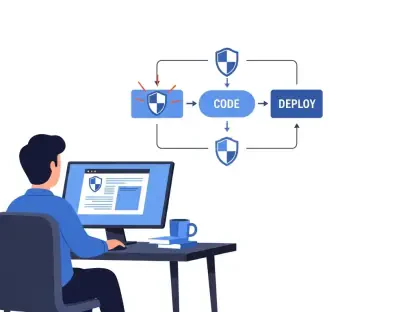
In response to these escalating threats, a powerful industry consensus is forming. An overwhelming 91% of technology leaders and security professionals now agree that the only viable path forward is to integrate security throughout the entire software development lifecycle (SDLC). This represents a fundamental shift away from treating security as a final, pre-release checkpoint and toward making it an intrinsic part of the creation process.
This modern, proactive security posture is built on the principle of continuous protection. It involves implementing security considerations at every stage, from initial design and coding to testing, deployment, and post-release monitoring. By embedding security into the development workflow, teams can identify and remediate vulnerabilities early, when they are easier and less costly to fix.
The effectiveness of this approach is validated by real-world results. Among organizations that have adopted a multi-layered protection strategy—combining static, dynamic, and interactive security measures—96% report a significant reduction in security incidents. This data provides clear evidence that a comprehensive, integrated security framework is the most effective way to defend against modern mobile threats.
The Blueprint for a Secure Future: Integrated and Automated Defense
A next-generation mobile security strategy is not reliant on a single tool but is composed of several interconnected layers of defense. This holistic approach ensures that if one layer is bypassed, others are in place to detect and thwart an attack. The core components include robust code protection, comprehensive testing, and real-time threat monitoring.
The synergy between these components is critical. Automated testing integrated into the CI/CD pipeline catches vulnerabilities before they ever reach production. Code protection, including obfuscation and anti-tampering technologies, shields the application from reverse engineering once it is deployed on user devices. Finally, runtime application self-protection (RASP) provides a crucial layer of defense that can detect and respond to active attacks as they happen.
Ultimately, a static defense is a losing strategy. The threat landscape is constantly evolving, with attackers developing new techniques every day. Therefore, continuous threat monitoring is an essential element of any modern security plan. This involves actively gathering intelligence on emerging threats and updating protective measures accordingly, ensuring the application remains resilient against both known and unknown attack vectors.
Closing the Gap: From Acknowledging Risk to Building Resilience
Bridging the client-side trust gap is no longer a strategic option but a critical necessity for protecting revenue and preserving brand reputation in the mobile-first era. The evidence showed that failing to secure the primary channel of customer interaction leads to direct financial and reputational harm. Acknowledging this risk is the first step toward building a more resilient and trustworthy mobile presence.
The path forward required implementing a comprehensive, layered security strategy that is integrated directly into the development lifecycle. By combining automated testing with advanced code protection and runtime defenses, organizations could secure their applications without sacrificing the development velocity needed to compete. This approach transforms security from a roadblock into an enabler of safe, rapid innovation.
Ultimately, prioritizing mobile application security yielded significant long-term business advantages. It not only protected the organization from immediate threats but also built a foundation of trust with customers, fostered brand loyalty, and created a sustainable competitive advantage in an increasingly security-conscious marketplace.