
Professional software engineering is currently undergoing a radical transformation as the industry attempts to reconcile the explosive growth of generative coding tools with the stagnating delivery speeds often referred to as the AI productivity gap. While individual developers are generating more lines of code than ever before, the overall throughput of engineering organizations has not seen a proportional increase. This discrepancy arises because the act of writing syntax is only a small fraction of the software development lifecycle. The missing link is context, which transforms isolated code generation into a coherent, architecturally sound system. This review evaluates the emergence of AI-native environments designed to bridge this gap by integrating artificial intelligence directly into the organizational fabric of modern development teams.
The Evolution of the AI-Native Software Development Lifecycle
The transition toward an AI-native development lifecycle marks a departure from the era of simple code completion toward a paradigm of agentic collaboration. Initially, artificial intelligence served as a glorified version of “find and replace” or a more sophisticated autocomplete function. However, the current landscape has shifted as teams realize that “more code” does not equate to “better products.” The industry has witnessed a significant trend where tool adoption among developers increased by over 60%, yet actual team velocity only nudged forward by a small fraction. This realization pushed the development of systems that treat AI not just as a tool for the individual, but as a participant in the collective workflow of the entire engineering team.
This evolution is defined by the move toward shared situational awareness. In a traditional setup, an engineer spends a large portion of their day researching technical debt, reading old documentation, and attending meetings to understand the requirements of a task. The AI-native approach seeks to automate this cognitive overhead. By moving from disconnected AI bots to integrated environments, organizations are attempting to create a “legible” development process where every decision is documented and accessible to both humans and machine agents. This shift is essential for reducing the “unwinding” process, where senior engineers must spend hours fixing the architecturally misaligned outputs of generic AI models.
Architectural Foundations and Core Components
The Teamwork Graph: Contextual Intelligence at Scale
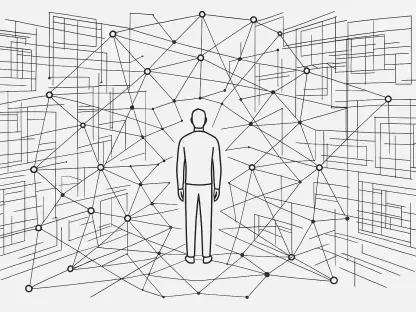
At the center of any successful AI-native implementation lies a sophisticated context layer often referred to as a teamwork graph. This component functions as the institutional memory of an organization, mapping the intricate relationships between task descriptions, historical pull requests, Slack discussions, and technical documentation. Unlike a standard large language model that only knows what it was trained on during a specific snapshot of time, a teamwork graph provides real-time access to the “why” and “how” of a specific project. This creates a significant competitive advantage because it allows AI agents to make decisions based on the current state of a specific codebase rather than general programming patterns.
The technical impact of such a component is measurable and profound. Internal benchmarks indicate that when agents are fed high-quality context from a centralized graph, their accuracy in solving complex bugs increases by nearly 50%. Simultaneously, because the agent does not have to search blindly through thousands of irrelevant files, the consumption of computational tokens is drastically reduced. For the enterprise, this means that the intelligence is no longer siloed in the minds of a few senior developers or buried in unread documentation. Instead, the knowledge is digitized and active, serving as a foundational pillar that enables agents to act with the same level of discernment as a human colleague.
Structured Intent and Spec-Driven Development
One of the most innovative features of the AI-native shift is the move toward structured intent, which replaces vague natural language prompts with machine-ready technical specifications. In the past, a developer might give an AI a simple command to “build a login page,” leading to generic and often insecure results. In an AI-native environment, the system utilizes “spec-driven development” to translate business requirements from product discovery tools directly into structured documentation. This ensures that when an agent begins work, it is already constrained by the specific architectural standards and security protocols of the organization.
This structured approach solves the problem of “hallucination” by providing a rigid framework within which the AI must operate. By making the technical intent clear before a single line of code is written, the development lifecycle becomes more predictable. Engineers shift their focus toward defining these specifications and reviewing the output, rather than getting bogged down in the syntax itself. This component differentiates the AI-native environment from a mere “coding bot” by turning the AI into a collaborator that understands the strategic boundaries of the work it is performing.
Innovations in Agentic Workflows and Industry Trends
The industry is currently moving away from isolated AI interactions toward what is known as observable autonomy. In this model, the actions of an AI agent are no longer hidden in a local development environment but are fully visible within a central system of record. This trend reflects a growing need for governance as teams scale their use of autonomous agents. Managers and lead engineers can now monitor agent sessions in real-time, seeing exactly which tasks are being worked on, which agents are stuck, and which require human intervention. This transparency is crucial for maintaining trust in a system where machines are making significant changes to production code.
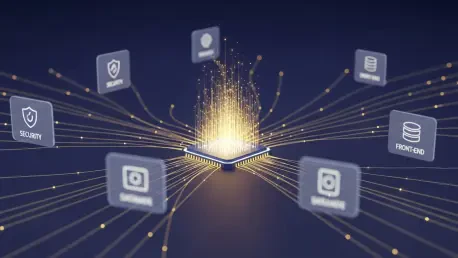
Furthermore, there is an increasing trend toward multi-agent orchestration. Rather than relying on a single model for every task, engineering teams are utilizing a diverse range of specialized agents—some optimized for security audits, others for front-end development, and others for database migration. These agents are coordinated through a unified interface that ensures consistency across the workflow. This shift in engineering culture redefines the role of the developer. The modern engineer is increasingly becoming a director of a digital workforce, responsible for the orchestration and quality control of multiple AI entities working in parallel toward a common goal.
Real-World Applications and Agentic Implementations
Automated Routine Maintenance and Bug Remediation
One of the most practical applications of this technology is the delegation of routine maintenance and “toil” to specialized coding agents. These agents are particularly adept at handling repetitive but essential tasks such as updating library versions, patching low-level vulnerabilities, and synchronizing documentation with the current codebase. In a traditional environment, these chores often accumulate as technical debt because they are less exciting for human engineers than building new features. An AI-native system, however, can automatically route these tasks to an agent as soon as a vulnerability is detected or a new update is released.
This implementation allows engineering teams to maintain a high level of code quality without sacrificing innovation. By automating the remediation of bugs, the time between the discovery of an issue and the submission of a pull request is reduced from days to minutes. This speed is not just a convenience; it is a critical security enhancement. Because the agent has access to the full context of the teamwork graph, it can ensure that a fix in one part of the system does not inadvertently break another, a feat that generic automation tools often struggle to achieve.
Integrated Communication and Multimedia Prompting
The integration of non-textual communication into the development process represents another significant leap in utility. Leading implementations now allow developers to record a brief video or capture a screen-sharing session to explain a complex problem or a desired feature. The AI-native system then parses the audio and visual data, converting it into a structured action plan. This bypasses the traditional bottleneck of writing long, detailed tickets that are often misinterpreted. By capturing the nuance of human speech and visual cues, the AI gains a richer understanding of the developer’s intent.
Moreover, the synchronization of these insights across communication platforms like Slack or Microsoft Teams ensures that the context is never lost. When a team discusses a technical challenge in a chat thread, the system can automatically update the relevant project task and provide that new information to the active agents. This real-time synchronization prevents the fragmentation of information that usually plagues large software projects. It ensures that the agent is always working with the most current set of instructions, reflecting the dynamic nature of human collaboration.
Navigating Technical Hurdles and Market Obstacles
Despite the optimism surrounding AI-native development, several significant hurdles remain that organizations must navigate with caution. The most prominent challenge is the risk of “code bloat” and the degradation of architectural integrity. When agents generate code too quickly, there is a temptation to accept pull requests without the same level of scrutiny applied to human-written code. If left unchecked, this can lead to a bloated codebase that is difficult to maintain and troubleshoot. Organizations must implement strict governance and “human-in-the-loop” protocols to ensure that the speed of AI does not compromise the long-term health of the software.
Economically, the management of AI costs presents another obstacle. The “cost per pull request” is becoming a new metric for engineering leaders to monitor, as the use of high-end models and large context windows can quickly inflate operational budgets. Balancing the gains in velocity against the expenditure on tokens requires a strategic approach to model selection and context management. Furthermore, there is the social challenge of team morale. Engineers may feel a sense of “review fatigue” if their role shifts too far toward purely checking the work of others. Maintaining a balance between human creativity and AI execution is essential for a healthy engineering culture.
The Future Outlook of Human-AI Orchestration
The trajectory of software engineering points toward a future where the entire development lifecycle is “agent-ready” from its inception. We are moving toward a state of autonomous governance, where systems will not only execute code but also predict where technical debt is likely to accumulate and suggest preemptive remediations. These systems will likely become more proactive, identifying potential bottlenecks in a project plan before they even occur. This predictive capability will be fueled by the continued growth of the teamwork graph, which will eventually include predictive modeling of team performance and project timelines.
Long-term, the synergy between human judgment and AI execution will likely redefine the very economics of software production. As the cost of generating high-quality code drops, the value of a software engineer will shift entirely toward problem definition and architectural oversight. The boundaries between different phases of the lifecycle—planning, coding, testing, and deployment—will continue to blur as integrated agents handle the transitions between them. This seamless environment will allow for a level of agility that was previously impossible, enabling organizations to respond to market changes and user feedback with unprecedented speed.
Final Assessment of the AI-Native Landscape
The evaluation of the current AI-native software development landscape revealed that the integration of contextual intelligence was the primary factor in overcoming the productivity gap. The review found that systems utilizing centralized knowledge graphs and structured intent protocols performed significantly better than those relying on siloed AI assistants. It was clear that the role of the engineer evolved from a focus on syntax to a focus on orchestration, which demanded a new set of skills in review and governance. The evidence suggested that while technical hurdles regarding code quality and token costs persisted, the strategic advantages of observable autonomy outweighed the risks for most large-scale organizations.
Ultimately, the transition toward AI-native environments proved to be an inevitable step in the maturation of digital engineering. The technology demonstrated a remarkable ability to amplify human judgment rather than replace it, provided that the necessary infrastructure for context and visibility was in place. The assessment concluded that the most successful teams were those that embraced the shift toward spec-driven development and utilized agents for routine maintenance. As these systems continued to refine their predictive capabilities, the gap between business intent and final execution narrowed significantly. The move toward a more integrated, agent-ready software development lifecycle was determined to be the definitive path forward for the industry.