
A flood of new mobile apps has arrived with unusual speed and scope, a break from years of drift that now puts Apple’s and Google’s stores under measurable stress as creators wield AI assistants to plan, code, test, and ship in days rather than months. The renewed momentum is unmistakable in Q1 data and in the lived cadence of releases, patch notes, and fast-follow updates.
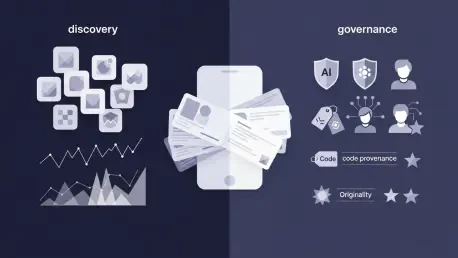
The industry sits at a hinge moment: tooling has democratized creation, yet governance, discovery, and safety guardrails remain anchored to earlier volumes. That mismatch is where opportunity and risk now collide.
A Reawakened App Economy: Scope, Stakeholders, and Why 2026 Matters
After a plateau, submissions rose sharply in Q1, signaling a true reawakening rather than a seasonal blip. Consumer utilities, productivity, indie games, niche social, education, and AI companions led the charge, often from small teams.
AI coding assistants such as Copilot, ChatGPT, Cursor, Replit, and v0, alongside AI-native IDEs, low-code platforms, and API backends, compressed build cycles. Apple and Google, AI vendors, indie makers, and scaled publishers all felt new pressure on reviews, rankings, curation, and monetization, especially under DMA, DSA, U.S. antitrust, GDPR/CCPA, and child-safety rules.
Evidence of a Shift: Trends, Behavior, and the Data Trajectory
Submission momentum aligned with mainstream AI tool adoption, as Appfigures flagged the strongest rise since the early 2010s. The signal matched observed behavior: faster version cadence, more first-time developer accounts, and brisker resubmissions after fixes.
The pattern pointed to correlation rather than simple causation. Yet the concurrence of tools, tutorials, and cheaper cloud backends formed a coherent explanation for scale and speed.
AI-Native Workflows Redefine App Creation, From Idea to Ship
Workflows now span ideation, scaffolding, refactoring, debugging, and UI guidance, not mere autocomplete. Solo builders and micro-teams iterate rapidly and reuse code across platforms without exotic expertise.
Lower friction opened long-tail niches, localized experiences, and mobile micro-SaaS, while on-device personalization improved utility. Practitioners, however, warned of derivative clones, prompt-injected anti-patterns, performance debt, and design sameness.
By the Numbers: Q1 2026 Surge and Forward Indicators
Q1 showed the steepest submission climb in years; time-to-market shortened and updates landed more frequently. Discovery signals strained under keyword collisions and chart volatility, and review/appeal volumes climbed.
If tooling matures and review scales, growth could hold; if policies tighten or discovery worsens, a plateau looms. Watch review backlogs, automated rejection rates, clone prevalence, retention, and ARPU.
Friction Points at Scale: Discovery, Quality, and Operational Load
Ranking noise rose as near-duplicates multiplied, nudging platforms toward originality-weighted algorithms and richer editorial taxonomies. Without that, high-quality apps risked burial beneath competent lookalikes.
AI-generated code often passed checks while hiding inefficiencies, accessibility gaps, or fragile architectures. Security scanning faced more latent vulnerabilities and supply-chain risks, as human reviewers juggled volume and nuance.
Rulebooks in Motion: Antitrust, Privacy, and Safety Shape the Playbook
DMA compliance, alternative payments, and ranking neutrality put pressure on default policies. Privacy enforcement across GDPR/CCPA, ATT, and training disclosures tightened expectations for user data and model inputs.
Child-safety rules demanded age gates, CSA detection, and moderation for generative content. Platforms explored SDK attestations, SBOM-style transparency, and AI-code risk disclosures, moving policy from prose to proof.
The Road Ahead: Platform Strategy, User Expectations, and New Growth Vectors
Hybrid review that blends AI triage with expert human judgment emerged as the scalable path. Listings began to surface trust signals and code provenance, while rankings weighed utility and originality over keyword density.
Users welcomed rapid iteration but rejected spammy UX, privacy creep, and sluggish performance. Competitive differentiation hinged on policy clarity, developer tooling, on-device AI, and revenue terms, as multimodal UI and cross-platform engines raised the bar.
From Surge to Sustainability: Findings, Risks, and Actionable Recommendations
The core finding was clear: AI assistants rewired development economics and coincided with a major submission upswing. Bottlenecks in discovery, code quality, and safety intensified, demanding new mitigations.
Platforms were advised to adopt tiered reviews for new or AI-heavy entries, expand automated code scanning, elevate originality signals, and invest in post-launch oversight. Developers benefited from secure prompts, rigorous testing, provenance documentation, and a focus on differentiated value.
Investors and partners prioritized tooling for security, discovery optimization, and AI-era analytics, backing teams with moats beyond speed. Taken together, these steps set a path that balanced growth with trust.
The analysis concluded that if governance modernized alongside tooling, the surge translated into durable innovation; if not, volume diluted trust and value. The next moves by Apple and Google set the tone, while disciplined developer practices and smarter discovery determined which apps endured and which faded.