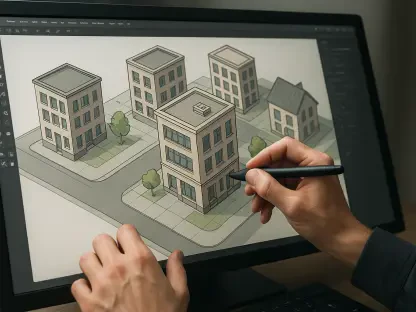

ArtCraft’s development strategy involves replicating the specific interfaces of well-known tools to minimize the learning curve for professionals who are accustomed to Adobe’s environment. This ambitious project, spearheaded by engineer Brandon Thomas, has reached a critical juncture where the demand for high-performance software has finally outpaced the tolerance for restrictive corporate ecosystems and recurring financial commitments. It consists of a comprehensive suite of seven programs designed to mirror the capabilities of industry staples like Photoshop, Premiere, and Lightroom. By utilizing a decentralized, open-source framework, the initiative addresses the growing need for professional-grade tools that operate independently of expensive monthly subscriptions. This shift signifies a broader trend where independent developers leverage sophisticated automation to provide the same level of utility previously reserved for massive software firms. Through meticulous design, the project bridges the gap between free software and premium tools.
Disrupting the Subscription Economy: The Shift Toward User Ownership
A significant motivator for the inception of this initiative was the widespread discontent surrounding the “Software as a Service” model, which many creators argue has become increasingly predatory. Brandon Thomas, a veteran software engineer with fifteen years of experience in robotics and optics automation, specifically identified the “cancellation fee trap” as a primary reason for developing a viable alternative. By offering the ArtCraft suite for free on GitHub, the project seeks to dismantle the barriers imposed by recurring monthly costs and return the ownership of creative tools to the artists themselves. This philosophical shift toward user autonomy is central to the project’s identity, positioning it as a direct retort to corporate practices that prioritize shareholder profits over the financial well-being of the creative workforce. Consequently, the movement has gained rapid momentum among professionals who feel alienated by current market leaders. The goal was to create a sustainable ecosystem where high-level creativity is not gated by subscription fees.
The technical architecture of the suite represents a significant advancement in software engineering, particularly through the integration of Large Language Models to streamline the coding process. Thomas utilized Anthropic’s Opus 5.5 AI to accelerate the development of complex features, demonstrating how small, agile teams can now produce sophisticated software that traditionally required hundreds of corporate developers. Furthermore, the decision to build the entire suite using the Rust programming language ensures a level of performance and memory safety that is essential for modern high-stakes production environments. This choice is particularly vital for resource-intensive operations such as 4K video rendering and high-resolution photo editing, where stability and speed are non-negotiable. By combining cutting-edge AI assistance with the efficiency of Rust, ArtCraft provides a high-performance creative environment that challenges the technical superiority of proprietary solutions. This synthesis of modern tools allows the project to maintain a rapid development cycle.
Strategic Viability: Feature Parity and Future Legal Challenges
A defining characteristic that sets this initiative apart from previous open-source endeavors is its commitment to achieving one hundred percent feature parity with flagship products like Photoshop and Premiere. ArtCraft was designed to minimize friction by offering specialized modules such as PhotoCraft and FilmCraft, which replicate established professional workflows to ensure that seasoned editors can transition between platforms without losing productivity. This strategic focus on familiarity addresses a major hurdle in software adoption, as many professionals are hesitant to abandon tools they have mastered over decades. Furthermore, the project addresses long-standing gaps in platform availability by providing native support for the Linux operating system, a community that has historically been underserved by major proprietary providers. By fostering an inclusive environment that supports macOS, Windows, and Linux equally, the initiative promotes a more democratic landscape for digital artistry, allowing talent to thrive regardless of hardware choice.
As the initiative transitioned into a broader operational stage, the complexities of navigating a landscape dominated by proprietary patents became a primary focus for the development team. While the core software remained accessible to the public, the project successfully introduced a hybrid funding model utilizing “AI credits” to ensure the long-term sustainability of high-end machine learning integrations. This strategy balanced open-source principles with the practical need for financial resources to support ongoing innovation from 2026 to 2028. Ultimately, the suite proved that independent developers could successfully challenge market dominance by prioritizing performance and user needs over corporate profit structures. Moving forward, the project demonstrated that establishing transparent development roadmaps was the most effective way to maintain professional trust and ensure the viability of alternative digital tools. This progression established a new precedent for how independent software engineering could influence the trajectory of global creative industries.