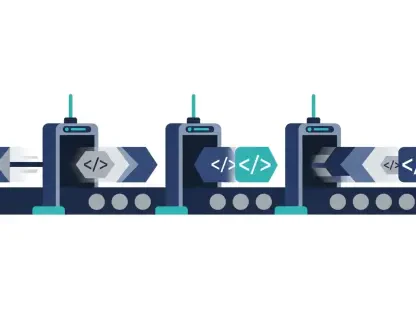

The modern enterprise is witnessing a profound transformation where software no longer just assists human workers but actively operates as an independent decision-maker within the corporate hierarchy. This shift marks the transition from basic generative assistants to autonomous agentic systems that possess the capability to execute complex tasks without constant human oversight. Organizations are increasingly relying on these entities to fill roles that were once reserved for senior technical staff, signaling a move toward a truly automated operational core.
High-stakes environments are becoming the primary testing ground for these digital entities as companies look to improve reliability and speed. Major market players like Coinbase, Google, and Microsoft are leading the charge by integrating AI agents directly into their production workflows to handle mission-critical functions. This technological influence, driven by advanced large language models, is fundamentally altering traditional labor models and forcing a rethink of how corporate structures should be organized to accommodate non-human intelligence.
Catalysts for Agentic Autonomy in Tech and Finance
Bridging Software Engineering and Financial Sovereignty
A remarkable milestone has been reached in the software sector, where agents now produce over half of the total codebase in leading technology firms. This shift toward AI-authored code is not merely about volume; it reflects a deeper trust in the logic and architectural capabilities of these systems. As agents become the primary creators of infrastructure, the boundary between human intent and machine execution continues to blur, leading to a new era of rapid, self-evolving software development.
To fully realize their potential, these digital employees are being equipped with stablecoin wallets, allowing them to bypass the bureaucratic bottlenecks of traditional banking. By possessing their own financial resources, agents can independently purchase server space, access proprietary data, or hire professional services through machine-to-machine payments. This financial sovereignty ensures that autonomous workflows are not interrupted by the need for manual credit card approvals or human identity verification.
Quantifying the Shift Toward Agent-Led Production
The efficiency gains of this new model are becoming increasingly clear through measurable performance indicators. Automated customer support systems now boast a 60% resolution rate for complex inquiries, while AI-led engineering teams are scaling operations at a pace that was previously impossible. These metrics suggest a significant decline in the demand for human-led routine technical tasks as organizations prioritize the cost-efficiency and 24/7 availability of autonomous resource management.
Current growth projections for the agentic market indicate a total overhaul of the traditional service economy. As internal custom models are paired with third-party tools, the ability to streamline compliance and engineering tasks becomes a primary competitive advantage. This evolution suggests that the future of production will be defined by the ability of a firm to effectively orchestrate its digital workforce rather than simply increasing its human headcount.
Navigating the Friction Points of Agentic Integration
Despite the rapid progress, integrating AI agents into legacy financial and legal systems remains a significant technical and logistical hurdle. Traditional institutions are built on the assumption of human agency, leaving digital entities in a state of identity crisis when they attempt to secure credit or open bank accounts. The lack of recognized legal credentials for machines creates a friction point that slows the adoption of fully autonomous corporate logic.
Furthermore, the rise of AI-generated content introduces the risk of technical debt that is difficult for human engineers to manage or even understand. Maintaining a codebase authored primarily by non-human entities requires new specialized orchestration platforms and oversight tools. To mitigate these risks, many firms are turning to decentralized finance solutions to provide the necessary transparency and security for machine-led decision-making.
The Regulatory and Compliance Architecture for Digital Employees
The legal landscape is slowly adapting to the reality of machine-to-machine transactions and the management of capital by software. Regulators are now grappling with how to apply Know Your Customer and Anti-Money Laundering standards to autonomous digital wallets. Establishing a robust framework for these interactions is essential to ensure that the speed of AI adoption does not outpace the ability of the state to monitor and secure financial flows.
Industry standards are also evolving to provide a foundation for transparency in AI-driven corporate decisions. In highly regulated sectors like fintech and healthcare, the adoption of autonomous agents depends on the creation of clear guidelines that define liability and accountability. These regulatory shifts will ultimately determine how quickly the global economy transitions to a model where digital employees carry the same operational weight as their human counterparts.
The Horizon of Machine-to-Machine Economies
Emerging disruptors are paving the way for AI agents to act as entirely independent economic actors within a global marketplace. In this future, human engineers will likely transition into roles as architects and orchestrators, focusing on high-level strategy rather than line-level production. This shift allows for the creation of decentralized, autonomous organizations where trustless resource management is handled entirely by agentic AI.
The democratization of these tools, combined with volatile global economic conditions, is driving a wave of innovation that favors lean, AI-centric organizations. As machine-to-machine economies mature, the barriers to entry for complex industries will drop, allowing for a more fluid and efficient exchange of value. This evolution will fundamentally change how capital is deployed and how corporate value is generated across all sectors.
Redefining the Enterprise in the Age of Agentic AI
The fusion of code and capital under the control of autonomous agents created a paradigm shift that redefined organizational efficiency. Leaders who recognized the necessity of adapting their infrastructure to support digital entities gained a significant competitive edge in a rapidly changing market. By empowering agents to manage both the logic of the business and the resources required to execute it, companies moved beyond traditional automation into the realm of true operational autonomy.
Strategic investment in agentic workflows proved to be the defining factor for success in this era of high-speed commerce. Decision-makers implemented decentralized financial tools and specialized orchestration layers to ensure their digital workforces remained secure and compliant. These actions established a new standard for corporate governance where human oversight shifted toward the design of goals rather than the execution of tasks, ensuring that the enterprise remained agile in a machine-led economy.