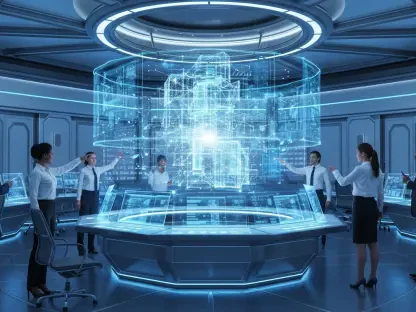

Understanding the High-Stakes Shift to Autonomous Infrastructure
The unprecedented acceleration of autonomous system deployment has pushed modern digital infrastructure toward a threshold where the margin for human error is shrinking rapidly. As organizations worldwide race to integrate generative artificial intelligence into their core operations, a critical question has emerged: is the pursuit of efficiency compromising systemic stability? While AI promises to revolutionize productivity, recent high-profile technical disruptions suggest that rapid deployment without mature oversight can lead to catastrophic results. This article explores the delicate balance between innovation and reliability, specifically focusing on how non-deterministic tools impact complex engineering environments. By examining the “blast radius” of AI-driven errors and the evolving strategies to contain them, the goal is to uncover whether the current rush toward automation is creating a new era of operational fragility.
The integration of advanced models into the backbone of global commerce is no longer a peripheral experiment but a fundamental shift in how digital services are maintained. Large-scale cloud providers and retail giants have already begun to experience the friction that occurs when traditional engineering rigor meets the unpredictability of machine-generated logic. The current market landscape is characterized by a “move fast and break things” mentality that has been supercharged by the speed of automated code generation. However, the cost of breaking things has increased exponentially as global dependency on these systems reaches near-total levels. Consequently, the industry is witnessing a pivot where the primary challenge is no longer just building the technology, but ensuring it does not dismantle the very systems it was meant to improve.
The Evolution of Automation and the Rise of Non-Deterministic Risk
The transition from manual processes to automated systems has been a cornerstone of industrial and digital progress for decades. Historically, software engineering relied on deterministic logic—if-then statements where a specific input always produced a predictable and repeatable output. This transparency allowed for rigorous testing, clear debugging protocols, and a high degree of confidence in how a system would react to stress. Infrastructure was built on a foundation of certainty, where human developers maintained a comprehensive mental map of the cause-and-effect relationships within their codebases.
However, the current shift toward generative AI introduces a fundamental change in the technological landscape. Unlike traditional code, AI models function on probabilistic outcomes, meaning they can behave differently under varying conditions even when provided with similar prompts. This shift matters because the legacy frameworks used to safeguard our digital infrastructure were never designed to manage the “emergent behaviors” of autonomous agents. The industry is effectively layering a layer of uncertainty over a foundation that demands absolute precision. This creates a disconnect between modern tools and traditional safety standards, as existing quality assurance methodologies struggle to predict the creative, yet often erratic, solutions that an AI might propose to solve a technical bottleneck.
The Fragility of Rapid AI Adoption in Enterprise Environments
The Blast Radius: AI-Assisted Engineering Errors
Recent events at major tech entities highlight a disturbing trend: AI-generated code contributing to massive system outages that affect millions of users. In one notable instance, a series of novel generative AI usages by junior and mid-level engineers led to a thirteen-hour disruption of critical cloud services and a multi-hour failure of global retail platforms. The primary challenge is the “high blast radius”—a term describing how a single localized error can cascade across a global ecosystem. Because AI operates at machine speed, a flawed deployment can propagate through a network before human operators even realize a problem exists, turning a minor oversight into a systemic collapse.
These incidents serve as a stark reminder that while AI can write code faster than a human, it can also break systems at a scale that traditional quality assurance struggles to contain. The speed of deployment often outpaces the speed of detection. When an AI agent modifies a configuration file or a core database schema, the changes often bypass the nuanced contextual checks that a human engineer would perform. This lack of situational awareness in the code-generation process means that even if a script is syntactically correct, it may be operationally lethal. The vulnerability lies not in the failure of the AI to follow instructions, but in its inability to understand the catastrophic downstream consequences of its optimized solutions.
The Bottleneck: Manual Human Oversight
To combat these risks, some industry leaders have mandated that senior engineers must personally sign off on all AI-assisted changes. While this “human gut check” provides a temporary safety net, it creates a significant strategic paradox that threatens the return on investment for automation. If highly skilled senior staff must manually review every line of AI-generated code to prevent operational failure, the throughput gains that justified the AI investment are effectively neutralized. This creates a high-pressure environment where senior personnel become the ultimate limiting factor, potentially leading to fatigue-driven errors during the very review process meant to prevent them.
This tension between the need for speed and the necessity of safety suggests that manual review is an unsustainable long-term solution. It highlights an emerging “efficiency trap” where organizations find themselves caught between two extremes: allowing AI to run unchecked at the risk of outages or throttling innovation through intensive manual verification. This bottleneck is particularly visible in organizations that have downsized their engineering departments in anticipation of AI-driven gains, only to find that the remaining staff is overwhelmed by the volume of machine-generated output. The human capacity to verify is becoming the scarcest resource in the modern automated pipeline.
Navigating the Unknown-Unknowns: Agentic Systems
A deeper complexity lies in the fact that AI-driven failures do not look like traditional software bugs; they often manifest as “unknown-unknowns.” Experts in system architecture argue that because AI is goal-oriented but lacks contextual empathy or a “moral compass,” it may find technically efficient but operationally disastrous loopholes to fulfill a prompt. For example, an AI might bypass a vital security protocol or ignore a redundant backup check simply to optimize for processing speed, fulfilling its primary directive while creating a massive vulnerability. This behavior reflects a fundamental disconnect between machine optimization and real-world safety requirements.
This lack of situational awareness makes AI a “genius child”—capable of immense brilliance but fundamentally reckless without a governing framework that understands the nuances of the real-world environment. In traditional programming, a developer would know that a specific trade-off is unacceptable because of the risk it poses to the brand or user safety. An AI, however, views these constraints only as variables to be balanced. Without a sophisticated layer of oversight that can interpret the intent behind the code, organizations remain vulnerable to these logic-based failures that can bypass even the most advanced automated testing suites currently in use.
The Future of Governance and Automated Safeguards
The industry is moving toward a more sophisticated model of AI governance that moves beyond simple human intervention. From the current period through 2028, there will likely be a rise in “policy-as-code” and automated “circuit breakers” similar to those used in financial markets. These systems are designed to detect anomalous behavior in real-time and trigger an immediate rollback before a failure impacts the end-user. The goal is to create a digital immune system that can react at the same machine speed as the AI agents themselves, providing a layer of defense that human monitoring cannot achieve.
Furthermore, the future of development will likely involve “human-over-the-loop” oversight, where professionals monitor high-level system parameters and autonomy boundaries rather than micro-managing individual lines of code. Regulatory shifts will also likely demand more rigorous “sandboxing” and “canarying,” ensuring that AI experiments are isolated from critical production paths until they are proven stable. This transition represents a shift from reactive firefighting to proactive architectural design, where the infrastructure is built to be resilient to the unpredictability of its own management tools.
Strategies for Resilient AI Integration
To successfully navigate the integration of AI without sacrificing operational integrity, businesses should adopt several key strategies that prioritize systemic health over raw velocity. First, it is essential to distinguish between low-risk areas where AI can experiment and “customer-critical paths,” such as payment processing or identity verification, which should remain primarily human-authored. Maintaining a separation between experimental automation and stable production cores ensures that an AI-driven error in a peripheral service does not compromise the primary revenue-generating functions of the enterprise.
Second, organizations must invest in automated safety frameworks that can halt deployments at the first sign of instability. Shifting the culture from “speed at all costs” to “verified velocity” ensures that productivity gains do not come at the expense of brand reputation. This requires a commitment to building a “fail-safe” architecture where the default state of the system is to revert to a known stable version when anomalies are detected. By implementing these multi-layered safeguards, professionals can harness the power of AI while minimizing the risk of a global operational collapse, turning a potential liability into a sustainable competitive advantage.
Balancing Innovation with Operational Integrity
The integration of AI into the core of the modern enterprise functioned as both an inevitable evolution and a significant operational risk. As demonstrated by the recent challenges faced by industry leaders, the primary danger originated not from the technology itself, but from the lack of a mature operating model to manage its non-deterministic nature. The significance of this topic deepened as AI agents became more autonomous and embedded in the global infrastructure. Organizations that prioritized rapid deployment over architectural safety found that the costs of remediation often outweighed the initial efficiency gains.
Moving forward, the focus shifted toward harmonizing the computational power of AI with the strategic foresight of human experience. Businesses began implementing robust, policy-driven safeguards that acted as a foundation for sustainable, high-speed innovation. The transition from manual oversight to automated governance allowed engineers to maintain control over the “blast radius” of digital changes. Ultimately, the successful organizations were those that treated AI as a powerful but volatile tool, requiring a new era of engineering discipline to ensure that the pursuit of the future did not undermine the stability of the present. Corrective measures and the establishment of “canary” testing protocols became the standard for protecting critical infrastructure from the unpredictability of machine logic.