
The rapid expansion of the artificial intelligence sector has transformed what was once a niche pursuit of researchers into an essential utility for the global workforce. While proprietary models such as Anthropic’s Claude have established incredibly high benchmarks for linguistic reasoning and sophisticated coding assistance, the ecosystem has matured to include a wide variety of cost-effective and highly capable alternatives. These emerging tools offer users a chance to sidestep the rigid subscription models and rate limits often associated with premier services, democratizing access to high-tier computational intelligence.
The AI assistant landscape now represents a significant advancement in the broader productivity software industry, moving away from simple text prediction toward complex, context-aware problem-solving. This review explores the current state of these alternatives, examining how they have evolved from basic wrappers into sophisticated environments that rival or even exceed the utility of centralized platforms. By analyzing the intersection of open-source innovation and strategic API management, this article provides a thorough understanding of the current capabilities and the potential future trajectory of the free AI sector.
Evolution of AI Chat and Coding Assistants
The journey of AI assistants has been marked by a transition from simple, retrieval-based chatbots to complex reasoning engines capable of autonomous task execution. In the early stages of this development, users were largely limited to static interfaces that required manual copying and pasting of information. However, the current generation of tools operates on core principles of deep integration and semantic understanding, allowing them to act as true partners in the creative and technical process. This evolution reflects a broader shift in how users perceive and interact with machine intelligence, viewing it less as a novelty and more as a foundational component of modern digital infrastructure.
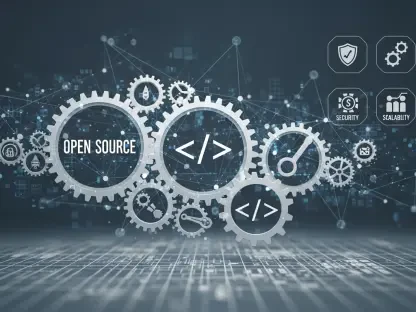
A significant driver of this evolution is the “Bring Your Own Key” (BYOK) movement and the rapid advancement of the open-source community. This shift highlights a critical change in the technological landscape toward user autonomy and decentralization. By decoupling the user interface from the underlying model, these movements have empowered individuals to choose their preferred intelligence provider while maintaining control over their data and expenditures. This decentralization has effectively broken the monopoly of walled-garden ecosystems, fostering a competitive environment where performance and accessibility are the primary metrics of success.
Core Features and Technical Components
Advanced Interface and IDE Integration: Moving Beyond the Browser
Modern alternatives to Claude have largely abandoned the limitations of the web browser in favor of deep integration into Integrated Development Environments (IDEs) like VS Code and terminal-based Command Line Interfaces (CLIs). These tools function as the connective tissue between a developer’s code and the reasoning power of an LLM. By residing within the local environment, these assistants gain the ability to index entire file systems, understand complex dependencies, and provide suggestions that are grounded in the specific context of a project. This move toward environmental integration significantly enhances performance by reducing the friction associated with context switching.
The technical architecture of these integrated tools allows for seamless file manipulation and real-time feedback loops. Instead of providing a block of code for the user to manually insert, these advanced interfaces can propose precise edits, create new files, and even execute shell commands to verify their suggestions. This capability transforms the AI from a distant advisor into an active participant in the workflow. The efficiency gained from this level of integration is a primary reason why many professionals are migrating toward these specialized alternatives, even when a free tier of a major proprietary model is available.
Versatile Model Orchestration: The Power of Choice
A primary feature of contemporary AI systems is the ability to orchestrate and switch between different model providers—such as Google’s Gemini, OpenAI’s GPT-4, or powerful local alternatives like the Qwen and DeepSeek families. This flexibility allows for an in-depth balance between cost, performance characteristics, and the specific requirements of any given task. For instance, a user might employ a lightweight, fast model for basic boilerplate generation while reserving a more sophisticated, high-parameter model for complex architectural debugging or creative narrative development.
This orchestration is often managed through unified backends that standardize the communication between the user’s interface and the various API endpoints. By abstracting the complexity of different model requirements, these tools allow for a “best-of-breed” approach to AI. This versatility ensures that users are never locked into a single provider’s limitations or downtime. Moreover, as open-source models continue to improve, the ability to effortlessly swap a proprietary backend for a local one provides a future-proof strategy for those seeking to maintain high-level reasoning capabilities without a recurring financial commitment.
Current Market Trends and Shift in User Behavior
The current market shows a clear trend toward privacy-first, local Large Language Model applications that allow sensitive data to remain entirely on the user’s hardware. This shift is particularly evident in corporate and legal sectors, where the risk of data leakage to external servers is a major concern. Innovations in quantization and local execution engines have made it possible for standard consumer hardware to run models that were previously the exclusive domain of massive data centers. This trend toward localization is not merely about security; it is also about reliability and the elimination of latency issues associated with cloud-based services.
Furthermore, there is an emerging shift toward agentic capabilities, where the AI does not merely suggest text but performs real-world actions like running terminal commands and managing version control systems. Users are increasingly looking for tools that can “close the loop” on a task rather than just providing a starting point. This transition is supported by innovations in context management, which now allow for the processing of massive datasets—such as entire software repositories or extensive legal libraries—within free or low-cost tiers. The ability to maintain a massive context window has become a competitive battleground, enabling AI tools to provide insights that were impossible when models were restricted to only a few thousand words of memory.
Real-World Applications of Alternative AI Tools
In the software engineering sector, tools like Aider and Cline are being deployed for git-heavy refactoring and autonomous project management. These tools are designed to work within the existing structure of a repository, ensuring that every change is logically committed and documented. This application of AI goes beyond simple code generation; it involves the intelligent management of technical debt and the proactive identification of bugs before they reach production. The impact on developer productivity has been profound, allowing small teams to manage complex codebases that would have previously required much larger cohorts.
For general research and creative industries, platforms like HuggingChat offer a zero-cost entry point for high-performance creative writing and ideation. These platforms leverage the best of the open-source world, providing a sleek, browser-based experience that rivals the polished interfaces of proprietary giants. Meanwhile, in the educational sector, these tools are being used to teach Python and Agentic AI through a layered stack approach. By using free interfaces paired with varied models, students learn the professional-grade workflows of the modern industry without the burden of expensive subscriptions, effectively democratizing technical literacy across the globe.
Challenges and Technical Hurdles
Despite the rapid progress, technical hurdles remain in matching the frontier reasoning of proprietary models like Claude when using smaller, local hardware configurations. While open-source models have made significant strides, the most advanced logic and multi-step reasoning tasks still often require the massive computational resources found in centralized cloud environments. This reasoning gap remains a primary challenge for users who wish to remain entirely offline or on free tiers. The trade-off between model size and reasoning depth is a constant consideration that dictates which tool is appropriate for a specific level of complexity.
Regulatory issues regarding data sovereignty and the ethics of open-source training data also continue to influence the trajectory of these technologies. As more users move toward decentralized and local tools, the legal landscape surrounding the provenance of AI knowledge remains in flux. Furthermore, market obstacles such as the hardware requirements for running high-parameter models locally may affect widespread adoption. While modern GPUs are becoming more powerful, many users with standard consumer electronics still find it difficult to run the most capable open-source models at acceptable speeds, creating a hardware-based divide in the accessible AI landscape.
Future Outlook and Technological Trajectory
The technology is heading toward a more decentralized and transparent model where open-source performance will likely reach parity with proprietary giants in the near future. We are seeing a move toward sovereign AI, where individual users or organizations host their own intelligence engines that are specifically fine-tuned for their unique needs. Potential breakthroughs in context window efficiency and local execution speed will further reduce the reliance on centralized cloud providers. This shift will likely result in a market where the “intelligence” becomes a commodity, while the value resides in the interface and the specific data the AI is trained on.
Long-term impacts include a more democratized AI landscape where high-level reasoning tools are accessible to everyone regardless of their ability to pay a monthly fee. This will lead to a surge in innovation from regions and communities that were previously priced out of the high-end AI market. As context management becomes even more efficient, we can expect AI tools to act as persistent, long-term collaborators that remember every interaction across months or years of work. The ultimate trajectory is one of total integration, where the AI is not an external tool but a seamless extension of the user’s own digital environment.
Summary and Overall Assessment
The robust evolution of the free AI ecosystem demonstrated that the dominance of a single proprietary model was no longer a certainty. This review explored how the combination of local models, open-source interfaces, and strategic API usage provided a viable, professional-grade alternative to the benchmarks set by Claude. The technological shift toward a layered AI stack represented a significant milestone in digital productivity, prioritizing privacy and flexibility while maintaining cost-efficiency. It was clear that the user base moved away from monolithic platforms toward a more modular and autonomous approach to artificial intelligence.
The overall assessment indicated that while proprietary services remained high-quality benchmarks, the alternatives matured enough to support even the most demanding professional workflows. The industry successfully bridged the gap between basic utility and complex reasoning through innovative interface design and decentralized model orchestration. This transition empowered individuals to tailor their AI experience to their specific needs, marking a departure from the “one-size-fits-all” mentality of early AI services. Ultimately, the shift toward these diverse alternatives ensured that high-level reasoning tools remained an accessible right rather than a restricted luxury, fundamentally altering the future of human-computer interaction.