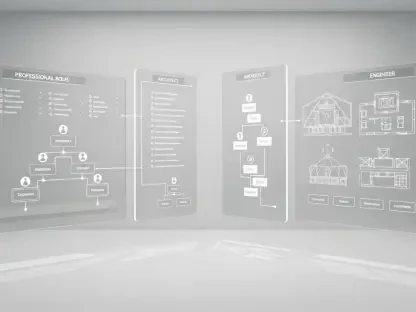

The conversation around artificial intelligence has moved from theoretical possibilities to practical, industry-altering applications, and nowhere is this shift more pronounced than in the field of modern engineering. Far from being a distant concept, AI is actively reshaping workflows, redefining roles, and unlocking new potentials for innovation. This transformation is not merely about adding another tool to the engineer’s toolkit; it represents a fundamental re-architecture of the entire engineering lifecycle, from the first spark of an idea to the final implementation and beyond. For organizations aiming to lead in an increasingly complex and fast-paced market, understanding and strategically integrating AI is no longer an option but a critical imperative for survival and growth.
Beyond Automation: The Dawn of a New Engineering Paradigm
The integration of artificial intelligence into engineering is ushering in an era that extends far beyond simple task automation. It marks a fundamental shift where AI evolves from a subordinate tool to an integral collaborator in the creative and analytical processes. This new paradigm is not about replacing human ingenuity but augmenting it, allowing engineers to transcend mundane, repetitive work and focus on complex problem-solving and strategic innovation. This partnership enables a level of speed and insight that was previously unattainable, fundamentally changing how projects are conceived, developed, and deployed.
Embracing this transformation is now a critical factor for maintaining a competitive edge. Companies that successfully weave AI into their engineering fabric can accelerate development cycles, enhance product quality, and operate with unprecedented efficiency. The ability to rapidly prototype, analyze vast datasets for insights, and automate complex documentation is becoming a key differentiator in the marketplace. Consequently, the changes being driven by AI in areas like prototyping, documentation practices, and data governance are not just incremental improvements; they are profound shifts that redefine the very nature of engineering work and its business impact.
The Core Pillars of AI-Driven Engineering Transformation
From Concept to Code: Radically Accelerating the Innovation Cycle
Artificial intelligence is dramatically compressing the timeline from ideation to a tangible prototype. AI-powered tools can now take conceptual prompts, such as a brief outline or a set of bullet points, and generate comprehensive project plans, identify architectural requirements, and even suggest initial code structures. This capability allows engineering teams to validate ideas and explore different approaches with remarkable speed, turning what once took weeks of manual planning into a matter of hours. This accelerated feedback loop fast-tracks the journey to a proof-of-concept, empowering teams to make critical decisions faster and with greater confidence.
To illustrate, consider the development of a new user interface. An AI research assistant can proactively outline critical project factors from the outset, detailing performance benchmarks, potential network constraints, and compatibility requirements. This provides engineers with a structured and well-researched starting point, helping them circumvent common pitfalls and move more directly toward an effective solution. However, this newfound speed introduces a crucial challenge: balancing the rapid output of AI with the indispensable value of human engineering judgment. The most effective teams will be those that learn to use AI as a powerful accelerator while ensuring that human oversight and critical thinking remain central to the validation and decision-making process.
The Documentation Duality: A New Symbiotic Relationship
A symbiotic relationship is emerging between AI models and technical documentation, where each is critically dependent on the other for success. For AI systems to function effectively and provide accurate, relevant outputs, they must be trained on high-quality, comprehensive, and up-to-date documentation. This necessity is fostering a cultural shift within engineering organizations, compelling them to adopt more rigorous and consistent documentation practices. To prevent AI from making flawed assumptions, it must be guided by well-structured prompts that point to a reliable source of truth, ensuring it has the necessary context to perform its tasks.
Conversely, AI itself is becoming a powerful ally in creating and maintaining the very documentation it relies on. Engineers can now leverage AI to automate the creation of initial drafts for technical specifications, API guides, and code comments. This alleviates a significant administrative burden, allowing engineers to dedicate their expertise to refining and validating the AI-generated content rather than writing it from scratch. This dynamic highlights the “garbage in, garbage out” principle in a new light; the risk of flawed AI outputs stemming from poor or outdated data is significant, underscoring that a robust knowledge base is no longer a “nice-to-have” but an essential foundation for any successful AI integration.
The Governance Gauntlet: Navigating a Heightened Era of Compliance and Security
The integration of AI introduces a new and complex layer to data governance and security. As organizations feed sensitive company and customer information into AI systems for training and operational purposes, they concurrently open themselves up to new liabilities and reputational risks. Regulations like the General Data Protection Regulation (GDPR) and compliance standards such as SOC 2 impose stringent requirements on data handling, and the use of AI magnifies the challenge of adherence. A data breach or misuse of information by an AI system can lead to severe financial penalties and a lasting loss of customer trust.
It is a critical mistake to view AI as just another piece of software. Instead, it must be reframed as a data-centric system that demands a robust, proactive governance and security strategy from its inception. Organizations must establish clear visibility into what data AI systems can access, how that information is used internally, and which third-party tools might be exposed to it. This requires the implementation of strong security guardrails, precise access permissions, and continuous monitoring to prevent the unauthorized use of sensitive data. Balancing the powerful capabilities of AI with a vigilant and strategic approach to data management is paramount for navigating this new era of compliance.
The Engineer’s Evolving Role: From Manual Executor to Strategic Orchestrator
The rise of AI is fundamentally reshaping the role of the engineer, steering it away from manual, repetitive tasks and toward a more strategic function. In this new landscape, the engineer acts as an orchestrator, guiding AI systems, validating their outputs, and focusing on high-level, complex problem-solving that requires human creativity and intuition. The emphasis shifts from writing boilerplate code or manually sifting through data to defining the problems AI should solve and critically evaluating the solutions it proposes.
This evolution necessitates a new set of skills. Expertise in areas such as prompt engineering, which involves crafting precise instructions to elicit desired AI responses, is becoming invaluable. Likewise, capabilities in AI model oversight, ethical systems design, and understanding the nuances of AI-generated outputs are now essential. According to industry leaders, this human-AI collaboration will be the key to unlocking solutions to previously insurmountable engineering challenges. By offloading cognitive-heavy but repetitive work to AI, engineers are freed to innovate and tackle problems that demand a deeper, more strategic level of human intellect.
Charting Your Course: Practical Strategies for AI Integration
The most impactful takeaways from AI’s integration into engineering are clear: it radically accelerates innovation, demands a new standard of superior documentation, and necessitates stringent security and governance protocols. These three pillars are not independent considerations but interconnected components of a successful transformation strategy. Acknowledging this interconnectedness is the first step for any leader looking to navigate this new terrain effectively.
For engineering leaders, the path forward involves a series of deliberate, actionable steps. A practical starting point is to initiate small-scale pilot projects to test AI tools and measure their impact in a controlled environment. Simultaneously, conducting a thorough audit of existing knowledge bases and documentation is crucial to assess their readiness for AI integration. Co-developing a clear AI governance framework in close collaboration with security and legal teams is not just recommended; it is essential to mitigate risk and ensure compliance from the outset.
Ultimately, the goal is to shift the organizational focus from isolated, tactical gains to a cohesive, long-term transformation. Teams should strategically identify areas where AI will drive the most significant business value, whether in accelerating product development, improving operational efficiency, or enhancing decision-making. By thoughtfully implementing AI in high-impact domains, organizations can begin to harness its full potential and build a sustainable competitive advantage for the future.
The Unwritten Blueprint: Engineering the Future, Together with AI
In the final analysis, it became evident that AI’s greatest impact was not in replacing engineers but in elevating their strategic importance within an organization. The narrative of displacement gave way to a more nuanced understanding of augmentation, where technology served to amplify human capabilities rather than render them obsolete. This partnership allowed engineers to focus their intellect on challenges that required creativity, ethical consideration, and a deep understanding of context—qualities that remained distinctly human.
The future of engineering excellence was defined by the seamless and ethical partnership forged between human intellect and artificial intelligence. This collaborative model proved to be the cornerstone of innovation, enabling the development of solutions that were more sophisticated, efficient, and aligned with complex human needs. It was this synergy that unlocked new frontiers and set a new standard for what could be achieved.
Organizations that succeeded embraced this change not as a mere technical upgrade but as a fundamental opportunity to redefine what was possible. They moved beyond viewing AI as a tool and began to see it as a collaborator in the ongoing project of building a better future. The blueprint was still being written, but its direction was clear: the most groundbreaking engineering feats were to be accomplished together.