
The global compute landscape has fractured under the weight of trillion-parameter models, forcing a departure from the generalized infrastructure that once defined the digital age. As enterprises move beyond the initial excitement of generative artificial intelligence and into the rigorous demands of production-grade deployment, the limitations of traditional cloud providers have become increasingly apparent. This shift has paved the way for the neocloud, a specialized breed of infrastructure provider designed specifically to meet the grueling power and interconnect requirements of modern accelerated computing.
The Maturation of Accelerated Computing and the Rise of Specialized Cloud Providers
Defining the Neocloud: High-Density GPU Infrastructure vs. Traditional Hyperscalers
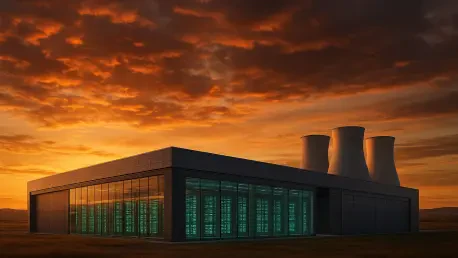
The neocloud represents a fundamental pivot in data center architecture, prioritizing raw computational density over the broad service catalogs offered by legacy hyperscalers. While traditional giants like Amazon Web Services or Microsoft Azure were built to support a diverse array of workloads ranging from simple web hosting to complex databases, neoclouds are purposefully lean. Their facilities are engineered from the ground up to support the extreme power draws and cooling requirements of the latest GPU clusters, often utilizing liquid cooling and advanced power distribution units that older data centers struggle to accommodate.
In contrast to the highly abstracted environments of traditional clouds, neoclouds provide a more direct relationship with the underlying hardware. This specialized focus allows for a much tighter integration of networking and storage, reducing the latency that often bottlenecks large-scale model training. By stripping away the layers of virtualization that characterize general-purpose clouds, these providers offer a performance profile that is specifically tuned for the non-linear scaling needs of massive neural networks. This structural difference is not merely a matter of hardware choice but a different philosophy of infrastructure design that favors depth over breadth.
Identifying Key Market Segments and Leading Players in the AI Infrastructure Space
The market for AI infrastructure has stratified into distinct segments, with neocloud providers like CoreWeave, Lambda, and Crusoe Cloud leading the charge in the high-performance tier. These players have carved out a significant niche by securing massive allocations of the most sought-after accelerators, such as the NVIDIA Blackwell series. They cater primarily to research labs, high-growth AI startups, and large enterprises that require dedicated, non-preemptible GPU clusters for months at a time. Their business models are built around high-availability compute for training and fine-tuning, rather than the consumption-based micro-services typical of broader clouds.
Beyond the hardware providers, the ecosystem now includes specialized orchestrators and middle-tier players that facilitate the movement of workloads between different specialized clouds. This segment of the market is growing rapidly as organizations seek to avoid vendor lock-in and optimize their spend across a multi-cloud landscape. Leading players are also differentiating themselves through sustainable energy practices, locating data centers near renewable energy sources to mitigate the high carbon footprint associated with large-scale AI operations. This alignment of high performance and environmental responsibility is becoming a key differentiator in the selection process for major global firms.
Analyzing the Economic Momentum and Technological Drivers Behind Neocloud Adoption
Evolving Consumer Behaviors and the Exponential Demand for Purpose-Built GPU Clusters
Consumer behavior in the enterprise sector has shifted from experimentation toward a focus on total cost of ownership and time-to-market. In the current landscape of 2026, organizations are no longer content with waiting in long queues for sporadic GPU availability on traditional platforms. Instead, there is an aggressive move toward securing long-term contracts for dedicated clusters. This change is driven by the realization that AI competitive advantage is tied directly to the speed at which a model can be iterated and deployed.
Moreover, the complexity of modern models requires a level of networking throughput that general-purpose clouds often fail to provide at scale. Enterprises are discovering that a cluster of one thousand GPUs is only as fast as the interconnect between them. Consequently, demand is surging for neoclouds that offer InfiniBand or other ultra-high-speed networking fabrics as a standard feature. This demand is not limited to the tech sector; industries like pharmaceuticals, financial services, and automotive manufacturing are increasingly seeking these purpose-built clusters to accelerate their own proprietary model development.
Quantitative Performance Indicators and Long-Term Projections for GPU-as-a-Service Markets
The economics of GPU-as-a-Service are increasingly favorable when compared to the overhead of maintaining legacy virtualized environments for AI tasks. Performance indicators suggest that neoclouds can deliver up to a thirty percent improvement in training efficiency per dollar spent, primarily due to reduced virtualization overhead and optimized data pathways. These quantitative gains are measurable across various benchmarks, particularly in large-scale distributed training where synchronization between nodes is the primary performance bottleneck.
Projections for the period from 2026 to 2030 indicate that the specialized cloud market will continue to capture a larger share of the total cloud spend. As the market matures, the pricing models are expected to become more sophisticated, moving toward performance-based billing rather than simple hourly rates. This evolution will likely drive a more efficient allocation of resources, where the most demanding tasks are naturally routed to specialized neoclouds, while auxiliary services remain on traditional hyperscale platforms. The long-term trajectory suggests a bifurcated cloud market where specialization is the primary driver of growth.
Navigating the Technical Friction and Operational Complexities of Specialized Clouds
Managing the Administrative Tax: Moving Beyond Traditional Cloud Abstraction
Adopting a neocloud environment introduces what many industry experts call an administrative tax. Unlike the highly automated and abstracted services of major providers, neoclouds often require a more hands-on approach to infrastructure management. Operations teams must be comfortable managing bare-metal or near-metal instances, which involves a deeper understanding of hardware drivers, kernel optimizations, and low-level networking configurations. This shift moves the burden of infrastructure stability from the provider back toward the enterprise’s engineering team.
Furthermore, the lack of an extensive ecosystem of integrated third-party tools means that many organizations must build their own management layers. Tasks that are trivial in a legacy cloud, such as automated scaling or complex identity management, may require custom scripting and integration work in a specialized environment. While this provides a higher degree of control, it also demands a more specialized workforce capable of bridging the gap between software engineering and hardware operations. Organizations must weigh the performance gains against the increased human capital required to maintain these environments.
Optimizing Performance and Financial Efficiency in Hardware-Intensive Environments
Performance optimization in a neocloud is a constant balancing act between computational throughput and capital efficiency. Because the costs associated with high-end GPUs are so substantial, even a small percentage of idle time can lead to significant financial waste. This has led to the rise of sophisticated scheduling and orchestration strategies designed to keep hardware utilization as close to one hundred percent as possible. Advanced telemetry and monitoring are essential to identify bottlenecks in real-time, whether they occur in the storage layer or the network interconnect.
Financial efficiency also depends on a deep understanding of the specific hardware architectures being used. For instance, optimizing a model to fit within the specific memory constraints of a given GPU can drastically reduce the number of nodes required for a job. Teams are increasingly employing specialized compilers and quantization techniques to squeeze maximum performance out of every watt of power consumed. This granular level of optimization is becoming a core competency for firms that rely heavily on AI, as it directly impacts the bottom line of their digital operations.
Architecting Resilience and Business Continuity for Mission-Critical AI Pipelines
Resilience in the neocloud era requires a departure from traditional disaster recovery strategies. Given the specialized nature of the hardware, it is often impossible to simply fail over to a different region or provider instantly. Instead, organizations are architecting resilience into the training and inference pipelines themselves. Frequent checkpointing of model weights is no longer optional; it is a critical operational requirement that ensures a hardware failure does not result in the loss of weeks of expensive compute time.
Moreover, business continuity planning must account for the physical scarcity of high-end hardware. If a neocloud provider experiences a major outage, there may not be enough spare capacity in the market to immediately relocate large-scale workloads. This reality is forcing enterprises to adopt hybrid strategies where mission-critical inference is spread across multiple providers, while training remains centralized in the most cost-effective specialized environment. Building this level of redundancy is complex and expensive, but it is necessary for AI applications that have become integral to customer-facing services.
Strengthening Governance and Data Security Within Native AI Frameworks
Redefining the Shared Responsibility Model for Sensitive Data and Proprietary Models
The shared responsibility model, a cornerstone of cloud security, takes on a new dimension in neocloud environments. In traditional clouds, the provider handles everything up to the hypervisor, but in the more direct-access world of specialized AI clouds, the enterprise often takes on more responsibility for securing the entire stack. This is particularly sensitive because the data being processed often represents a company’s most valuable intellectual property. Protecting model weights from unauthorized access or exfiltration requires rigorous encryption at rest and in transit.
Additionally, the physical isolation of workloads is a primary concern. As neoclouds scale, ensuring that data does not leak between different tenants using the same high-performance clusters is paramount. This necessitates the use of secure enclaves and hardware-level isolation features that are still maturing in many specialized environments. Security teams must move beyond traditional perimeter defenses and focus on the integrity of the data pipeline itself, ensuring that every stage of the model lifecycle is audited and protected.
Adhering to Global Compliance Standards and Evolving Privacy Regulations
Compliance in the AI sector is a moving target, as global regulations evolve to keep pace with technological advancements. Neocloud providers are under constant pressure to achieve certifications such as SOC2, HIPAA, and GDPR compliance to remain viable for enterprise customers. However, the unique nature of AI data processing, where data is often transformed and combined in complex ways, makes traditional compliance mapping difficult. Organizations must ensure that their specialized providers can offer the necessary transparency and auditability to satisfy increasingly stringent regulatory requirements.
Sovereignty is another critical factor in the current landscape. Many jurisdictions now require that AI models be trained and operated on hardware located within specific geographic borders. Neoclouds are responding by building out localized data centers, but this creates a fragmented infrastructure landscape for global enterprises. Navigating this web of local regulations while maintaining a unified AI strategy requires a high degree of coordination between legal, compliance, and technical teams. The cost of non-compliance is not just financial; it can result in the loss of the right to operate in key markets.
The Future Landscape: Bridging the Gap Between General-Purpose and Specialized Clouds
The Shift Toward Multi-Cloud Maturity and Hybrid AI Infrastructure Strategies
The maturation of the market has led to a standard practice of multi-cloud maturity where organizations leverage the best features of both general and specialized providers. It is now common for an enterprise to use a legacy hyperscaler for its general business applications and data lakes, while bursting into a neocloud for intensive AI training cycles. This hybrid approach allows for maximum flexibility, enabling companies to take advantage of the vast service ecosystems of traditional clouds without sacrificing the performance of specialized hardware.
As we move toward 2028 and beyond, the tooling to manage these hybrid environments is becoming more seamless. Cross-cloud orchestration platforms are evolving to handle the movement of massive datasets and model artifacts with minimal friction. This interoperability is crucial for reducing the operational complexity of a multi-vendor strategy. It also fosters a more competitive environment, as providers must compete on performance, price, and ease of integration rather than relying on vendor lock-in to retain customers.
Anticipating Market Disruptors and the Next Generation of Accelerated Hardware
The rapid pace of hardware innovation continues to be the primary disruptor in the cloud space. While GPUs currently dominate the landscape, new architectures such as specialized AI ASICs and optical interconnects are beginning to emerge. These technologies promise even greater efficiency and lower latency, potentially shifting the market toward even more specialized providers that can quickly integrate the latest hardware. Neoclouds are uniquely positioned to adopt these innovations faster than traditional hyperscalers, given their smaller scale and specialized focus.
Furthermore, the rise of edge AI is starting to influence cloud operations. As more inference happens on the device or at the edge of the network, the role of the central cloud is shifting toward managing and coordinating these distributed models. This necessitates a more decentralized infrastructure model where specialized clouds act as the “brain” for a vast network of edge processors. The interplay between these different layers of compute will define the next decade of digital infrastructure, pushing the boundaries of what is possible in real-time artificial intelligence.
Final Strategic Synthesis: Unlocking Scalability Through Performance-Driven Cloud Operations
The investigation into neocloud environments revealed that the transition toward specialized infrastructure was a necessary response to the extreme demands of modern AI. It was found that organizations that successfully integrated these providers achieved significantly higher performance densities and better economic alignment than those that relied solely on traditional hyperscalers. The evidence showed that the operational complexity of managing these environments was offset by the competitive advantages gained in model iteration speed and deployment efficiency.
Looking forward, the success of AI initiatives will increasingly depend on an organization’s ability to orchestrate complex, multi-layered infrastructure strategies. The past period of experimentation transitioned into a phase of rigorous operational maturity where hardware awareness became a core competency for IT leaders. Moving forward, enterprises should focus on building the internal talent necessary to manage these high-density environments and invest in the orchestration layers that enable a seamless hybrid cloud experience. Ultimately, the neocloud is not just a temporary solution to hardware shortages; it is the blueprint for the next generation of performance-driven cloud operations.