
Agitstatusmonitoringhookthatcapturesmodifiedfilesandrecentcommitsensuresthatthenextsessioncanresumeimmediatelywithaclearunderstandingofcurrentprogress. The primary friction point in using modern AI coding agents is the total loss of situational awareness once a process concludes. Every developer has experienced the frustration of painstakingly explaining a complex architectural constraint to an AI, only to have that context vanish the moment the terminal window is closed or the session is reset. In the current landscape of 2026, the demand for more autonomous and reliable agents has led to the development of sophisticated memory architectures that operate independently of the core model’s training data. These systems rely on a robust combination of local Markdown files and Python-based lifecycle hooks to ensure that an agent never has to learn the same lesson twice. By treating the local file system as a persistent synaptic bridge, engineers can effectively grant these agents a long-term memory that survives session restarts and system reboots. This advancement is not merely a convenience; it is a fundamental shift in how human-AI collaboration is structured, allowing for a continuous narrative in software development that spans several years of progress without the typical overhead of manual re-contextualization.
1. Configure the Knowledge Vault: The Foundation of Context
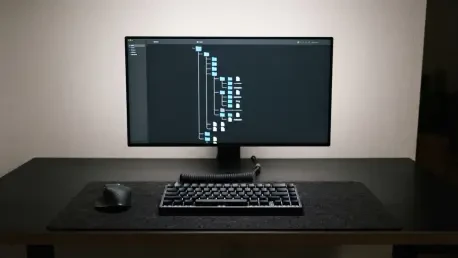
The knowledge vault serves as the central intelligence repository for the entire development ecosystem, functioning as a structured database comprised entirely of human-readable Markdown files. To make this vault truly effective, a primary router file named CLAUDE.md must be established at the root of the workspace. This file does not hold technical code but instead acts as a navigational map, providing the agent with clear instructions on where to find specific types of data and, more importantly, where to record new insights. Tables within this router file define search locations for operational strategies, personnel records, and past technical decisions. For instance, a query regarding a specific database migration should be directed to an intelligence folder, while a question about current team roles points to a CRM subfolder. This structured approach ensures that the agent can utilize standard search tools like grep to find exactly what it needs without being overwhelmed by the sheer volume of data, maintaining a clean and efficient context window for the actual coding task at hand.
Implementing nested rules within the vault further refines the agent’s behavior by providing localized instructions that only activate when specific directories are accessed. By placing smaller CLAUDE.md files in subdirectories, such as an api or infrastructure folder, the developer can provide highly specific guidance that is relevant only to that domain. This lazy-loading mechanism is particularly effective because it saves tokens and avoids the confusion that often arises when global rules conflict with local requirements. Furthermore, each note within the vault should begin with a plain text classification block, identifying the document type and project brand. This allows the AI to quickly distinguish between different contexts during a recursive search. In a multi-brand environment, for example, a simple classification line prevents the agent from accidentally applying the design standards of one product to another. As the vault grows from a few hundred to several thousand notes throughout 2026 and beyond, this organizational rigor becomes the difference between a helpful assistant and a confused automated script.
2. Manage Persistent Memory Files: Preserving Behavioral Logic
While the knowledge vault stores general information, the memory layer is designed to hold specific behavioral corrections and learned preferences that dictate how the AI should work with a particular developer. This layer is organized into a dedicated directory where each individual memory or “fact” is stored as a separate Markdown file. A critical component of these files is the inclusion of a “Why” section, which provides the underlying logic or incident report that led to the creation of the rule. For example, if an agent previously crashed a production environment by running a global commit without checking the git index, the corresponding memory file would document that specific failure. Providing the rationale behind a rule is essential because it allows the AI to judge whether the current situation is an edge case or a direct application of the rule, leading to more nuanced decision-making rather than rigid adherence to arbitrary commands.
To ensure these individual memories are accessible without overwhelming the AI, a central MEMORY.md file acts as an index, containing one-line summaries of every stored fact. This index is loaded into every session, giving the agent a high-level overview of the developer’s expectations. However, to prevent this index from becoming a source of noise, it must be pruned regularly to remain under a 20 KB limit. This maintenance process involves removing obsolete rules and merging similar memories into more cohesive guidelines. As of 2026, professional workflows prioritize this type of “active forgetting” just as much as remembering, ensuring that only the most relevant and high-impact behavioral corrections are front-and-center during a coding session. This creates a feedback loop where the agent becomes more specialized to the developer’s specific workflow over time, effectively developing a personalized professional relationship based on shared history and refined expectations.
3. Implement Lifecycle Hooks: Automating State Management
The true power of this persistent memory system is realized through the implementation of lifecycle hooks, which are Python scripts that execute automatically during specific events like session start, prompt submission, or session termination. The handoff hook is perhaps the most vital of these, as it bridges the gap between disconnected sessions. On the termination of a session, a Python script captures the current state of the workspace, including modified files, recent git commits from the last few hours, and a “scratchpad” of the agent’s current thoughts and pending tasks. When a new session begins, the script checks the age of this handoff file; if it is less than 48 hours old, the contents are printed directly into the AI’s context. This allows the agent to resume work mid-thought, with a clear understanding of what was recently changed and what needs to happen next, eliminating the need for the human developer to manually recap the progress.
Beyond simple state handoffs, lifecycle hooks can be used to deploy “learned instincts” and intelligent skill suggestions. By logging failed tool calls to a specialized file during a session, a script can automatically summarize these failures into one-line rules at the end of the day. These instincts, such as “never pipe curl output directly to a shell script,” are then injected at the startup of the next session, effectively teaching the agent to avoid its own past mistakes. Furthermore, for developers with large libraries of custom skills, a UserPromptSubmit hook can utilize a simple TF-IDF retriever to suggest the most relevant skills based on the current prompt. This retriever calculates word importance to match the prompt against skill descriptions, offering suggestions without forcing them on the agent. This balance of automated guidance and agent autonomy ensures that the most powerful tools are always available when needed, without cluttering the interface when they are not.
4. Apply Safety and Compatibility Measures: Ensuring System Stability
When integrating automated Python hooks into a development environment, maintaining system stability and performance is of paramount importance. A hook that hangs or crashes can block the entire AI prompt, leading to a frustrating experience that negates the benefits of persistent memory. To mitigate this risk, all Python scripts should be wrapped in a hard timeout guard, typically set to three seconds. Using the threading module to start a timer that forces an exit if the script does not finish within the allotted window ensures that the agent never becomes unresponsive due to a background process. Additionally, the scripts must be written to swallow their own errors silently; a failed hook should never prevent the developer from continuing their work. This fail-safe approach ensures that the memory system remains a supportive background infrastructure rather than a potential point of failure in the critical path of software production.
Reliability also extends to how these hooks interact with the underlying operating system and version control tools. When a hook performs a git status check to capture session state, it should always use the --no-optional-locks flag to avoid accidental file locking. This prevents a background status check from blocking actual commits or other git operations, a problem that could otherwise lead to significant workflow disruptions. For developers working on Windows environments, an additional layer of refinement involves using a Node.js wrapper to hide the console windows that typically flash on screen when a Python process is spawned. By running hooks through a wrapper with the windowsHide attribute set to true, the background memory processes remain entirely invisible to the user. These combined measures create a professional, seamless environment where the AI’s persistent memory feels like a native part of the operating system rather than a series of bolted-on scripts.
5. Connect to Settings: Integrating the Memory Infrastructure
The final step in establishing a long-term memory system is the integration of these Python scripts into the agent’s core configuration. In the standard settings file, usually found at ~/.claude/settings.json, developers must map the various hooks to their corresponding lifecycle events. The handoff reader and the instinct loader are typically assigned to the SessionStart event, ensuring that the agent is fully briefed before the first prompt is even entered. The skill suggester finds its place in the UserPromptSubmit event, where it can analyze each query in real-time to provide context-aware recommendations. Finally, the handoff writer and instinct extractor are mapped to the Stop event, capturing the valuable metadata generated during the session before the environment is cleared. This centralized configuration makes the entire memory architecture manageable and allows for easy updates as the system evolves throughout the 2026 to 2028 development cycles.
As this infrastructure matures, the vault and memory files become more than just a collection of scripts; they evolve into a living document of an engineer’s technical journey. The cumulative effect of these hooks is a dramatic reduction in cognitive load, as the developer no longer needs to act as the primary memory bank for the AI. Instead, the system handles the heavy lifting of state management, failure analysis, and knowledge retrieval. This allows the human developer to focus on high-level architecture and creative problem-solving, while the AI manages the intricate details of the codebase with the confidence of a long-term collaborator. The investment in setting up these hooks pays dividends in the form of increased throughput and decreased errors, representing the state-of-the-art in autonomous development as practiced in 2026. By building a system that learns and remembers, engineers are essentially creating a customized digital partner that grows more capable with every line of code written.
The Strategic Evolution of Persistent Agent Memory
The implementation of these persistent memory structures allowed for a more fluid interaction model between engineers and AI agents, marking a departure from the fragmented workflows of previous years. Developers who adopted this three-layer architecture observed a significant decrease in the time required to onboard an AI to a new task within an existing project. The systematic recording of “learned instincts” ensured that common pitfalls were avoided automatically, while the knowledge vault provided a reliable single source of truth for technical documentation. These steps collectively transformed the AI from a stateless utility into a contextual partner capable of maintaining complex project narratives across long-term development cycles.
Moving forward, the primary focus for developers shifted toward the curation and refinement of these memory files to prevent information rot. The periodic pruning of the MEMORY.md index became a standard best practice, ensuring that the most impactful lessons remained at the forefront of the agent’s awareness. As the complexity of software systems continued to increase through 2026 and 2027, the ability to offload state management to automated Python hooks provided a sustainable path for managing vast codebases. Future considerations for this system included the integration of more advanced retrieval mechanisms, yet the fundamental principle of using structured local files remained the most robust and transparent solution for achieving long-term AI memory.