
As autonomous AI coding agents increasingly take the wheel in modern software development pipelines, the traditional methods of managing sensitive enterprise credentials have reached a critical breaking point. This shift toward automation has exposed a fundamental flaw in how machines handle the keys to the digital kingdom, often leaving API keys, database passwords, and environment variables vulnerable to exfiltration or accidental exposure within large language model prompts. Developers have historically relied on static secrets stored in environment files or hardcoded into scripts, but these persistent credentials are a magnet for attackers who target the intermediate memory of AI systems. The complexity of modern CI/CD environments demands a security architecture that can keep pace with the speed of AI without sacrificing the integrity of the underlying infrastructure. Organizations now face a difficult choice between the productivity gains offered by autonomous agents and the mounting risks associated with unauthorized data access.
The Technical Solution: Just-in-Time Access for Machines
The core issue within the current ecosystem stems from the fact that AI agents require broad permissions to interact with cloud services, deployment servers, and internal databases effectively. When these agents are granted persistent access tokens, those tokens remain in the memory of the session, potentially appearing in log files or being captured during a prompt injection attack. Security researchers have noted that any secret existing in a persistent state within an AI-driven workflow should be considered compromised by default. This reality has forced a reevaluation of how “secrets” are defined when the entity using them is a non-human agent capable of processing millions of lines of code in seconds. While human developers are trained to avoid committing secrets to version control, AI agents do not inherently possess the same contextual caution, often treating sensitive strings as mere data points to be processed. This lack of inherent discretion necessitates a structural change in credential delivery.
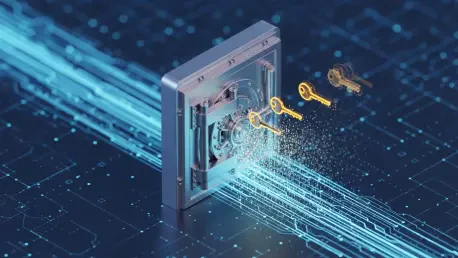
Building on this foundation, the strategic collaboration between 1Password and OpenAI introduced a specialized infrastructure known as the Environments MCP Server for Codex to address these mounting concerns. This system utilizes a just-in-time credential model that fundamentally changes how AI agents interact with sensitive data by providing secrets only at the precise moment they are required. Instead of holding a permanent key in its context window or local memory, the agent requests access through a secure bridge that pulls the necessary information from a protected vault. Once the specific task—such as an automated deployment or a database query—is completed, the credential is immediately discarded and rendered useless for any subsequent unauthorized attempts. This architectural shift ensures that even if an AI session is intercepted, there are no persistent secrets for an attacker to harvest from the model’s history. This method provides a “least-privilege” environment that adjusts dynamically to the agent’s current activity.
The implementation of the Environments MCP Server for Codex established a new standard for how enterprises approached the intersection of cybersecurity and artificial intelligence. Security teams realized that the most effective way to protect their assets was to eliminate the permanent existence of sensitive keys within the development lifecycle entirely. This transition allowed companies to leverage the full power of OpenAI’s models while maintaining the rigorous security posture provided by 1Password’s vault technology. Developers focused on integrating these just-in-time systems into their existing workflows, ensuring that human oversight remained a critical component through mandatory authentication checkpoints. By prioritizing temporary access over static storage, the industry moved toward a more resilient model that anticipated the risks of 2026. Leaders in the space emphasized that the goal was not just to patch existing holes but to build a future where AI and security were fundamentally inseparable. Actionable steps involved migrating all cloud tokens to dynamic vaults and auditing every agent session.