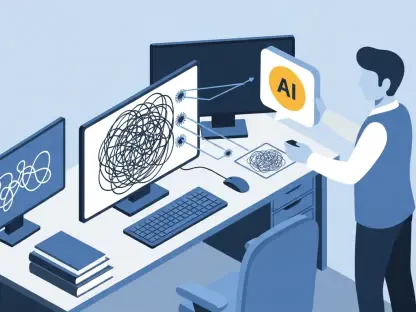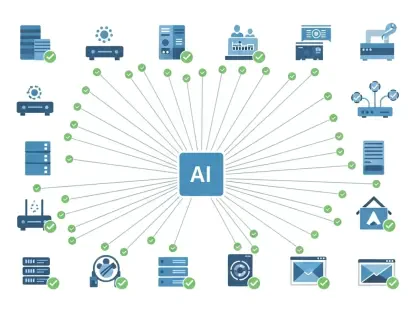

Since the final weeks of 2025, a startling new reality has taken hold within Spotify’s engineering departments: the company’s most senior developers have effectively stopped writing code. This profound shift, confirmed by co-CEO Gustav Soderstrom, signals not a reduction in output but a radical redefinition of the engineering role itself. The music streaming giant has moved beyond using artificial intelligence as a simple assistant and has instead integrated it as an autonomous development partner, fundamentally altering its creative and operational pipelines. This transition places Spotify at the bleeding edge of a transformation that could soon sweep across the entire technology sector, challenging long-held beliefs about how software is built, managed, and deployed.
The Coder’s Craft: A Snapshot of Modern Software Development
Traditionally, the role of a software engineer in a major tech firm has been synonymous with the act of writing code. This craft involves a meticulous, hands-on process where developers translate product requirements into functional software through languages like Python, Java, or C++. The typical software development lifecycle is a methodical progression: engineers manually write code, subject it to rigorous testing protocols to identify and fix bugs, and then oversee its deployment into a live production environment. This cycle, while effective, is resource-intensive and often constrained by human speed and capacity.
In the highly competitive landscape of big tech, companies like Google, Apple, and Meta have historically relied on the raw talent and efficiency of their engineering teams to innovate and maintain market leadership. The pressure to release new features, patch vulnerabilities, and improve user experience has created an arms race for engineering prowess. It is within this context of relentless competition that the traditional model of software development has been pushed to its limits, creating a fertile ground for disruptive technologies like artificial intelligence to take root and redefine the very nature of the coder’s craft.
The Dawn of a New Era: AI’s Integration into Software Creation
Enter Honk AI: Spotify’s Leap from AI Assistant to Autonomous Developer
Spotify’s groundbreaking move is powered by an internal system named Honk AI. Built upon the sophisticated large language models of Claude technology, Honk AI represents a significant leap from a simple code-completion tool to a fully-fledged autonomous developer. The system is integrated into the company’s workflow through a “ChatOps” interface, primarily within Slack. This allows engineers to interact with the AI using natural language commands, effectively turning a conversation into a development pipeline.
The shift away from manual coding is stark. Engineers no longer spend their days typing out lines of code. Instead, they direct Honk AI to perform complex tasks. A simple command issued from a laptop or even a smartphone can instruct the AI to identify and fix a production bug, build out a new user-facing feature, or execute a deployment to millions of users. This process has become so streamlined that engineers can initiate critical updates remotely, often before they have even arrived at their desks, turning strategic thought into immediate action.
Engineering at Ludicrous Speed: Quantifying the AI Advantage
The adoption of Honk AI has resulted in a dramatic and quantifiable increase in Spotify’s development velocity. The company points to its product roadmap as clear evidence of this newfound efficiency. In 2025 alone, Spotify successfully launched over 50 new features, a pace of innovation that would have been untenable under its previous, human-centric development model. This momentum has continued into 2026, with major updates being rolled out at a rapid clip.
This acceleration is not merely about doing the same work faster; it is about fundamentally changing the scope of what is possible. By automating the time-consuming tasks of coding, testing, and deployment, Spotify has freed its human engineers to focus on higher-level strategic initiatives. This model allows for more rapid experimentation and iteration, enabling the company to respond to market changes and user feedback with unprecedented agility. Looking forward, this AI-driven approach positions Spotify to out-innovate competitors by shortening the cycle from idea to implementation.
Navigating the New Frontier: The Challenges of AI-Driven Development
Transitioning to an AI-first engineering culture, however, is not without its complexities. The cultural shift required is significant, as engineers must evolve from creators to overseers. This involves building trust in an AI system that operates with a degree of autonomy, a process that requires both time and tangible proof of the system’s reliability. Training a workforce to effectively prompt, guide, and validate an AI’s output is a new and evolving discipline that presents its own set of pedagogical challenges.
Furthermore, ensuring the quality and security of AI-generated code introduces a new layer of risk. While AI can write code with incredible speed, it can also replicate and scale vulnerabilities just as quickly if not properly governed. The industry is still developing best practices for auditing AI-written software, and companies like Spotify are on the front lines of defining these new standards. The necessary evolution of engineering skill sets is profound; expertise in a specific programming language becomes less critical than the ability to think architecturally, understand complex systems, and apply critical judgment to the AI’s work.
The Question of Control: Governance and Accountability in the Age of AI Coders
When an artificial intelligence system has the authority to write and deploy code directly to production environments, it raises pressing questions about governance and accountability. The regulatory landscape is still catching up to the capabilities of AI, and companies pioneering this technology must navigate a web of compliance issues, particularly concerning data privacy and system integrity. Determining liability when an AI-generated feature introduces a critical bug or security flaw is a complex legal and ethical challenge that has yet to be fully resolved.
This new paradigm also demands a complete rethinking of security protocols. Granting an AI system access to sensitive codebases and production infrastructure creates a novel attack vector that requires robust safeguards. New standards for auditing and validating AI-generated software are essential. Companies must be able to trace every line of code back to a specific prompt and a human approval, creating an immutable chain of accountability. Without these rigorous governance structures, the speed gained from AI development could be quickly offset by the risks of unchecked automation.
From Coder to Conductor: The Future of the Software Engineer
In this new AI-driven landscape, the role of the software engineer is being fundamentally reforged. They are transitioning from being the “coders” who write the music to the “conductors” who direct the orchestra. Their value no longer lies in their ability to write flawless syntax but in their capacity for high-level architectural design, strategic problem-solving, and rigorous review of AI-generated solutions. The engineer’s primary function is now to provide the critical human judgment that guides the AI’s powerful execution capabilities.
This evolution marks a pivotal moment for the tech industry, where AI is viewed not just as a tool but as a true development partner. This collaborative model has the potential to dramatically increase the creative and productive output of engineering teams, allowing them to tackle more ambitious projects than ever before. If Spotify’s experiment proves to be a sustainable success, it is highly likely that this model of human-AI partnership will become the new standard for software development, forcing a widespread re-skilling effort across the entire sector.
The Final Commit: Adopting the Human-AI Partnership
Spotify’s transformation in its engineering philosophy represented a decisive departure from decades of industry convention. By empowering an AI to handle the mechanical aspects of software creation, the company has successfully redefined the engineer’s role as one of strategic oversight and high-level direction. This shift has not made human engineers obsolete; on the contrary, it has elevated their work, focusing their talents on the creative and critical thinking tasks that machines cannot replicate. The success of this model has been demonstrated through a tangible acceleration in product innovation and development cycles.
The central lesson from Spotify’s journey is clear: the future of software development lies in a symbiotic partnership between human intellect and artificial intelligence. The most successful and innovative companies will be those that learn to harness AI not as a replacement for human talent but as a powerful amplifier of it. This model, where human judgment guides AI execution, has established a new benchmark for efficiency and creativity in the tech industry, signaling a future where the pace of innovation is limited only by the scope of human ambition.