
The current state of software education is grappling with an uncomfortable paradox where the very tools designed to boost productivity are simultaneously eroding the foundational critical thinking skills of the next generation of engineers. While large language models can output perfect Python scripts in seconds, they often leave the human operator in a state of intellectual stagnation. Teachable AI emerges as a sophisticated counter-movement to this trend, repositioning the machine not as a source of truth, but as a student that requires guidance. By adopting a “learning-by-teaching” (LBT) approach, this technology seeks to restore the cognitive friction necessary for deep learning, transforming a passive shortcut into an active pedagogical journey. This review explores how the transition from AI as an oracle to AI as a protégé is redefining the software engineering classroom.
Understanding Teachable AI: A Shift in Educational Dynamics
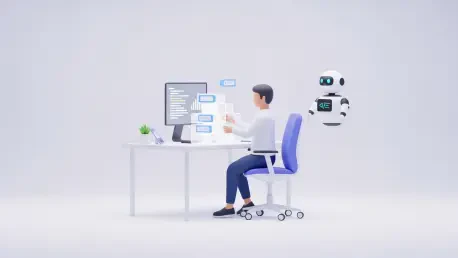
Teachable AI represents a fundamental departure from the conventional “AI-as-tutor” model that has dominated educational software for the last decade. Rather than serving as a definitive source of answers or a real-time error corrector, this system functions as a digital learner. Developed through the collaboration of institutions like Carnegie Mellon University and the University of Rome, the framework leverages generative models to act as a “protégé” that requires instruction from a human user. This inversion of the traditional hierarchy addresses a critical failure in modern education where students rely on AI to generate logic rather than internalizing it themselves.
This technology is unique because it prioritizes the process of knowledge transfer over the accuracy of the final output. In a typical educational setting, a student might ask an AI to explain recursion; in a Teachable AI environment, the student must explain recursion to the agent. This methodology ensures that the student is the primary architect of the logic, preventing the mental atrophy that often occurs when a machine provides immediate, frictionless solutions. The pedagogical shift here is not just about changing the interface, but about redistributing the cognitive load back to the human learner where it belongs.
Defining the Core Mechanics of Teachable Agents
The Learning-by-Teaching (LBT) Paradigm and the Protégé Effect
The efficacy of Teachable AI is rooted in the “Protégé Effect,” a psychological phenomenon where individuals exert more cognitive effort when they are responsible for the progress of another. When a student takes on the role of an instructor, they are forced to retrieve prior knowledge, organize it logically, and articulate it in a way that is accessible to a novice. The AI agent in this system is intentionally designed to be curious yet occasionally confused, a technical calibration that prevents the user from providing vague or incomplete explanations. This requirement for clarity forces a deeper level of mental processing than simple memorization ever could.
Unlike standard chatbots that attempt to be as helpful as possible, a teachable agent provides a specific type of resistance. It might “understand” the syntax of a coding loop but fail to grasp the termination condition unless the student explains it explicitly. This unique implementation ensures that the student cannot gloss over the nuances of a subject. By making the student accountable for the agent’s performance, the system creates a sense of ownership and responsibility that significantly boosts engagement and retention of abstract concepts.
Interactive Feedback and Correction Loops
The most critical technical feature of this system is the iterative diagnostic loop that occurs after the initial instruction phase. Once a user has explained a concept, the AI attempts to apply that knowledge to a specific task, such as writing a function or designing a system architecture. If the AI makes a mistake, the user is tasked with identifying the specific logical flaw in the agent’s “thinking.” This functionality mirrors the real-world process of code review and debugging, which are essential skills for any professional software engineer.
The significance of this loop lies in its ability to expose the user’s own knowledge gaps. When an AI “misunderstands” a concept, it is often a direct reflection of an incomplete explanation provided by the student. Identifying and correcting these errors requires a high level of metacognition—the ability to think about one’s own thinking. This immediate and practical feedback mechanism provides a more robust learning experience than traditional grading, as it allows for a continuous cycle of trial, error, and refinement that builds true mastery.
Emerging Trends: Moving from AI as Tutor to AI as Learner
The broader technological landscape is currently undergoing a shift away from “black box” models toward more transparent, collaborative learning partners. As AI literacy becomes a core competency in the modern workforce, there is a growing demand for tools that encourage users to critically evaluate machine output. Teachable AI fits perfectly into this trajectory by democratizing the learning space and making the relationship between human and machine more fluid. The trend is moving toward systems that do not just provide answers but facilitate the development of human expertise through collaboration.
Moreover, this shift highlights a growing skepticism toward the “instant gratification” model of generative AI. Industry leaders are beginning to recognize that while speed is important, the ability to reason through complex problems is the true value of a developer. Teachable AI addresses this by moving away from the role of a task-oriented assistant toward a metacognitive tool. This democratization of the learning process ensures that the hierarchy of knowledge is not dominated by the machine, but is instead a shared journey where the human remains the primary source of logic and creative direction.
Real-World Applications in Software Engineering Education
Teachable AI is finding its most significant application in high-level computing environments where abstract concepts often serve as barriers to entry. In university settings, the technology is being used to move students beyond the basic mechanics of syntax toward an understanding of algorithmic efficiency and design patterns. For instance, students might teach a bot how to optimize a database query or manage memory in a low-level language. If the bot fails to implement the optimization correctly, the student must revisit the underlying theory and refine their instruction, reinforcing the concept through repeated articulation.
This application is particularly valuable because it prepares students for the collaborative nature of modern engineering teams. In a professional environment, developers are rarely working in isolation; they are constantly explaining logic to peers, documenting systems, and reviewing the work of others. Teachable AI simulates these professional interactions, providing a safe but rigorous environment for practicing the communication of complex ideas. By the time students transition to the workforce, they have already developed the diagnostic skills necessary to navigate the intricacies of large-scale software systems.
Key Challenges and Technical Constraints
Despite the clear pedagogical benefits, the implementation of Teachable AI faces several technical and market-related hurdles. One of the primary challenges is calibrating the agent’s “level of confusion.” If the AI is too proficient, it effectively returns to being a tutor, and the student becomes a passive observer. Conversely, if the AI is too difficult to teach or fails to show progress, the user may become frustrated and disengaged. Finding the “sweet spot” of resistance is a complex engineering task that requires sophisticated prompt engineering and behavioral modeling.
Regulatory and market obstacles also pose significant challenges to widespread adoption. Most current educational frameworks are built around standardized testing and quantifiable outputs rather than the qualitative process of teaching. Integrating a generative teaching model into these rigid structures requires a fundamental rethink of how we assess student progress. Furthermore, there is the risk of “prompt fatigue,” where users find the iterative nature of the system too time-consuming compared to traditional methods. Balancing the depth of learning with the efficiency required in a classroom setting remains a critical point of ongoing development.
The Road Ahead for Human-AI Learning Partnerships
The future of this technology points toward a more integrated and reflective classroom environment where AI agents are customized to the specific needs of individual learners. Potential breakthroughs include agents that can adapt their “learning style” to match the instructor’s strengths or weaknesses, creating a truly personalized feedback loop. As the underlying models become more sophisticated, these agents will likely be able to simulate more complex misunderstandings, challenging even advanced students to think more deeply about their subject matter.
Long-term, Teachable AI could fundamentally change how abstract subjects are taught across all STEM fields, shifting the focus from the memorization of facts to the mastery of logical frameworks. As these systems become a staple of professional training, they will help individuals navigate an increasingly complex technological world by fostering a culture of continuous, active learning. The goal is not to replace human instructors, but to provide them with a powerful tool that transforms students from consumers of information into masters of their craft.
Conclusion and Final Assessment
The development of Teachable AI marked a departure from the static interaction models that characterized early educational software. By prioritizing the “learning-by-teaching” paradigm, the system successfully addressed the superficiality that often accompanied the use of traditional generative tools in the classroom. The research demonstrated that when students were held responsible for an agent’s understanding, they engaged in higher-order thinking and retained complex information more effectively. This shift was not merely a technical update but a necessary pedagogical evolution.
The prototype showed that the most effective way to master a subject was to explain it, and the AI agent provided a consistent, scalable way to facilitate that process. Future steps for this technology involved the integration of more adaptive behavioral models and the expansion into a wider range of technical disciplines. As educators looked for ways to counteract the passivity encouraged by automated tools, Teachable AI provided a clear path toward a more rigorous and interactive educational future. It stood as a testament to the idea that the best use of artificial intelligence was not to think for us, but to challenge us to think more clearly for ourselves.