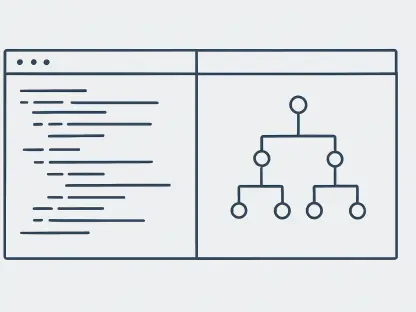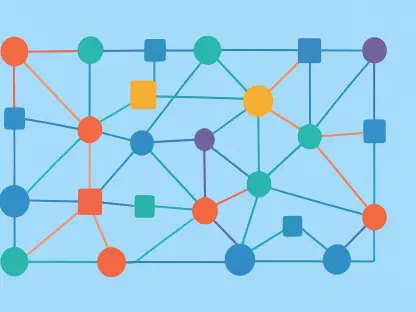

The traditional concept of software as a tool for human interaction is dissolving as autonomous AI agents take the driver’s seat in the digital economy. For years, the Software as a Service (SaaS) industry prioritized the “user experience,” pouring billions into intuitive interfaces and colorful dashboards. However, a seismic shift has occurred where the primary consumer of data is no longer a person looking at a screen, but a machine executing logic. This transition marks the dawn of a post-human software paradigm, where value is derived from machine readability and autonomous execution rather than visual appeal.
This inversion is forcing a complete reimagining of the software ecosystem. As agentic coding—the process where AI autonomously builds and deploys code—becomes the industry standard, the friction points that once defined the developer’s life are vanishing. The significance of this change lies in its efficiency; when software manages itself, the speed of innovation is no longer limited by human cognitive cycles. Consequently, the tools we use must adapt to a world where the “user” is a silicon-based entity requiring structured data streams instead of graphical metaphors.
The Dawn of a Post-Human Software Paradigm
Development workflows have evolved from labor-intensive manual syntax toward highly automated, self-sustaining systems. Historically, version control and deployment pipelines were designed to help human teams coordinate their efforts. Today, these same environments serve as the training grounds and operational theaters for AI agents. The move toward agentic coding signifies a transition where AI navigates complex repositories, manages technical debt, and optimizes architectural decisions without needing a human to approve every pull request.
This structural shift renders the traditional “human-in-the-loop” model a bottleneck. In the current landscape, software is increasingly built by agents for other agents, creating a closed loop of production and maintenance. This does not merely accelerate the development cycle; it fundamentally changes the nature of the software itself. Programs are becoming more modular and data-centric, designed to be disassembled and reassembled by algorithms that prioritize functional performance over human readability or traditional documentation standards.
The Structural Inversion of Software Value
The Obsolescence: The Dashboard Economy
A significant sector of the SaaS market that once thrived on providing “insights” through visual reporting is facing a terminal crisis. For years, managers relied on specialized tools to aggregate data from Jira or GitHub into digestible DORA metrics and performance graphs. However, the emergence of advanced Large Language Models and tools like Claude Code has made these static visualization layers redundant. If an autonomous agent can query a database and deliver a precise status report via a command-line interface, the need for a subscription-based, pre-packaged dashboard effectively disappears.
This creates an existential threat for companies that act merely as secondary visualization layers. The market is shifting away from “insight-only” platforms toward tools that offer deep integration and raw data accessibility. SaaS providers that fail to provide unique data generation capabilities are being bypassed by agents that prefer direct access to the source. The value proposition of software is moving from “How does this look to a manager?” to “How easily can an agent ingest this data to make a decision?”
Strategic Pivots: Toward Machine Monitoring
In response to the diminishing returns of human-centric reporting, forward-thinking providers are rebranding their core utility. There is a visible move away from monitoring human productivity toward auditing the safety, reliability, and cost-efficiency of AI agents. Instead of tracking how many tasks a human engineer completes, the new generation of infrastructure focuses on the behavioral patterns of autonomous coding entities. This shift reflects a broader industry consensus: as labor migrates to machines, the management framework must naturally follow.
The risk for modern enterprises lies in staying tethered to human-centric metrics while the actual work is performed by software agents. New oversight protocols are being developed to ensure that autonomous loops do not spiral out of control or introduce systemic vulnerabilities. Companies are now investing in “agent-observability” stacks, which prioritize high-frequency telemetry over human-readable summaries. This transition ensures that the oversight remains as fast and as scalable as the labor it is meant to govern.
The Power: Data Ingestion and Infrastructure
The divide in the contemporary SaaS landscape is becoming clear: companies that merely display data are at risk, while those that own the raw data infrastructure are thriving. Platforms that manage the ingestion of logs and time-series data, such as Datadog, occupy a strategic “moat” because they provide the essential context that AI agents need to function. In a troubleshooting scenario, an agent does not require a pretty graph to identify a system failure; it needs raw, high-fidelity log data to find the root cause and deploy a fix.
The strategic focus has shifted toward the Model Context Protocol (MCP), a standard that allows software to act as a structured data source for AI. By implementing MCP, a service ensures that it is discoverable and usable by the agents that now navigate the tech stack. This protocol effectively serves as the new “front end” for software, where the quality of the data interface determines whether a tool is integrated into the autonomous loop or left to gather dust in an unused browser tab.
Emerging Trends in Non-Human Decision Making
The future of the industry is being shaped by the rise of the machine as the primary customer. We have entered an era where AI agents, rather than human procurement officers, increasingly evaluate and select the tools within a tech stack. This leads to a “de-branding” of software; when an agent chooses a tool based on API latency and documentation accuracy, the visual identity and marketing copy of a SaaS company become irrelevant. We are seeing a future dominated by autonomous operations loops where systems self-heal and self-update without human intervention.
Furthermore, the economic and regulatory framework of the technology sector is being rewritten to accommodate these silicon-based decision-makers. Procurement cycles that once took months are being compressed into milliseconds as agents run simulations to find the most efficient tool for a specific task. This shift necessitates a move toward transparent, performance-based pricing and standardized data formats, as agents will naturally gravitate toward the path of least resistance and highest utility.
Adapting to the Agentic Era
To survive this transition, businesses and professionals must adopt a machine-first mindset. For SaaS providers, the most actionable strategy is to prioritize API-first architectures and implement robust protocols to ensure their services are agent-ready. Developers and managers are pivoting from being “doers” to being “orchestrators,” focusing on the governance and safety of autonomous systems rather than manual task execution. The key to long-term viability lies in providing the “connective tissue” that allows the agentic ecosystem to thrive.
As the industry moves forward, organizations should audit their current software dependencies to identify which tools are still human-dependent and which can be offloaded to autonomous agents. Investing in high-quality data pipelines and standardized metadata will be more valuable than investing in user interface redesigns. The goal is to create an environment where the data is the product, and the delivery mechanism is optimized for machine consumption, ensuring the company remains relevant in an increasingly automated marketplace.
Navigating the Machine-Led Future
The rise of agentic coding represented the final transition from software as a tool for humans to software as an autonomous ecosystem. As AI agents took over the heavy lifting of development, monitoring, and decision-making, the traditional SaaS playbook was discarded. The significance of this shift was profound; it moved the industry toward a world of autonomous operations where speed and data integrity became the only currencies that mattered. Organizations that embraced this machine-led reality by providing high-quality data interfaces defined the current decade of technology, while those focused on the human interface were left behind in the silent efficiency of the machine loop. Use of the Model Context Protocol became the standard for survival, effectively bridging the gap between raw infrastructure and intelligent action. Strategies shifted toward the governance of these autonomous loops, ensuring that as the human presence in the technical cycle faded, the robustness of the system remained uncompromised. This evolution fundamentally altered the economic landscape, making data accessibility the ultimate competitive advantage.