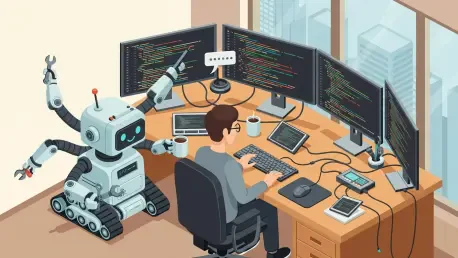

In the fiercely competitive landscape of artificial intelligence, where proprietary models are guarded like state secrets, a detailed blueprint has emerged from an unlikely source, revealing not just the tool, but the intricate human processes that unlock its true potential. The strategies, disclosed by key figures behind Anthropic’s Claude, outline a sophisticated development methodology that treats the AI not as a mere assistant, but as a core member of a high-performance engineering team, fundamentally altering the calculus of software creation. This playbook moves beyond theoretical applications, offering a battle-tested glimpse into how the creators of a leading AI model leverage their own technology, setting a new standard for AI-assisted development that has begun to ripple across the industry.
This is not simply about writing code faster; it is about re-architecting the very fabric of the development lifecycle. The significance of this methodology lies in its transformative potential, shifting AI coding tools from experimental novelties to production-critical infrastructure. As organizations race to integrate AI into their workflows, the competitive edge is increasingly defined not by access to a specific model, but by the sophistication of the human-AI interaction patterns a team can master. The techniques from Anthropic’s engineers provide a credible, road-tested framework for this new paradigm. This marks a critical inflection point, signaling a move away from passive AI prompting toward an active, strategic orchestration of multiple AI agents, a change that redefines the developer’s role from a solitary coder to that of an AI collaborator and systems architect.
Beyond Autocomplete: How Are Claudes Creators Redefining AI Assisted Development
The foundational shift in Anthropic’s approach is the transition from a linear, single-threaded interaction with an AI to a massively parallel one. The team’s most lauded productivity enhancement involves leveraging a standard software development tool, git worktrees, in a novel way to run three to five simultaneous, independent sessions of their AI, Claude. This method transforms the development environment into a multi-agent system, where each AI instance can tackle a discrete task, such as writing new code, analyzing logs, or refactoring existing modules, all at the same time. This parallel processing model is a departure from the conventional request-and-response pattern, instead creating a dynamic where the developer acts as a conductor, orchestrating a symphony of AI agents to accelerate progress on multiple fronts.
To make this parallel workflow seamless, the Anthropic team has invested in deep environmental integration, effectively lowering the friction of adoption until it becomes the default mode of operation. This is exemplified by the native support for git worktrees built directly into the Claude Desktop application, a feature created internally to streamline the process. Engineers further enhance this system with personalized shell aliases, allowing them to switch between different AI-powered work environments with a single command. This level of customization and integration demonstrates a core principle of their playbook: the environment itself must be optimized to support a new way of working. The tool must not only be powerful but also ergonomic, encouraging and reinforcing the most effective development patterns through its very design.
The specialization of these parallel AI sessions adds another layer of sophistication to the workflow. Developers often designate specific worktrees for distinct types of cognitive labor, creating a clear separation of concerns. For instance, one worktree might be dedicated exclusively to development tasks, with its AI context primed for code generation and debugging. Concurrently, another “analysis” worktree could be used for querying databases or parsing server logs, keeping the investigative context separate from the creative one. This structured approach prevents context pollution between tasks, allowing each AI instance to maintain a highly focused and relevant understanding of its specific domain, which leads to more accurate and efficient outputs across the board.
Why This Playbook Matters: From Experimental Tool to Production Critical Infrastructure
The competitive landscape for AI coding assistants has become a battleground of titans, with major technology companies and agile startups all vying for developer loyalty. In this crowded market, functionality is often measured by benchmarks and feature lists. However, Anthropic’s internal playbook suggests that the true differentiator lies not in the raw power of the underlying model but in the methodology used to wield it. While tools like GitHub Copilot and Amazon CodeWhisperer have focused heavily on inline code completion and suggestion, Anthropic’s approach emphasizes a deeper, more strategic partnership between human and machine. This focus on workflow over raw capability provides a distinct competitive angle, framing the AI as a collaborator in problem-solving rather than a simple code generator.
The credibility of these techniques is significantly amplified by their origin. These are not theoretical best practices conceived by academics or consultants; they are battle-tested strategies honed by the very engineers who build and maintain the Claude model. This pedigree lends an unparalleled authenticity to the playbook. When the creators of a sophisticated AI system reveal that their “single biggest productivity unlock” is a specific workflow pattern, it carries more weight than any marketing claim. It provides a direct line of sight into how elite practitioners are extracting maximum value from their own creations, offering a template that other development teams can adopt with a high degree of confidence in its efficacy and practicality.
Ultimately, the dissemination of this playbook marks a pivotal moment in the evolution of software development, signaling a fundamental shift in how developers interact with their AI counterparts. The transition is from a passive, transactional relationship—where the developer asks a question and receives an answer—to an active, collaborative partnership. The developer’s role is elevated from that of a mere coder to an orchestrator of AI agents, a strategist who designs complex workflows and guides AI partners toward a common goal. This change has profound implications for developer skills, team structures, and the very definition of productivity in the modern software engineering discipline.
The Core Pillars of Anthropics Development Strategy
A counterintuitive yet central pillar of Anthropic’s strategy is a disciplined, plan-first philosophy. This approach deliberately inverts the common developer instinct to dive immediately into writing code, instead prioritizing an exhaustive planning phase. The goal is to articulate the problem and the proposed solution with such clarity and detail that the AI can execute the implementation in a single, successful attempt. This front-loading of cognitive effort into planning significantly reduces the churn and rework that often results from a rush to implementation, embodying the old adage of “measure twice, cut once” for the age of AI. By treating planning as the highest-leverage activity, developers ensure that the AI’s powerful execution capabilities are aimed squarely at the right target from the outset.
To further refine this planning process, the team employs an innovative adversarial review system using multiple AI instances. An engineer might first task one Claude instance with generating a detailed technical plan. Then, a second, separate Claude instance is brought in and instructed to act as a skeptical senior engineer, critically reviewing the plan for architectural flaws, logical gaps, or potential edge cases. This AI-powered peer review process surfaces weaknesses before a single line of code is written, drastically lowering the cost of correcting architectural errors. This technique institutionalizes a form of automated design critique, ensuring that plans are robust and well-vetted before being handed off for implementation.
The discipline of this philosophy extends beyond the initial planning phase. A critical element of the team’s methodology is the learned instinct to immediately revert to “plan mode” the moment an implementation detail goes awry. Instead of attempting to patch a failing approach, developers are trained to halt implementation, reassess the plan in light of the new information, and formulate a new strategy with their AI partner. This prevents the accumulation of technical debt and ensures that the project remains on a solid architectural foundation. This constant willingness to return to the drawing board reflects a mature understanding of software development, where acknowledging a flawed plan early is far more efficient than persisting with it.
Another core pillar is the creation of a self-documenting AI system through a living knowledge base, typically a file named CLAUDE.md. This practice transforms every correction into a durable learning moment. After identifying and fixing a mistake made by the AI, developers conclude the interaction with a simple but powerful instruction: “Update your CLAUDE.md so you do not make that mistake again.” This prompt encourages the AI to synthesize the lesson from the specific error into a general rule or guideline for itself. The result is an AI that progressively learns a project’s specific constraints, coding standards, and architectural patterns, effectively becoming more intelligent and context-aware over time.
This CLAUDE.md file is not a static document but an evolving repository of institutional knowledge, co-authored by the human developer and the AI. The team advocates for a process of continuous refinement, where this file is ruthlessly edited and optimized until there is a measurable decrease in the AI’s error rate. This data-driven approach treats the AI’s guidance system as a tunable component of the development environment. By systematically improving the quality of the instructions within this file, the team can directly enhance the AI’s performance and reliability, creating a powerful feedback loop that drives continuous improvement.
More advanced practitioners have extended this concept into a hierarchical knowledge structure. Instead of a single, monolithic file, the AI is instructed to maintain a dedicated notes directory for each project or even for each major task. The main CLAUDE.md file then serves as a high-level index, pointing to these more specific notes. This architecture allows the AI to access both global best practices and highly specific, project-level context, mirroring how an experienced human engineer balances general software principles with the unique requirements of a particular codebase. This method ensures that the AI’s knowledge is both broad and deep, making it a more effective partner across a wide range of development contexts.
The playbook also champions a radical degree of trust in the AI’s ability to perform autonomous debugging. The prevailing mindset is to provide Claude with high-level context about a bug and then delegate the entire resolution process, from diagnosis to implementation of the fix. This contrasts sharply with traditional debugging, where a developer painstakingly steps through code line by line. Anthropic’s engineers have found that when given sufficient context—such as a bug report, relevant code snippets, and access to error logs—the AI is remarkably capable of identifying the root cause and proposing a correct solution on its own.
This autonomous approach is supercharged by seamless integrations with common development tools, particularly collaboration platforms like Slack. Through a specialized protocol, an engineer can copy an entire bug report thread from Slack, paste it into the Claude interface, and issue a simple one-word command: “fix.” The AI then parses the conversational context, extracts the technical details of the problem, and proceeds to work on a solution, dramatically reducing the context-switching overhead for the human developer. This turns bug reports from passive documents into active, executable inputs for the AI, streamlining the entire debugging workflow from discovery to resolution.
The scope of delegation extends to highly complex and specialized tasks that traditionally require significant senior engineering expertise. For example, team members routinely hand off the analysis of failing continuous integration (CI) tests or the troubleshooting of intricate Docker log outputs from distributed systems. The AI’s ability to process and find patterns in vast amounts of unstructured log data often allows it to pinpoint issues that a human might overlook. This practice frees up senior engineers from time-consuming diagnostic work, allowing them to focus on more strategic architectural challenges, while the AI handles the tactical, deep-dive investigations.
Advanced Techniques and Environmental Tuning for Maximum Impact
Beyond core strategies, Anthropic’s engineers cultivate a library of personal AI tools by encapsulating reusable workflows into custom “skills.” The guiding philosophy is simple and pragmatic: if a task is performed more than once a day, it should be automated into a skill. These skills are then committed to version control, transforming ad-hoc automations into durable, sharable, and versioned assets for the entire team. This practice moves beyond simple prompting and into the realm of building a personalized, compounding library of AI-powered capabilities that grow in value over time.
The creativity in applying this philosophy is evident in the diverse range of skills the team has developed. One notable example is a /techdebt command that, when run at the end of a session, directs the AI to scan for and refactor duplicated code or other common code smells, integrating technical debt management into the daily workflow. Another powerful skill syncs recent content from disparate sources like Slack, Google Drive, and GitHub into a single, cohesive context file, solving the pervasive problem of information fragmentation. This allows the AI to have a holistic view of a project’s current state without the developer needing to manually collate information.
This concept of skills extends to the creation of highly specialized, domain-specific agents. Some engineers have built what they describe as “analytics-engineer-style agents” capable of independently writing data transformation models, reviewing them for correctness, and testing them in a development environment. This represents a significant leap from general-purpose assistance to specialized, autonomous agents tailored for complex, multi-step workflows. By developing these agents as reusable skills, the team is effectively building a stable of expert AI assistants, each one optimized for a particular role within the software development lifecycle.
The playbook also details advanced prompting techniques designed to invert the typical human-AI dynamic, positioning Claude not as a subordinate but as a rigorous and demanding collaborator. One powerful prompt is, “Grill me on these changes, and do not make a pull request until I pass your test.” This transforms the AI into a gatekeeper for code quality, forcing the developer to articulate the rationale behind their decisions and defend them against critical questioning. This adversarial process often uncovers flawed assumptions or overlooked edge cases far more effectively than a passive review would.
Another crucial technique is used to escape the trap of settling for a suboptimal solution. After an initial, perhaps functional but inelegant, fix has been implemented, a developer can prompt the AI with: “Knowing everything you have learned, discard this entire approach and implement the elegant solution.” This prompt liberates the AI from the constraints of the previous attempt, allowing it to leverage the context and insights gained during the first pass to devise a superior, more robust architecture. It is a powerful method for overcoming the anchoring bias that can lead to iterating on a flawed foundation.
Underpinning all of these advanced interactions is a renewed emphasis on the foundational software engineering practice of detailed specification. The team has found a direct and unambiguous correlation: the quality of the AI’s output is directly proportional to the quality and specificity of the initial requirements provided by the human. This reinforces the idea that as AIs take on more implementation tasks, the uniquely human skill of precisely defining problems and desired outcomes becomes even more critical. In this new paradigm, the prompt is the specification, and its clarity determines the success of the project.
Finally, the playbook recognizes that achieving maximum impact from AI collaboration requires optimizing the foundational layer of the developer’s environment: the terminal. There is a strong team preference for modern terminal emulators like Ghostty, which offer superior visual clarity through features like synchronized rendering and full 24-bit color support. In an environment where a developer is managing multiple parallel AI sessions, the ability to clearly differentiate between contexts is not a luxury but a necessity for maintaining situational awareness and avoiding costly errors.
This environmental tuning extends to the customization of the terminal’s user interface. Engineers use Claude’s built-in commands to create a custom status bar that persistently displays critical information, such as the amount of context the AI is currently using and the active git branch. This constant, ambient feedback helps developers manage the AI’s limited context window more effectively and maintain a clear mental model of their multi-threaded workspace. This level of meticulous organization, often involving color-coding tabs or using terminal multiplexers like tmux, is essential for managing the cognitive load of parallel development.
Perhaps the most surprising recommendation for environmental optimization is the widespread adoption of voice dictation for crafting prompts. The rationale is based on simple human biology: most people can speak about three times faster than they can type. By using voice-to-text, developers can provide far more detailed, nuanced, and context-rich prompts than they would if they were typing, leading to significantly better outputs from the AI. This simple ergonomic shift removes a key bottleneck in the human-AI communication loop, demonstrating that even low-tech solutions can have an outsized impact when integrated thoughtfully into a high-tech workflow.
Evolving the Developer Role: From Coder to AI Orchestrator
A more advanced architectural pattern employed by the team involves the use of subagents to distribute cognitive load and manage complex tasks. By simply appending a command like “use subagents” to a request, a developer can instruct the primary AI instance to break down a large problem and delegate pieces of it to subordinate, specialized AI agents. This approach is particularly effective for preventing the main agent’s context window from becoming cluttered with low-level details, allowing it to maintain a clean, high-level view of the overall objective. The developer’s role in this scenario shifts from direct implementer to a manager who delegates tasks to a team of AI agents.
This subagent architecture mirrors the hierarchical structure of human engineering teams. The main agent acts like a tech lead, understanding the overarching goals and coordinating the work, while the subagents function as individual contributors focused on specific, self-contained implementation tasks. This distribution of labor not only keeps the primary context clean but also allows for a greater degree of parallelism and specialization. It represents a sophisticated model for composing AI capabilities to tackle problems that would be too complex for a single AI instance to handle effectively.
The team has even implemented AI-powered security layers using this multi-agent pattern. By using system hooks, they can automatically route any request that requires elevated permissions—such as file system access or network calls—to a separate, highly capable AI model like Opus 4.5. This “security agent” is specifically tasked with scanning the request for potential threats or malicious commands, and it can be configured to auto-approve safe, routine operations while flagging suspicious ones for human review. This creates an intelligent, automated guardrail that balances the need for developer velocity with the imperative of maintaining a secure development environment.
The playbook also demonstrates how these AI workflows can extend far beyond the traditional boundaries of software development, turning Claude into a powerful, on-demand data analyst. By leveraging the AI’s ability to interact with command-line interface (CLI) tools, engineers can perform complex data queries using natural language. The team has a checked-in, reusable BigQuery “skill” that allows any developer to ask analytical questions directly within their coding environment, effectively eliminating the need to write SQL for many common data exploration tasks.
This practice fundamentally changes how developers interact with data. Instead of switching contexts to a separate database client, writing and debugging complex SQL queries, and then manually interpreting the results, an engineer can simply ask a question like, “What was the daily active user count for the past two weeks?” The AI, using its pre-configured skill, translates this natural language query into the appropriate CLI commands, executes them, and presents the analyzed results back to the user in a human-readable format. This has proven so effective that some senior team members reported not having written a single line of SQL in over six months.
The power of this concept lies in its generalizability. Because it relies on the common interface of the command line, the approach can be extended to virtually any data source or backend service that offers a CLI, an API, or a similar programmatic interface. This makes it possible to integrate Claude with a wide variety of existing data infrastructure, from traditional relational databases to modern data warehouses and streaming platforms. It envisions a future where the AI assistant serves as a universal translator for data, allowing developers to converse with their systems in natural language rather than specialized query languages.
Finally, the most forward-looking aspect of the playbook reframes the AI assistant not just as a tool for productivity, but as a platform for continuous learning and professional development. Engineers can configure their AI to operate in an “Explanatory” or “Learning” style, which instructs it not only to perform a task but also to explain the reasoning, trade-offs, and underlying principles behind its actions. This transforms every interaction, from a simple code change to a complex architectural decision, into a personalized micro-lesson, allowing developers to deepen their understanding as they work.
The AI’s teaching capabilities extend into generating custom educational materials on demand. When faced with an unfamiliar or complex section of the codebase, a developer can ask Claude to create a visual HTML presentation to explain it. This ability to generate bespoke, context-aware learning content can dramatically accelerate the process of onboarding to a new project or mastering a new technology. Similarly, for understanding system architectures or network protocols, engineers frequently ask the AI to generate ASCII diagrams, leveraging a simple, text-based format to create powerful visual aids that clarify complex relationships.
Perhaps the most sophisticated educational application is a custom-built “spaced-repetition learning” skill. This skill facilitates an active, Socratic learning process where the developer first explains their understanding of a concept. The AI then asks targeted follow-up questions to probe for weaknesses and identify gaps in their knowledge. The results of this interaction are then stored, and the system schedules future reviews based on spaced-repetition principles to ensure long-term retention. This transforms the AI from a passive source of information into an active, personalized tutor that systematically works to strengthen a developer’s expertise over time.
The detailed strategies emerging from within Anthropic painted a clear picture of a new frontier in software development. The shift was not merely an incremental improvement but a fundamental re-imagining of the relationship between human creativity and machine execution. By embracing concepts like parallel processing, adversarial planning, and autonomous subagents, these engineers had moved far beyond using AI as a simple assistant. They had successfully integrated it as a core collaborator, a tireless reviewer, and a dedicated teacher, fundamentally altering their daily workflows and, in the process, offering the rest of the industry a glimpse into a more efficient and intelligent future of coding. The playbook they established was not just a set of tips; it was a foundational text for a new discipline, one where the most valuable skill was not just writing code, but orchestrating intelligence.