
In a strategic maneuver that reverberates through the global semiconductor industry, Microsoft is reportedly in advanced discussions to partner with Broadcom for the co-design of its next generation of custom artificial intelligence chips, a move that signals a significant reordering of its hardware strategy. This is not a simple vendor swap but a calculated pivot that underscores a monumental shift among technology titans: the relentless drive toward vertical integration. As the demands of generative AI strain existing infrastructure, hyperscale cloud providers are no longer content with off-the-shelf solutions, instead opting to architect their own silicon from the ground up to gain a definitive competitive edge.
This report analyzes the multifaceted rationale behind Microsoft’s potential shift from its current partner, Marvell Technology, to Broadcom. It examines the broader industry trend of in-house chip development, the specific technical and economic calculus driving Microsoft’s decision, and the geopolitical and supply chain complexities that form the backdrop for this high-stakes partnership. The negotiation represents a critical inflection point in Microsoft’s quest to fortify its Azure cloud platform, optimize its AI services like Copilot, and secure a dominant position in the escalating arms race against rivals Google and Amazon, where control over the foundational hardware is becoming synonymous with market supremacy.
The New Arms Race Why Hyperscalers Are Building Their Own AI Chips
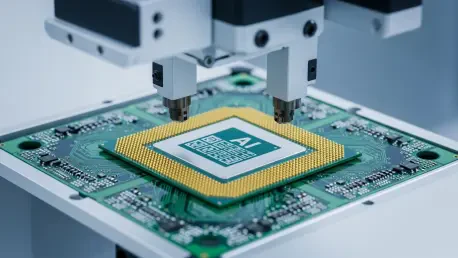
The era of relying exclusively on general-purpose GPUs, once the undisputed workhorses of AI, is rapidly giving way to a new paradigm of custom-designed silicon. Hyperscale cloud providers have come to the conclusion that off-the-shelf hardware, while powerful, represents a one-size-fits-all approach to problems that are becoming increasingly specialized and resource-intensive. Custom application-specific integrated circuits (ASICs) provide a direct path to achieving unparalleled performance and power efficiency by tailoring the chip’s architecture to the precise computational demands of specific AI workloads, whether it be natural language processing, computer vision, or large-scale model training.
This movement toward bespoke hardware is no longer a fringe trend but has become the central strategic pillar for the cloud computing oligopoly. Google pioneered this approach years ago with its Tensor Processing Units (TPUs), which have been instrumental in powering its core search and AI products. Not to be outdone, Amazon Web Services developed its own Trainium and Inferentia chips, explicitly designed to optimize the cost-performance ratio of machine learning training and inference on its cloud platform. Microsoft’s own development of the Maia AI accelerator and Cobalt CPU is its direct answer to these initiatives, placing it firmly within this elite group of vertically-integrating technology giants.
The immense, multi-billion-dollar investment in research and development for these custom chips is fueled by the strategic imperative of vertical integration. By controlling the entire technology stack—from the silicon in the server racks to the software services delivered to end-users—hyperscalers can create a deeply optimized and highly defensible ecosystem. This end-to-end control translates directly into a significant competitive advantage, enabling them to offer faster, more powerful, and more cost-effective AI services. This, in turn, helps them attract and retain a larger share of the lucrative cloud computing market, making the ownership of foundational hardware a non-negotiable prerequisite for long-term dominance.
Analyzing Microsofts Strategic Calculus
The Triple Threat Chasing Performance Efficiency and Supply Chain Control
At the core of Microsoft’s strategic pivot is a trifecta of interconnected objectives: achieving superior performance, unlocking greater cost-efficiency, and establishing more resilient supply chain control. From a technical standpoint, custom ASICs empower Microsoft to design hardware that is perfectly optimized for its own massive and unique AI workloads, such as the complex models that underpin its rapidly expanding suite of Copilot services. This level of fine-tuning can yield dramatic improvements in processing speed and significant reductions in latency, which directly translates into a better and more responsive user experience. Economically, diversifying away from a heavy reliance on a single, high-margin supplier like Nvidia promises to substantially lower long-term operational expenditures, a critical consideration when operating data centers at a planetary scale.
This potential partnership with Broadcom marks the latest evolution in Microsoft’s sophisticated supply chain diversification strategy. The company has been methodically cultivating a network of partners to build a more robust and resilient hardware foundation. Its initial collaboration with Marvell Technology for data processing units laid important groundwork, but the exponential demands of generative AI now necessitate a partner with deeper and more specialized ASIC expertise. Broadcom, with its proven track record in high-performance custom silicon, represents a significant upgrade in design capability. This strategic move is complemented by Microsoft’s major manufacturing alliance with Intel, which leverages Intel’s foundry services to onshore a portion of its chip production. This multi-pronged approach demonstrates a clear and sophisticated strategy to de-risk its supply chain from the geopolitical and logistical vulnerabilities associated with an over-reliance on any single partner or geographic region.
Reading the Tea Leaves Market Reactions and Financial Ramifications
The financial markets reacted to the news of the potential partnership with swift and telling clarity, immediately recalibrating valuations to reflect the perceived winners and losers of this significant realignment. Broadcom’s stock value experienced a notable increase, a direct reflection of investor confidence in the company’s ability to secure another multi-billion-dollar custom AI chip contract with a hyperscale titan. In stark contrast, Marvell Technology’s shares faced downward pressure, as the potential loss of Microsoft as a key design client cast a shadow of uncertainty over its future revenue streams and its position in the competitive custom data center silicon market.
Broadcom’s ascendant stature in the AI hardware ecosystem is the result of deliberate strategic positioning and flawless execution on high-profile projects. The company’s successful partnership with OpenAI to co-develop next-generation AI processors has already cemented its reputation as a premier design house for the most demanding and cutting-edge AI silicon. This established relationship creates a powerful and undeniable synergy for Microsoft, which has invested billions in OpenAI and integrated its technology deeply into its own products. By aligning its custom chip roadmap with a partner already enmeshed with OpenAI’s hardware requirements, Microsoft can streamline development, foster deeper integration, and ultimately accelerate the pace of innovation across its entire AI portfolio.
This high-profile negotiation serves as a bellwether for the broader semiconductor industry, highlighting the explosive growth trajectory of the custom AI chip market. Industry forecasts indicate that this segment will continue its rapid expansion, capturing an increasingly larger share of the overall semiconductor market value in the period from 2025 to 2030. This fundamental shift is compelling traditional chipmakers to rethink and adapt their business models, while simultaneously creating immense opportunities for design specialists like Broadcom and the advanced foundries capable of manufacturing these complex, leading-edge chips. The influence of these hyperscaler-driven initiatives will continue to reshape supply chains, R&D priorities, and competitive dynamics across the global industry.
High Hurdles in the Hardware Race Geopolitics Supply Chains and Power Consumption
The pursuit of custom silicon, while strategically sound, requires navigating a minefield of inherent complexities and vulnerabilities that define the modern global semiconductor supply chain. This intricate network, which spans multiple continents and involves hundreds of specialized suppliers for materials, equipment, and services, is perpetually susceptible to disruption. Events ranging from raw material shortages and logistical bottlenecks to international trade disputes can create cascading delays, impacting production timelines and delaying the critical rollout of new data center infrastructure designed to support next-generation AI services.
Compounding these logistical hurdles are significant and escalating geopolitical tensions, particularly those concentrated around Taiwan, which is home to the world’s most advanced and largest semiconductor foundry, TSMC. The heavy concentration of leading-edge chip manufacturing within this single geographic location represents a substantial systemic risk for the entire global technology industry. Microsoft and its peers are acutely aware of this vulnerability, and it serves as a primary motivator for strategies aimed at diversifying manufacturing partners and onshoring a portion of production to more politically stable regions, such as the United States and Europe.
Beyond the challenges of supply chain management and geopolitics lies an equally formidable and escalating environmental concern: the immense energy appetite of AI data centers. Training and operating the large-scale models that power modern AI services consume vast and growing amounts of electricity, raising critical questions about sustainability and the industry’s collective carbon footprint. A key promise of custom ASICs is their superior power efficiency. By designing chips that perform specific computational tasks with minimal wasted energy, companies like Microsoft can help mitigate the explosive growth in power consumption, making their ambitious AI goals both more environmentally responsible and more economically viable in the long run.
Navigating the Global Tech Cold War Alliances Dependencies and Strategic Manufacturing
The global technology landscape is increasingly defined by a strategic competition between major world powers, a dynamic that influences everything from national trade policy to international technology partnerships. This new “tech cold war” environment forces multinational corporations like Microsoft to make exceptionally careful decisions regarding their alliances and supply chains to ensure operational resilience and compliance with evolving national security mandates. The selection of a key partner is no longer based solely on technical merit or cost-effectiveness; it is now heavily weighted by factors like geopolitical alignment and the urgent need to secure access to critical technologies without running afoul of export controls or other trade restrictions.
In direct response to this complex and often volatile environment, Microsoft is actively pursuing a deliberate and multi-pronged strategy to onshore and “friend-shore” its semiconductor manufacturing capabilities. The landmark agreement with Intel to utilize its advanced foundry services in the United States is the cornerstone of this critical effort. This strategic move not only diversifies Microsoft’s manufacturing base away from its heavy concentration in Asia but also aligns seamlessly with U.S. government initiatives, such as the CHIPS Act, which are designed to bolster domestic semiconductor production and reduce foreign dependencies. By investing in local manufacturing, Microsoft helps build a more secure and resilient supply chain for its most critical hardware components.
In this intricate global chess game of technology and influence, the formation of strategic alliances is paramount. No single company, regardless of its size or resources, can achieve mastery over every complex aspect of modern semiconductor design, manufacturing, and advanced packaging. Long-term success now depends on building a robust and trusted network of specialized partners. The potential collaboration with Broadcom for world-class design, coupled with the existing partnership with Intel for cutting-edge fabrication, perfectly exemplifies this modern approach. Such alliances provide Microsoft with access to best-in-class expertise and technology, enabling the company to accelerate its innovation cycle while adeptly navigating the intricate web of global dependencies and international rivalries.
Architecting Tomorrows AI The Future of Custom Silicon and Edge Computing
The future of artificial intelligence acceleration is inextricably linked to continued and rapid innovation in the field of high-performance ASICs. A deep collaboration between a hyperscale cloud provider like Microsoft and a premier design specialist like Broadcom holds the potential to push the boundaries of what is possible in both AI training and inference. By co-designing hardware and software in a tightly integrated fashion, they can unlock new levels of performance and efficiency, enabling the development and deployment of even larger, more sophisticated, and more capable AI models. This powerful synergy could lead to significant breakthroughs in areas like model efficiency, drastically reducing the computational cost of AI and making these powerful new capabilities more accessible to a wider audience.
While the immediate and most visible focus of custom silicon development is on powering massive, centralized data centers, its applications will inevitably and logically expand to the network’s edge. The paradigm of edge computing, which involves processing data closer to the point where it is generated, requires small, powerful, and extremely power-efficient chips. The design principles, intellectual property, and expertise gained from developing large-scale data center ASICs can be adapted and scaled down to create custom silicon for a new generation of edge devices, ranging from intelligent factory equipment and retail systems to autonomous vehicles and advanced robotics. This will enable more sophisticated AI applications to run locally, providing benefits of lower latency, enhanced privacy, and reduced reliance on constant network connectivity.
Ultimately, the Microsoft-Broadcom partnership represents more than just a business deal; it serves as a potential blueprint for the next generation of global AI infrastructure. The novel architectures and chip designs they develop could set new industry standards for performance, efficiency, and scalability, influencing hardware design across the sector. As these custom-designed systems are deployed across Microsoft’s vast, worldwide network of Azure data centers, they will form the computational backbone for an immense range of AI-powered services that touch everything from enterprise software to consumer applications. This collaboration could therefore play a pivotal role in shaping how AI is developed, deployed, and consumed on a global scale for years to come.
The End Game Why Vertical Integration Is Non-Negotiable for AI Supremacy
This report has demonstrated that in the contemporary AI landscape, controlling the entire technology stack—from the base layer of silicon to the customer-facing software application—was no longer a luxury but a critical necessity for market leadership. This vertical integration allowed for a degree of optimization, efficiency, and innovation that was unattainable when relying on off-the-shelf components. It created a powerful flywheel effect where hardware improvements drove software capabilities, and software demands informed the next generation of hardware design.
Microsoft’s strategic pivot toward Broadcom was therefore not merely a change in suppliers but a decisive maneuver to secure its long-term future in the AI era. It represented a calculated step to deepen its control over its technological destiny, reduce critical dependencies, and build a more resilient and performant infrastructure. The move underscored a fundamental understanding that in the race for AI supremacy, the companies that design their own tools will ultimately build the most powerful and defensible empires.
Looking forward, the companies that successfully mastered the complex art of custom hardware design were positioned to define the technological landscape of the coming decade. This capability unlocked not only superior performance and cost advantages but also the agility to innovate at a pace that competitors could not match. The long-term prospects for vertically integrated giants like Microsoft were exceedingly bright, as their ability to architect every layer of their service delivery would remain a profound and enduring competitive advantage.