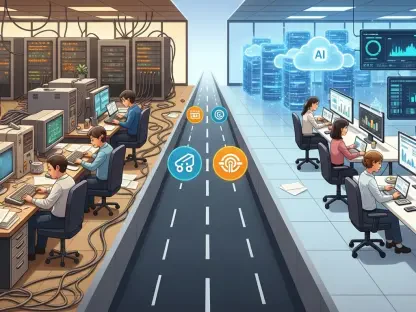

The conventional image of a software developer hunched over a keyboard for ten hours a day, manually typing out every bracket and semicolon, is rapidly fading into the archives of technological history. As we navigate the current landscape of 2026, the integration of generative artificial intelligence has moved past the stage of novelty and entered the realm of fundamental infrastructure. The industry is witnessing a profound shift where the barrier between human intent and machine execution is becoming thinner, leading many to wonder if the traditional coder is an endangered species. However, a closer look at market dynamics and project complexities reveals that while the labor of coding is being automated, the necessity for sophisticated engineering judgment has never been more critical to global economic stability.
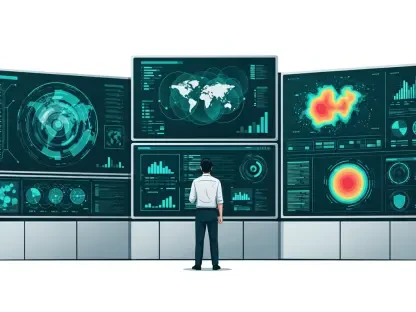
This evolution is characterized by a transition from syntax-heavy implementation to high-level system orchestration. Today, the software engineering sector serves as the backbone of every major global industry, from healthcare and finance to autonomous logistics. The current scope of the field has expanded beyond mere application development to encompass the management of massive, AI-integrated ecosystems that require constant oversight. Major market players are no longer just selling software; they are providing intelligent platforms that self-heal and optimize. Consequently, the significance of the developer has shifted from being a “writer” of instructions to a “governor” of complex digital intelligence, operating within a regulatory environment that increasingly demands transparency and accountability for automated outputs.
The Transformation of Professional Roles and Workflow
Emerging Technologies and the Shift Toward Strategic Architecture
The primary trend affecting the modern developer is the delegation of routine tasks to sophisticated AI agents. In the current professional environment, the “boilerplate” code that once consumed nearly half of a development cycle is now generated in seconds by localized large language models. This shift toward strategic architecture means that engineers are now expected to focus on how disparate systems communicate and scale rather than how a specific function is written. Emerging technologies like autonomous coding assistants and natural language compilers have turned the integrated development environment into a collaborative space where the human provides the “why” and the machine handles the “how.”
Consumer behaviors are also driving this change as the demand for hyper-personalized, real-time software experiences increases. Users now expect applications to adapt to their needs instantaneously, which requires developers to build systems that are flexible and modular. This market driver has created a new opportunity for developers to act as product designers and user experience specialists. Instead of getting bogged down in the minutiae of debugging syntax, professionals are spending their time designing resilient architectures that can withstand the unpredictable inputs of AI-generated content. The shift is definitively toward a model where the human developer is the pilot of a high-speed craft, rather than the mechanic building the engine by hand.
Market Projections and the Expanding Tech Labor Force
Despite early fears of AI-induced job losses, the demand for specialized tech labor continues to climb. Projections for the remainder of the decade suggest that while generalist roles may face saturation, high-level engineering positions will see growth rates between 15 and 34 percent. The market is not shrinking; it is bifurcating. There is an enormous need for professionals who can bridge the gap between traditional software logic and machine learning implementation. Data from the current year indicates that the global tech workforce is expanding to accommodate new roles such as AI architects and reliability engineers who specialize in automated systems.
Performance indicators within the industry show that teams utilizing AI-assisted workflows are completing project cycles up to 40 percent faster than those relying on traditional methods. This efficiency gain has not led to fewer hires but has instead allowed companies to take on more ambitious projects that were previously considered too costly or time-consuming. Forecasts based on current investment trends in Silicon Valley and global tech hubs suggest that the valuation of AI-integrated software services will continue to outpace traditional SaaS models. The labor force is evolving into a more diverse group of specialists who prioritize system integrity and data ethics over simple code production.
Navigating Systemic Risks and Technical Obstacles
The rapid adoption of AI is not without its share of systemic complexities and technical friction. One of the most significant obstacles is the “black box” nature of AI-generated logic, where a suggestion might appear functional on the surface but contains deep-seated security vulnerabilities or logical fallacies. When a human developer relies too heavily on an automated tool, there is a risk of losing the granular understanding of the codebase, making future troubleshooting a logistical nightmare. To combat this, many firms are implementing “human-in-the-loop” protocols that mandate rigorous manual reviews for any AI-suggested code that touches the core architecture or handles sensitive user data.
Regulatory and market-driven challenges further complicate the landscape as governments begin to catch up with the pace of innovation. There is a growing concern regarding the provenance of the data used to train coding assistants, leading to potential intellectual property disputes and “hallucinated” code that might infringe on existing patents. The solution lies in the development of proprietary, “clean-room” AI models trained exclusively on a company’s own verified repositories. Strategically, organizations are also investing in defensive AI—tools designed specifically to find the bugs that generative AI accidentally creates—ensuring that the speed of development does not compromise the safety of the end-user.
The Regulatory Landscape and Ethical Stewardship
The current regulatory environment is a patchwork of new laws and standards aimed at ensuring that AI does not become a liability. Compliance is no longer a footnote in the development process; it is a central requirement. Significant laws now dictate how automated systems must be audited for bias and how much autonomy an AI can have over critical infrastructure. For the developer, this means that ethical stewardship is now a core job requirement. They must ensure that the algorithms they deploy are not only efficient but also fair and transparent, adhering to international standards that prioritize consumer safety over raw processing power.
Security measures have evolved to address the new reality of AI-driven cyber threats. As AI makes it easier to write code, it also makes it easier for malicious actors to generate sophisticated exploits. Consequently, industry practices have shifted toward a “Zero Trust” architecture where every piece of code, whether written by a human or a machine, is treated as a potential risk until verified. This high level of scrutiny has transformed the role of the developer into that of a security analyst who must understand the broader implications of their code within the global digital ecosystem. Ethical transparency is becoming a competitive advantage for companies that can prove their AI models are built on a foundation of integrity.
The Future of the Multi-Disciplinary Developer
Looking ahead, the industry is moving toward a model of the “generalist-specialist.” The future developer will not only need to be proficient in multiple programming languages but will also need a firm grasp of data science, cloud infrastructure, and human psychology. Emerging technologies like quantum computing and edge AI are expected to be the next major disruptors, requiring a workforce that can pivot quickly between vastly different technical paradigms. Consumer preferences are shifting toward “invisible” technology, where the software is so well-integrated into daily life that the user never notices it, placing a premium on developers who can create seamless, low-friction interfaces.
Growth areas are likely to be found in the intersection of biology and software, as well as in the management of massive, decentralized networks. Innovation in these fields will be driven by global economic conditions that favor efficiency and sustainability. As energy costs for running massive AI clusters remain a concern, the next generation of developers will likely focus on “green coding”—the practice of writing highly efficient algorithms that require minimal processing power. The most successful professionals will be those who can navigate these multidisciplinary challenges, combining technical prowess with a vision for how technology can solve the world’s most pressing socio-economic problems.
Synthesis of Industry Prospects and Strategic Recommendations
The investigation into the evolving role of software engineering revealed that we are not witnessing the end of the developer, but rather the professionalization of the architect. It was clear throughout the analysis that the displacement of manual coding tasks by artificial intelligence has freed the human intellect to focus on higher-order problem solving and ethical oversight. The findings suggested that the most resilient professionals in the market are those who have embraced AI as a force multiplier rather than a competitor. They recognized that the value of a developer in the modern age is measured by their judgment, their ability to handle ambiguity, and their capacity to lead cross-functional teams through complex digital transformations.
Moving forward, the strategic focus for both individual developers and tech organizations should be on “AI literacy” and deep system knowledge. It is recommended that educational institutions and corporate training programs prioritize the teaching of architectural design and security auditing over rote memorization of syntax. For investors and stakeholders, the most promising areas for growth lie in companies that are developing the “connective tissue” between AI models and legacy business systems. The future belongs to the multidisciplinary engineer who treats AI as a sophisticated instrument, using it to build a world that is more efficient, more secure, and more human-centric. The industry transitioned from a period of frantic automation to one of measured, strategic integration, where the human element remained the ultimate arbiter of quality and purpose.