
Modern software engineering has reached a critical point of saturation where the cognitive overhead of managing micro-services and sprawling repositories often outweighs the actual act of writing creative code. AWS Kiro Crew emerged as a direct response to this bottleneck, offering an open-source agentic workspace that moves beyond the superficiality of standard code suggestions. It provides a framework where AI acts as a persistent collaborator rather than a temporary search tool, specifically designed to navigate the complexities of modern cloud-native environments.
The platform distinguishes itself by emphasizing the “agentic” aspect of development, where the software understands project context across multiple sessions. Instead of a stateless chat interface, the tool maintains a continuous awareness of the codebase and the developer’s goals. This shift enables a more fluid transition between high-level architectural planning and the granular details of implementation, effectively reducing the mental context-switching that typically drains productivity during a workday.
Introduction to the AWS Kiro Crew Workspace
The AWS Kiro Crew workspace functions as an orchestration layer designed to liberate engineers from the “toil” of repetitive maintenance tasks. It was built on the premise that developers should spend more time on logic and less on the administrative friction of software development. By integrating directly into the developer’s environment, it creates a unified space where human intent and machine execution can coexist without the need for constant micro-management.
What makes this implementation unique is its foundation in massive-scale internal testing. AWS refined the system through the daily workflows of over 500 internal engineers before releasing it to the public. This process ensured that the tool addresses real-world pain points, such as the difficulty of maintaining focus during long-running tasks or the challenge of keeping documentation and code in sync.
Technical Architecture and Core Capabilities
Autonomous Task Delegation and Asynchronous Execution
The core strength of the system lies in its ability to handle complex, multi-stage operations without requiring the user to wait for completion. Developers can delegate a high-level objective, such as refactoring a legacy module or investigating a performance regression, and continue working on other features. The agents handle the intermediate steps of exploration, testing, and verification in the background, signaling the human user only when a significant decision or review is required.
This asynchronous nature is a significant departure from traditional IDE plugins that provide immediate but isolated snippets of text. By utilizing long-running processes, Kiro Crew allows for deep-dive investigations that would be too time-consuming for a standard synchronous AI call. The persistence of context ensures that the agent does not “forget” the initial parameters of the task, even if the process spans several hours or involves multiple sub-directories.
Orchestration via Agent Client Protocol: ACP
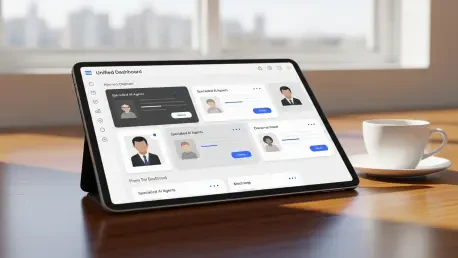
To solve the “black box” problem often associated with autonomous AI, the platform utilizes the Agent Client Protocol to provide total transparency into the agent’s logic. Through a dedicated dashboard, users can observe the “Activity” view, which displays every tool call, internal reasoning step, and partial result in real-time. This level of visibility is crucial for building trust, as it allows the developer to verify that the agent is following the correct path before it completes a major operation.
The protocol acts as a standardized communication bridge, ensuring that different specialized agents can collaborate under a single interface. By exposing the underlying tool usage, the system allows for easier debugging of the AI’s own actions. If an agent misinterprets a file structure, the developer can catch the error by looking at the specific command attempted, rather than just receiving a failed output at the end of the cycle.
Workflow Observation and Reusable Skill Generation
Perhaps the most forward-thinking feature is the system’s ability to learn from the developer’s specific environment and habits. By observing repetitive command sequences or recurring setup tasks, Kiro Crew can suggest the creation of custom AI “skills.” These skills are essentially localized automations that the agent can then perform independently in the future, effectively allowing the tool to grow more capable the longer it is used in a specific project.
This adaptive behavior bridges the gap between general-purpose AI models and the unique requirements of a particular organization’s codebase. Instead of relying on generic scripts, the system generates logic that understands local environment variables, specific testing frameworks, and internal documentation styles. This creates a highly personalized assistant that becomes more efficient as it accumulates knowledge about the developer’s preferences and the project’s idiosyncrasies.
Trends in Agentic Software Engineering
The release of Kiro Crew signals a broader industry transition from “assisted” to “agentic” engineering. In the past, AI tools were largely reactive, waiting for a prompt to generate a specific block of code. Today, the trend is moving toward proactive systems that identify issues before they are reported and execute maintenance tasks autonomously. AWS’s entry into this space with an open-source tool highlights a push for standardization in how these autonomous agents interact with human environments.
Moreover, this shift reflects a growing realization that increasing the volume of code output is not as valuable as improving the quality of the development lifecycle. By focusing on reducing cognitive load and managing “toil,” the industry is prioritizing the sustainability of the engineering profession. This movement toward agentic autonomy suggests that future development environments will be managed by a hybrid of human architects and AI operators who handle the heavy lifting of execution.
Real-World Applications and Use Cases
In practical scenarios, Kiro Crew has shown significant utility in the realm of DevOps and incident management. For example, when a system alert occurs, an agent can be tasked with triaging the ticket queue and performing an initial root-cause analysis by gathering relevant logs. This allows the human engineer to start their investigation with a summarized report and a list of suspected anomalies, rather than starting from a blank slate.
Furthermore, development teams utilize the tool for automated ticket triaging and code consistency checks. In large-scale repositories, keeping track of every minor bug or formatting issue can be overwhelming. The agents can independently scan for these issues, propose fixes, and even run the associated test suites to ensure no regressions were introduced. This implementation proves that AI agents are most effective when they act as a force multiplier for quality assurance.
Security Framework and Operational Challenges
Security remains a primary concern when allowing AI to execute commands on a local machine, a challenge AWS addressed with a “secure-by-design” strategy. The architecture uses an operating system-level sandbox and a “denied-by-default” policy for all tool installations and file access. By redacting credentials and validating every input, the system mitigates the risk of an agent inadvertently exposing sensitive data or executing malicious scripts.
However, operational hurdles still exist, particularly regarding the tool’s current reliance on the command-line interface. While the CLI is powerful for experienced engineers, it limits the tool’s accessibility for those who prefer a more visual integration. Additionally, the need for continuous auditing of signed logs adds another layer of administrative responsibility to the user. Balancing the autonomy of the agent with the necessary constraints of a secure environment is an ongoing challenge for the platform.
Future Outlook and Industry Impact
The trajectory of this technology suggests that the boundaries between local development and cloud-based orchestration will continue to blur. As the tool expands toward Windows and other operating systems, it will likely become a standard component of the modern developer’s toolkit. The long-term impact will be a redefinition of the “junior developer” role, as many entry-level tasks such as unit testing and documentation are handed off to autonomous agents.
Ultimately, this evolution could lead to a more democratized software production landscape where the barrier to building complex systems is lowered. As agents take over the mechanical aspects of coding, the value of high-level architectural thinking and creative problem-solving will increase. This transition might eventually alleviate the burnout prevalent in the industry by removing the most tedious aspects of the job, allowing engineers to focus on innovation.
Final Assessment of AWS Kiro Crew
The AWS Kiro Crew provided a robust demonstration of how agentic workflows can transform the daily experience of a software engineer. It successfully bridged the gap between basic code completion and truly autonomous task management by providing a secure, transparent, and persistent environment. The system’s ability to learn and generate reusable skills proved to be its most innovative contribution, offering a degree of personalization that set it apart from general AI assistants.
While the tool was restricted by its CLI-only nature and the overhead of managing a sandboxed environment, its benefits in reducing developer toil were undeniable. The implementation favored transparency through the Agent Client Protocol, ensuring that users never felt sidelined by the AI’s actions. In the end, AWS Kiro Crew established a high standard for the future of agentic engineering, proving that the most valuable AI tools are those that act as diligent partners rather than just smart calculators.