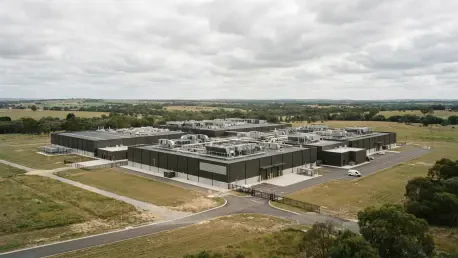

Shortening the time-to-market for digital infrastructure projects remains a central pillar of the proposed Cloud and AI Development Act. The European Union is currently navigating a pivotal transition in its digital policy, spearheaded by Diego Solier, a Spanish lawmaker and the rapporteur for the Cloud and AI Development Act (CADA). Representing the ECR group, Solier brings a technical background in IT to a legislative role that is traditionally dominated by career politicians. The central theme of his mandate is the pursuit of “digital independence,” a concept that seeks to rectify Europe’s profound reliance on foreign technology giants without succumbing to the pitfalls of isolationism. The Cloud and AI Development Act is not merely a set of rules; it is a strategic framework designed to bolster Europe’s data center capacity and foster a self-sustaining technological ecosystem. By streamlining regulatory permits and creating domestic demand through strategic public procurement, the EU aims to ensure that the foundations for AI remain within European control. This transition is not merely about competition; it is a fundamental shift toward ensuring that the European market can sustain its own technological needs while maintaining its core values of privacy and transparency in an increasingly interconnected world.
Modernizing the Legislative Framework
Simplifying the European Regulatory Environment
One of the primary goals of CADA is to pivot away from the “overregulation” that often characterizes European digital policy. European policy has frequently been criticized for creating innovation graveyards due to overlapping layers of compliance and complex reporting requirements. Solier recognizes that for Europe to compete, it must stop adding hurdles and start removing them. The harmonization of rules across member states is key to this effort. Currently, a cloud provider might face twenty-seven different sets of interpretations for a single directive, making cross-border scaling a logistical nightmare. CADA seeks to unify these standards, ensuring that a startup in Tallinn can deploy services in Lisbon with minimal administrative friction. This simplification is expected to attract more venture capital, as investors generally shy away from markets where legal uncertainty can stall growth for years. By focusing on clarity, the EU hopes to foster a culture where digital enterprises spend more time coding and less time navigating legal paperwork.
The act positions itself as a facilitator for investment by defining clear timelines for regulatory reviews, moving away from open-ended administrative cycles. By creating a more efficient landscape, the EU aims to keep capital within its borders. Between 2026 and 2028, the focus will be on ensuring that the returns on digital infrastructure investments are realized faster, making the European market as attractive as North American or Asian alternatives. This efficiency is vital for the cloud sector, where technology evolves rapidly and a six-month delay can render a project obsolete before it even launches. Furthermore, this legislative modernization targets the removal of national-level barriers that have historically hindered the expansion of pan-European digital services. By establishing a “single window” for digital infrastructure approvals, the commission aims to reduce the overhead costs for mid-sized firms looking to expand their footprint. This approach ensures that the regulatory framework evolves alongside the technology, rather than trailing behind it.
Expediting Physical Infrastructure Development
A major bottleneck in European digital expansion is the lengthy process of building data centers, which can be stalled for years by permitting and energy grid issues. Building a modern data center is not just about software; it involves complex real estate and utility negotiations. Currently, securing a high-capacity power grid connection can take up to four years in some European cities. CADA introduces the concept of “data center acceleration zones,” where member states prioritize permits and electricity access for infrastructure projects. These zones would bypass traditional bottlenecks by designating areas where grid access and permits are pre-cleared for digital infrastructure. This allows developers to break ground months, rather than years, after the project is approved. Member states are encouraged to identify regions with underutilized energy resources to host these zones, ensuring that the surge in AI demand does not strain existing urban power grids or residential energy supplies.
This geographic strategy also aims to distribute digital capacity more evenly across Europe. For too long, European data capacity has been concentrated in a few hubs like Dublin or Amsterdam, which are now reaching a saturation point regarding energy consumption and land availability. CADA encourages a shift toward nations like Poland, Spain, and France, where land and renewable energy are more abundant. This diversification is not just an economic benefit for those regions; it is a critical security measure. By spreading digital infrastructure across the continent, the EU enhances its regional resilience and disaster recovery capabilities. If one region faces a localized crisis or infrastructure failure, data and services can be seamlessly rerouted through other nodes in the network, ensuring that public services and private enterprises remain operational regardless of regional disruptions. This distributed approach strengthens the backbone of the European digital economy, making it more robust against both natural disasters and geopolitical instabilities.
Strategic Growth and Market Stimulation
Utilizing Public Procurement for Scaling
The EU plans to use public sector demand as a powerful lever to stimulate the growth of domestic cloud providers. By directing public contracts toward European companies, the government can provide the reliable revenue streams necessary for these firms to expand. However, this transition is designed to be gradual, recognizing that nearly ninety percent of European tech firms are currently small or medium-sized enterprises. The focus is on “sustainable scaling,” allowing local companies to mature their technical management alongside their contract volumes until they can compete as true hyperscalers. This strategy avoids the shock of forcing immature companies into massive contracts they cannot handle, while simultaneously signaling to the market that the EU is committed to its own industrial base. By acting as a sophisticated “first customer,” the public sector can help these firms bridge the gap between initial innovation and global commercial viability.
The challenge lies in balancing sovereign ambitions with the current technical realities of the domestic industry. While the long-term goal is to move away from foreign “hyperscalers,” the EU must ensure that public services remain efficient during the transition. Therefore, CADA proposes a tiered approach to procurement, where certain critical data sets are reserved for European-controlled clouds, while less sensitive operations continue to utilize global partnerships. This provides a clear path for European firms to gain experience in handling high-security government data, which is often a prerequisite for winning major international private-sector contracts. Over time, as these domestic providers grow in capacity and sophistication, the scope of public procurement can expand, creating a virtuous cycle of growth and investment. This methodology ensures that sovereignty is built on a foundation of technical excellence rather than protectionist mandates that could inadvertently lower the quality of public digital services.
Implementing a Pragmatic Digital Vision
Europe produces world-class engineers and tech visionaries, yet many migrate to the United States due to a lack of local scaling opportunities and financing. This “brain drain” results in a significant loss of intellectual property and economic potential for the bloc. CADA aims to fix this by creating a more competitive business environment that allows innovators to see their projects through to global success on home soil. Retaining this talent is viewed as essential, as human capital is the engine that will ultimately drive the success of the Cloud and AI Development Act. By providing access to high-performance computing clusters and streamlined funding, the EU seeks to keep its brightest minds focused on solving European challenges. This includes the strategic exclusion of hardware from initial sovereignty requirements to avoid paralyzing AI development. Lawmakers recognized that European firms could not yet match the computing power of global leaders, so they prioritized software and infrastructure first.
The ultimate success of the EU’s new strategy depended on its ability to remain achievable from day one through a pragmatic, business-friendly approach. Lawmakers prioritized a realistic roadmap that bridged the gap between research excellence and industrial output. By consulting with a broad spectrum of stakeholders, from local startups to global tech giants, the commission successfully crafted rules that motivated industry growth rather than stifling it. This path ensured that the EU became a resilient leader in the global tech landscape, maintaining control over its digital destiny while remaining open to international collaboration. Actionable steps were taken to synchronize the Chips Act II with CADA, ensuring that hardware and software development moved in lockstep. This integrated vision allowed the continent to begin producing competitive semiconductors within the region, effectively securing the entire supply chain from raw silicon to sophisticated AI cloud services, thereby establishing a truly autonomous digital ecosystem.
Frequently Asked Questions About CADA
1. What is the main objective of the Cloud and AI Development Act?
The primary mission of the act is to reduce Europe’s eighty percent dependency on foreign cloud providers by simplifying regulations and establishing infrastructure zones. It seeks to redefine sovereignty as the ability to choose and compete rather than creating a closed system. By fostering alliances that allow for technological exchange, the EU intends to help its domestic firms reach the international scale required to challenge dominant global players. This objective is supported by a robust framework that incentivizes local investment and streamlines the deployment of high-performance computing resources. The act serves as a blueprint for a self-sustaining digital economy where critical data remains within the jurisdiction of European law, protecting the privacy and security of citizens and businesses alike.
The initiative also focuses on creating a predictable market for new technologies, ensuring that the legal framework does not lag behind innovation. By standardizing the requirements for cloud security and AI transparency, CADA provides a clear set of rules that allow companies to plan for the long term. This stability is crucial for attracting the large-scale investments needed to build the next generation of digital infrastructure. The act is not just about regulation; it is an industrial policy designed to cultivate a vibrant ecosystem of developers, providers, and users. Through these combined efforts, the EU aims to transform from a major consumer of foreign technology into a global leader in cloud and AI services, ensuring that the economic benefits of the digital age are more evenly distributed across the continent.
2. How will “acceleration zones” help the European tech industry?
These zones streamline the administrative process for building data centers, providing prioritized access to the power grid and faster permits to ensure the EU can quickly expand its data capacity. By designating specific geographic areas for rapid development, the act removes the common physical bottlenecks that currently delay projects by several years. This allows infrastructure providers to respond more quickly to the surging demand for AI processing power. Furthermore, these zones are designed to leverage renewable energy sources, aligning the expansion of digital infrastructure with the EU’s broader climate goals. This ensures that the growth of the tech sector is both economically and environmentally sustainable, providing a green blueprint for future industrial development.
In addition to speeding up construction, acceleration zones help to decentralize the European digital landscape. By encouraging development in regions that have historically been overlooked, the act promotes economic growth and high-tech job creation across a wider geographic area. This decentralization also enhances the overall resilience of the European cloud, as it reduces the reliance on a few concentrated hubs. If a primary data center hub faces an outage or a security threat, the presence of robust infrastructure in acceleration zones across different member states allows for seamless failover and continuity of service. This strategic distribution of resources is essential for maintaining a reliable digital economy that can withstand regional disruptions while providing consistent service levels to users regardless of their location.