
The traditional pull request has long been the primary bottleneck in software engineering, often forcing developers to choose between submitting massive, unreviewable code dumps or navigating a logistical nightmare of dependent branches. As development speeds accelerate toward a reality where AI-generated commits outpace human cognitive capacity, the necessity for a more granular, structured approach has become undeniable. GitHub’s integration of stacked workflows represents a strategic pivot designed to deconstruct these monolithic blocks of code into manageable, logical layers. By formalizing the concept of “stacking,” GitHub is not just updating a feature; it is fundamentally altering the movement of code from a local machine to a production environment.
Evolution of Code Review and the Rise of Stacked Workflows
In the early days of version control, the primary goal was simply to merge changes without losing data, but as repositories grew into massive enterprise ecosystems, the focus shifted toward reviewability and velocity. Monolithic pull requests (PRs) became a liability, often containing thousands of lines of code that spanned database migrations, API changes, and frontend updates. This “everything at once” approach forced reviewers to juggle multiple contexts, leading to fatigue and overlooked bugs. Stacked workflows emerged as a grassroots solution to this problem, allowing developers to break a single large feature into a sequence of smaller, dependent PRs that can be reviewed in isolation while maintaining their logical relationship.
The transition to this methodology is largely a response to the “rebase hell” that defines complex development. Historically, if a developer had three dependent branches and made a change to the first one, they would have to manually rebase and push every subsequent branch in the chain. This friction discouraged incremental development and incentivized the very “code dumps” that hinder quality. By institutionalizing stacking, the industry is moving toward a philosophy where “small and frequent” is no longer just a best practice, but a technically enforced standard that prioritizes the reviewer’s time as the most valuable resource in the pipeline.
Core Components and Technical Architecture
The gh-stack CLI Extension: Automating Complexity
At the heart of this technical shift is the gh-stack CLI extension, which fundamentally changes how a developer interacts with their terminal. Rather than manually creating and tracking the upstream relationships of half a dozen branches, the CLI automates the heavy lifting of state management. It allows an engineer to work in a single logical flow, while the tool handles the creation of individual PRs for each logical commit. This automation is unique because it removes the cognitive overhead of branch management, allowing the developer to focus on the code logic rather than the plumbing of the version control system.
Visual Stack Maps and Frontend Integration
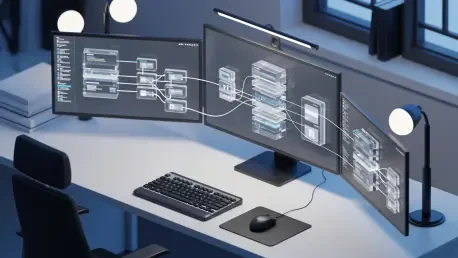
On the browser side, GitHub has introduced visual stack maps that serve as a navigational compass for reviewers. Unlike the traditional linear list of PRs, these maps provide a hierarchical view of how specific changes sit on top of one another. This is a critical departure from competitors who often present dependent PRs as isolated events. By preserving the overall context while isolating specific diffs, GitHub ensures that a reviewer can understand why a specific API change was made in the second layer of the stack without being overwhelmed by the UI changes sitting in the fourth layer.
Automated Change Propagation and State Management
The most technically sophisticated aspect of this architecture is the automated propagation of changes through the stack. When a reviewer requests a modification on a “base” PR that sits at the bottom of the sequence, GitHub’s engine automatically updates the base pointers for every dependent PR above it. This mechanism ensures technical consistency across the entire chain without requiring manual intervention from the author. It effectively turns a series of disconnected branches into a single, cohesive unit of work that respects the dependencies of the underlying code, a feature that significantly reduces the risk of merge conflicts during the final stages of the release cycle.
Recent Developments and the AI Influence
The surge in generative AI has acted as a primary catalyst for the widespread adoption of stacked workflows. When AI agents can generate hundreds of commits per hour, the human-centric model of code review faces an existential crisis. Current trends indicate that commit volumes are increasing exponentially, shifting the focus from “writing code” to “auditing code.” Stacked PRs provide the necessary infrastructure to handle this machine-speed development by forcing AI-generated suggestions into granular, reviewable units. Without this granularity, the sheer volume of code would become a black box, impossible for human engineers to verify or maintain.
Real-World Applications and Industrial Impact
For years, the stacked model was a “secret weapon” used by tech giants like Google and Meta, who built proprietary internal tools to manage their massive monorepos. By bringing these capabilities to a broader audience, GitHub is democratizing the high-velocity methodologies that were previously out of reach for smaller teams. In platform engineering environments, this allows for parallel reviews where a database team can approve a migration in the first stack layer while the frontend team reviews the UI implementation in the third layer simultaneously. This modularity dramatically shortens the time-to-market for complex features by removing the sequential blocking that defines traditional workflows.
Challenges and Adoption Barriers
Despite the clear efficiency gains, the primary hurdle remains the cultural shift required by development teams. Transitioning from “monolithic” thinking to “stacked” thinking requires a high degree of discipline and a change in how engineers visualize their work. There is also the inevitable risk of toolchain sprawl; as developers integrate more AI assistants and security scanners, adding another layer of CLI complexity can feel burdensome. Furthermore, GitHub’s native implementation creates a competitive tension with specialized third-party tools like Graphite, forcing organizations to weigh the benefits of a deeply integrated platform feature against the more specialized, cross-platform capabilities of niche startups.
Future Outlook and Strategic Trajectory
Looking forward, the trajectory of stacked workflows points toward a more autonomous merging process. As automated testing and AI-driven validation become more reliable, the “middle” layers of a stack—those that handle internal logic or boilerplate—may eventually be auto-approved and merged by the system itself. This shift would leave human reviewers to focus only on the high-level architectural changes at the bottom and the user-facing impacts at the top. We may also see a transition in how platform value is calculated, moving toward usage-based models that reflect the number of automated operations performed within a stack rather than simple per-user fees.
Summary and Overall Assessment
The implementation of stacked workflows succeeded in addressing the most persistent friction points in modern version control. By automating the tedious aspects of branch management and providing a clear visual framework for review, the technology significantly reduced the time spent on manual rebasing and administrative overhead. The integration demonstrated a clear understanding of the future of the industry, specifically the need to accommodate the rising tide of AI-authored code. Moving forward, teams should prioritize training their engineers in modular development patterns to fully capitalize on these tools. Organizations would be well-served to evaluate their current PR cycle times and consider migrating to a stacked model as a prerequisite for adopting more advanced AI-driven development agents. This evolution ensured that GitHub remained the essential hub for high-velocity engineering by prioritizing clarity and manageability in an increasingly complex digital landscape.