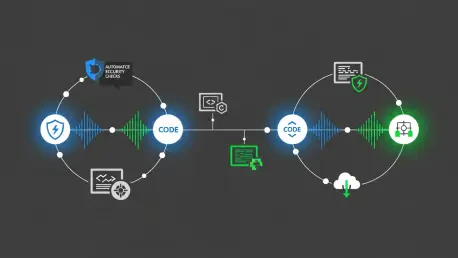

The integration of sophisticated artificial intelligence into the modern software delivery pipeline has fundamentally redefined how engineering teams approach scalability and operational resilience. As the current technological landscape demands unprecedented speed and precision, the traditional methods of manual configuration and reactive troubleshooting have become increasingly insufficient for managing complex microservices architectures. Organizations are now leveraging an advanced AI layer that permeates every phase of the Software Development Life Cycle, transforming human-led processes into highly optimized, machine-assisted workflows. This shift is not merely about replacing manual labor but about augmenting human expertise with predictive insights and automated logic that can process data at a scale impossible for human engineers. By embracing this synthesis of intelligence, businesses can mitigate the risks of operational downtime and technical debt, ensuring that their software delivery remains agile and competitive in a market where the margin for error continues to narrow significantly.
Maximizing Productivity and Operational Health
Quantifiable Efficiency Gains in the Delivery Cycle
The primary driver for adopting intelligence in the delivery pipeline is the radical compression of development cycles through the automation of repetitive and high-friction tasks. Contemporary engineering environments utilize these tools to generate boilerplate code, conduct initial performance assessments, and create comprehensive documentation, which collectively reduces the time from initial commit to production deployment. This transition allows developers to bypass the tedious aspects of syntax management and library integration, focusing instead on the core business logic that provides value to the end user. When organizations implement these automated assistants effectively, they frequently observe a reduction in development time that approaches forty percent, effectively doubling the output of specialized teams without requiring a corresponding increase in headcount or physical infrastructure costs.
Furthermore, the automation of continuous integration and delivery stages ensures that quality checks are performed consistently and without the variability inherent in manual reviews. By identifying potential logic flaws and architectural inconsistencies during the earliest phases of code construction, AI-powered systems prevent the accumulation of downstream errors that often lead to expensive rework. This proactive approach to delivery health fosters a culture of rapid experimentation, where developers can push boundaries with the confidence that an intelligent safety net is monitoring their progress. Consequently, the transition from quarterly or monthly releases to daily or even hourly deployments has become the standard for high-performing technology companies, allowing them to iterate on product features with a level of responsiveness that was previously considered unattainable in traditional software environments.
Enhancing Reliability Through Advanced Monitoring
Modern IT operations are undergoing a fundamental transformation through the application of AIOps, which utilizes machine learning to navigate the vast oceans of telemetry data generated by distributed systems. In an era where a single application might rely on hundreds of interconnected services, the ability to discern meaningful signals from background noise is critical for maintaining uptime. AI systems now analyze logs, traces, and metrics in real-time, identifying subtle anomalies that precede catastrophic failures. By correlating disparate events across the entire infrastructure, these tools provide engineers with a holistic view of system health, often pinpointing the root cause of an issue before it impacts the customer experience. This shift from reactive firefighting to predictive maintenance ensures that high-availability targets are met consistently across global deployments.
The alleviation of cognitive load on engineering staff is another vital benefit of intelligent monitoring systems, particularly concerning the reduction of alert fatigue. Traditional monitoring often bombards “on-call” engineers with thousands of non-critical notifications, leading to burnout and delayed responses to genuine crises. Intelligent remediation platforms filter these alerts, surfacing only the most critical issues and providing context-aware suggestions for resolution. In many cases, these systems can even initiate automated recovery procedures, such as restarting failing containers or reallocating traffic away from degraded nodes. By reducing the mean time to resolution and minimizing human intervention in routine incidents, organizations can redirect their top technical talent toward high-value architectural innovations that drive long-term growth and stability.
Strategic Frameworks for Practical Implementation
Core Criteria for Selecting AI Solutions
Selecting the appropriate tools for a modern DevOps strategy requires a rigorous evaluation process that prioritizes contextual awareness and data integrity over generic automation features. A tool is only as effective as its understanding of the specific environment in which it operates; therefore, engineering leaders must prioritize solutions that can ingest and learn from their unique codebase and infrastructure patterns. Solutions that lack this context often produce suggestions that are technically plausible but architecturally incompatible, potentially introducing subtle bugs or security gaps. The most successful implementations involve platforms that integrate deeply with existing version control systems and cloud environments, ensuring that the machine’s recommendations align with the organization’s established coding standards and operational best practices.
In addition to contextual relevance, the transparency of the logic behind AI-driven recommendations is a non-negotiable requirement for maintaining technical trust within an organization. Engineers must be able to inspect the reasoning used by an automated system before authorizing changes to live production environments. This “explainability” ensures that the human oversight team remains the final authority on architectural decisions, preventing the creation of “black box” systems that could fail in unpredictable ways. When evaluating potential vendors, businesses should look for interfaces that provide clear evidence and data sources for every suggestion. By fostering a transparent relationship between human operators and machine assistants, companies can build a robust engineering culture that leverages the speed of automation without sacrificing the critical thinking necessary for long-term system health.
Integrating Automation with Human Oversight
The most effective DevOps transformations avoid the trap of seeking total automation, instead focusing on a collaborative model where human judgment and machine speed complement one another. This “human-in-the-loop” philosophy positions AI as a productivity layer that handles the heavy lifting of data analysis and debugging while leaving complex problem-solving to experienced engineers. For instance, while an automated tool might suggest the most efficient way to scale a database cluster, the human engineer decides whether that scaling aligns with the broader business strategy and budget. This balanced approach prevents the erosion of technical skills within the workforce and ensures that the final product reflects the nuance and creativity that only human developers can provide in high-stakes environments.
Developing a robust internal framework for this collaboration involves setting clear boundaries for where autonomous action ends and human approval begins. Organizations typically categorize tasks based on their risk profile, allowing AI to handle low-risk remediation automatically while requiring manual sign-off for high-impact infrastructure changes. This tiered management structure allows teams to move quickly on routine maintenance while maintaining strict control over the most sensitive parts of their delivery pipeline. By standardizing these interaction patterns, businesses create a predictable environment where engineers feel empowered by technology rather than threatened by it. The result is a more resilient organization that can adapt to changing technical requirements while maintaining the high standards of craftsmanship and accountability that define professional software engineering.
Security and Governance in the AI Era
As automated tools gain deeper access to sensitive deployment pipelines and cloud configurations, the implementation of rigorous data governance becomes a cornerstone of any successful DevOps strategy. Organizations must ensure that the data used to train or fine-tune their AI models is handled with the highest level of security to prevent leakage of intellectual property or customer information. This involves establishing strict boundaries for data egress and ensuring that any third-party tools comply with regional privacy regulations and industry-specific security standards. By prioritizing governance early in the adoption phase, teams can avoid the costly legal and reputational consequences that arise when automated systems inadvertently expose sensitive credentials or proprietary code during the development process.
Furthermore, the concept of “shifting left” has evolved to include automated security scanning and autonomous defense mechanisms that identify vulnerabilities at the moment code is written. Modern AI security tools do more than just flag common errors; they analyze the architectural intent of the code to spot complex logic flaws that traditional scanners might miss. By integrating these capabilities directly into the integrated development environment and CI/CD pipeline, organizations can remediate security threats before they ever reach a production environment. This proactive stance on security reduces the burden on dedicated security teams and ensures that every piece of AI-generated code meets the same rigorous standards as human-authored work. Ultimately, a security-first approach to AI adoption builds the foundation for a trustworthy and resilient software delivery ecosystem.
The Technological Landscape and Future Trajectory
Leading Platforms and Industry-Standard Tools
The current market for DevOps technology is characterized by a high degree of specialization, with major cloud providers and independent vendors offering sophisticated agents tailored to specific stages of the lifecycle. Amazon and Google have integrated native assistants into their cloud consoles to help teams optimize resource allocation and troubleshoot networking issues with natural language queries. Meanwhile, platforms like Datadog have introduced specialized agents that assist in incident investigation by automatically surfacing relevant logs and metrics during a service outage. These tools are designed to fit seamlessly into the workflows that engineers already use, such as terminal commands and integrated development environments, minimizing the friction associated with adopting new technologies into an existing stack.
Integration at the pipeline level has also reached a new level of maturity, with tools that can manage cloud costs and resource tagging without human intervention. These systems analyze historical usage patterns to suggest more efficient instance types or to automatically shut down unused development environments, providing immediate financial benefits to the organization. This level of utility ensures that AI is not just a theoretical improvement but a practical tool for daily operational management. By utilizing a combination of platform-native features and specialized third-party agents, engineering teams can build a customized toolkit that addresses their specific bottlenecks. This ecosystem approach allows organizations to remain flexible, swapping out individual components as technology evolves while maintaining a consistent overall strategy for delivery excellence.
The Rise of Agentic AI Systems
The industry is currently transitioning from passive assistants to “agentic” AI systems that possess the capability to perform multi-step remediation tasks with minimal human intervention. Unlike early iterations that merely provided suggestions, these modern agents can identify a performance bottleneck, spin up additional cloud resources, and update the load balancer configuration autonomously. This move toward self-healing infrastructure represents a major milestone in the evolution of DevOps, as it effectively closes the gap between problem detection and resolution. These systems use sophisticated feedback loops to monitor the impact of their actions, reverting changes if the system health does not improve, which provides an additional layer of safety for high-velocity environments.
This advancement toward autonomy is also visible in the management of complex security vulnerabilities and compliance requirements. Agentic systems can monitor for new vulnerability disclosures and automatically generate pull requests to update dependencies across thousands of repositories simultaneously. This capability is particularly valuable for large enterprises with vast codebases that are otherwise impossible to patch manually in a timely manner. By automating the lifecycle of vulnerability management, these agents allow security professionals to focus on strategic threat modeling rather than the endless cycle of manual updates. As these systems become more reliable and widespread, the role of the DevOps engineer will continue to shift toward that of a system architect and orchestrator, overseeing a fleet of intelligent agents that maintain the operational health of the enterprise.
Bridging the Observability Gap
The future of software engineering is defined by the ability of AI to bridge the “observability gap,” turning the massive volume of raw telemetry signals into actionable business value. As distributed systems have grown in complexity, the sheer amount of data generated by logs and metrics has exceeded the human capacity for manual analysis. Intelligent systems have effectively solved this problem by providing a layer of abstraction that translates technical signals into concrete insights about user experience and system performance. This transformation ensured that engineering teams remained focused on innovation rather than being buried under the weight of operational data. Organizations that mastered this transition established a significant advantage by making data-driven decisions at a speed that traditional competitors could not match during the current cycle.
Engineers successfully implemented these strategies by prioritizing transparency and adopting a modular approach to automated tooling. They recognized that the key to long-term success was not the total replacement of human oversight but the creation of a symbiotic relationship between machine logic and human creativity. By establishing clear governance policies and focusing on explainable AI, teams maintained high standards of code quality and security even as delivery speeds accelerated. These organizations also leveraged agentic systems to build self-healing infrastructures, which drastically reduced the time spent on routine maintenance. This evolution fundamentally changed the professional landscape, allowing the next generation of developers to spend their careers building new features and solving complex architectural challenges rather than managing the mundane tasks of the past.