
An Introduction to a New Paradigm in Enterprise Technology
The relentless demand for rapid software delivery has long been at odds with the non-negotiable need for robust security, creating a persistent friction point within enterprise technology. Addressing this fundamental conflict is technology pioneer Ananth Reddy Munagala, whose work is transforming enterprise cloud solutions by integrating artificial intelligence into the core of DevOps and security. He is at the forefront of a movement to dismantle the outdated, siloed structures that have traditionally pitted development speed against operational integrity.
Munagala’s approach marks a significant departure from conventional IT management. By architecting AI-driven systems, he resolves the deep-seated tension between innovation and protection. This new paradigm introduces a cohesive ecosystem where automated intelligence empowers organizations to accelerate their development cycles without compromising their security posture, thereby establishing a new standard for operational excellence in the digital age.
The Foundational Challenge: Bridging Siloed IT Operations
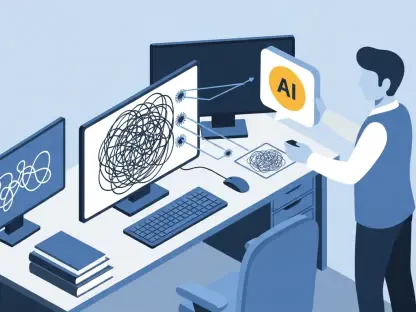
For decades, the standard enterprise model has operated with a clear separation of duties: development teams built features, operations teams maintained stability, and security teams enforced compliance. This division, while logical in theory, created practical inefficiencies, communication breakdowns, and critical delays. Development sprints were often halted by last-minute security reviews, and operational stability was frequently threatened by rapid code changes, leading to a cycle of friction and bottlenecks.
In response to this fragmented landscape, Munagala champions a core philosophy of a “security-by-design” model. This principle reframes security not as a final gatekeeper but as an integral component woven into every stage of the development lifecycle. Instead of retroactively patching vulnerabilities, this approach embeds automated security protocols directly within the DevOps pipeline, ensuring that protection is a continuous and proactive process rather than an afterthought.
Landmark Contributions to Integrated Tech Ecosystems
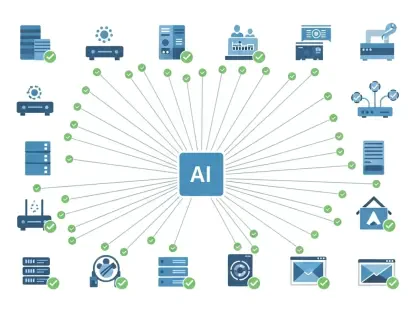
Munagala’s most significant contributions lie in the practical application of his philosophy, where he has successfully fused AI with cloud infrastructure, development pipelines, and security protocols. His work provides a tangible blueprint for creating a unified, intelligent, and secure technology stack.
Intelligent Cloud Transformation
A cornerstone of Munagala’s work is the design of intelligent cloud architectures that move beyond simple automation. These systems use AI to facilitate automated workload optimization, ensuring that computational resources are allocated efficiently and dynamically in real time. Furthermore, predictive resource management anticipates future needs based on historical data, preventing performance degradation and minimizing unnecessary expenditure.
By modernizing legacy systems into self-optimizing cloud environments, this approach also incorporates continuous performance monitoring. This allows organizations to identify and resolve potential issues before they impact end-users, leading to a significant increase in reliability and a reduction in operational overhead. The result is a cloud infrastructure that is not only cost-effective but also inherently more resilient.
AI Enhanced DevOps AIOps
Munagala has been instrumental in evolving traditional DevOps into a more intelligent framework known as AIOps. This involves infusing AI and machine learning directly into continuous integration and continuous deployment (CI/CD) pipelines, creating self-healing operational ecosystems. In this model, algorithms constantly analyze system data to detect anomalies and predict potential failures before they occur.
This proactive capability fundamentally accelerates delivery cycles. When a potential issue is identified during a deployment, the AI can automatically trigger corrective actions or alert developers with precise, actionable insights. This reduces manual intervention, minimizes human error, and ensures that code quality remains high even as the pace of development increases, transforming the pipeline into a smarter, more resilient asset.
AI Powered Security
Central to Munagala’s vision is the development of advanced, AI-powered security frameworks. These systems provide continuous, autonomous monitoring of cloud environments to identify and neutralize vulnerabilities in real time. By combining sophisticated threat analytics with automated remediation capabilities, this model drastically reduces the window of opportunity for malicious actors.
Unlike traditional security measures that are often reactive, this approach embeds proactive protection directly into the infrastructure. The AI constantly learns from new data, adapting its defensive posture to counter emerging threats. Consequently, security becomes an intrinsic layer of the operational fabric, safeguarding assets at every stage of the software lifecycle and creating a truly fortified enterprise environment.
A Uniquely Unified Approach to IT
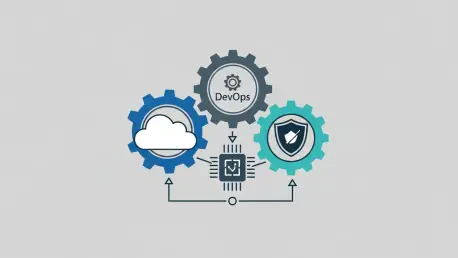
What truly sets Munagala’s work apart is its seamless integration of cloud scalability, DevOps agility, and AI-driven intelligence. His approach is not about optimizing each domain in isolation but about creating a synergistic system where each component enhances the others. This unified model effectively eliminates the traditional trade-off between speed and safety.
By bridging these three pillars, he has architected a framework where scalability does not introduce new vulnerabilities, agility is not hindered by security checkpoints, and protection is not a bottleneck to innovation. This holistic perspective ensures that as an organization’s infrastructure grows and its development velocity increases, its security and efficiency scale in tandem.
The Current Landscape: Building Autonomous Systems Today
The contributions of Ananth Reddy Munagala are actively shaping the present landscape of enterprise technology. His frameworks are being adopted by organizations seeking to move beyond manual oversight and toward the development of autonomous, data-driven ecosystems. These advanced systems are designed to adapt, protect, and evolve with minimal human intervention.
The ongoing evolution of this work represents a significant step toward fully autonomous IT operations. These intelligent environments are capable of self-optimization and self-healing, managing complex workloads and neutralizing threats independently. As these systems mature, they are paving the way for a future where IT infrastructure is not just automated but truly autonomous.
Reflection and Broader Impacts
Reflection
The strengths of this integrated approach are undeniable, offering enhanced resilience, greater operational efficiency, and a more robust security posture. By automating complex decision-making processes, it allows organizations to allocate their human talent to more strategic initiatives. However, this transformative model is not without its challenges. The implementation complexity requires a significant upfront investment in both technology and training. Moreover, the demand for specialized skills in AI, cloud engineering, and cybersecurity creates a talent gap that organizations must address to fully realize the benefits of this paradigm.
Broader Impact
The wider implications of this work are profound, positioning the fusion of AI, cloud, and DevOps as the new standard for next-generation enterprise architecture. The successful integration of these technologies provides a compelling blueprint for how modern businesses can achieve both speed and security without compromise. This has established Ananth Reddy Munagala as a key thought leader whose vision is guiding the industry toward a more intelligent and secure future.
Conclusion: Paving the Way for Autonomous IT Operations
Ananth Reddy Munagala’s work provided a clear and effective blueprint for resolving some of the most persistent conflicts within enterprise IT. His innovative fusion of AI with cloud, DevOps, and security demonstrated that speed and safety are not mutually exclusive but can coexist and even enhance one another within a unified, intelligent framework.
His contributions laid the groundwork for a fundamental industry shift, one that is moving decisively toward fully autonomous IT operations. The path forward for enterprise technology involves embracing this transformative model, where intelligent systems manage, protect, and optimize themselves. For industry leaders, the question was no longer if this shift would happen, but how quickly they could adapt to lead it.