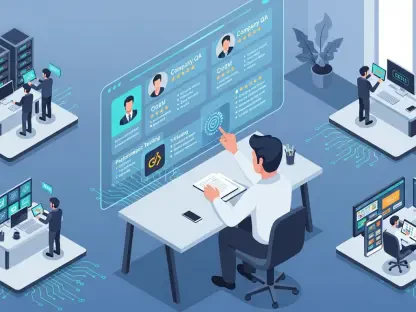

The traditional boundary between writing code and managing infrastructure has effectively dissolved, replaced by a unified ecosystem where resilience is baked into the very fabric of the development lifecycle. In this current landscape, the Amazon Web Services (AWS) environment has moved far beyond the simple goal of deployment speed, prioritizing a holistic commitment to intelligent automation and measurable business outcomes. The core objective is no longer merely shipping code faster; it is about establishing a delivery lifecycle that is inherently safe, predictable, and self-healing. In this high-stakes environment, DevOps engineers act as architects of complex systems where security, compliance, and cost-efficiency are integrated directly into the foundational automation layer. This evolution marks a transition toward contract-based pipelines—sophisticated systems where code is only promoted if it satisfies a rigorous, automated battery of health, security, and policy checks.
The Historical Context: From Scripting to Systems
To understand the current landscape, one must look back at the foundational shifts that brought the industry to this point. Historically, DevOps was often reduced to writing scripts to automate manual tasks, a reactive approach that frequently left security and cost management as afterthoughts. However, the rapid adoption of cloud-native technologies and the explosion of microservices necessitated a more structured approach. Past developments, such as the rise of Infrastructure as Code (IaC) and the integration of basic CI/CD pipelines, laid the groundwork for the current era. These shifts were driven by a need to manage increasing complexity without sacrificing stability. Understanding this background is vital because it explains why the industry has moved toward platform engineering and zero-trust architectures; the manual methods of the past simply could not scale with the demands of modern, global digital infrastructure.
The Pillars of Intelligence and Efficiency
The Integration: Agentic AI and Intelligent Automation
A critical aspect of the current landscape is the rise of agentic AI within DevOps workflows. AWS has moved beyond simple machine learning models to deploy composable agents capable of automating complex, multi-step tasks. For example, in highly regulated sectors, solutions like Amazon Connect Health demonstrate how AI can handle patient verification and medical coding autonomously. For a DevOps professional, this means building environments that support the unique lifecycles of AI models alongside traditional software. While this provides immense benefits in terms of efficiency, it introduces the challenge of maintaining strict auditability and least-privilege access for autonomous entities. Organizations must now design pipelines that treat AI agents as first-class citizens, ensuring they operate within predefined safety rails.
Solving Scale: Regional Namespaces and Simplified IaC
Another essential angle in the evolution of AWS is the technical refinement of core services to reduce friction. A prime example is the introduction of account regional namespaces for S3. Historically, the requirement for globally unique S3 bucket names created significant hurdles for multi-region Infrastructure as Code (IaC), often requiring complex naming logic to avoid collisions. Currently, buckets are unique within a specific account and region, allowing engineers to use consistent naming conventions across geographical zones. This change significantly reduces the cognitive load on engineering teams and minimizes the risk of deployment errors during regional expansions. It illustrates a broader trend: AWS is actively removing the undifferentiated heavy lifting of infrastructure management, allowing teams to focus on higher-level architectural stability.
Governance: The Rise of Platform Engineering
Beyond technical tweaks, the complexity of the current AWS ecosystem has given rise to Platform Engineering. Specialized teams now build Internal Developer Platforms (IDPs) that offer self-service access to golden path templates. This approach addresses the common misunderstanding that every developer needs to be a cloud expert; instead, it provides them with pre-approved, secure, and compliant infrastructure components. By integrating shift-left security—where vulnerability scanning and compliance checks occur at the earliest stages of development—organizations can enforce governance without slowing down the innovation cycle. This methodology ensures that security is not a final gate but a continuous presence, utilizing tools like AWS Config and GuardDuty to monitor environments in real-time.
Future Horizons: Predictive Operations and FinOps Integration
Looking toward the next few years, specifically from 2026 to 2029, several emerging trends are poised to further reshape the discipline. There is a visible move toward Continuous Intelligence, where static monitoring is replaced by proactive observability. By leveraging Amazon CloudWatch for anomaly detection and predictive scaling, systems can now adjust capacity based on anticipated demand rather than reactive thresholds. Furthermore, FinOps is no longer a separate accounting function but an integrated part of the DevOps lifecycle. Future pipelines will likely include automated cost gates that prevent the deployment of inefficient architectures. Predictions suggest that the blast radius of changes will continue to shrink as canary and blue-green deployments become the absolute standard for all enterprise workloads, driven by a global demand for 99.999% uptime.
Strategies: Navigating an Automated Era
To navigate this evolved landscape, businesses and professionals should adopt several actionable strategies. First, total infrastructure automation is non-negotiable; any system requiring manual hotfixes should be viewed as a technical debt. Second, professionals must master modular IaC tools like Terraform or the AWS CDK, focusing on drift detection to ensure environment consistency. Third, it is recommended to implement chaos engineering as a standard practice—deliberately injecting failures to test system resilience. Finally, integrating cost-aware tagging and real-time budget tracking into the CI/CD process ensures that innovation remains financially sustainable. By treating the delivery pipeline as an enforceable contract, teams can ensure that every release is a data-driven, low-risk event.
Synthesizing the Future: Navigating Modern Delivery
The evolution of AWS DevOps represented a powerful convergence of automation, security, and intelligence. As explored, the transition from manual scripting to autonomous orchestration allowed organizations to deliver high-quality software with unprecedented reliability. The role of the DevOps professional matured into that of a system orchestrator, responsible for managing the delicate balance between rapid innovation and operational excellence. This topic remained significant because the ability to deliver secure, cost-effective, and resilient digital services became the primary competitive advantage in the modern economy. As AWS continued to provide more sophisticated building blocks, the responsibility shifted to forward-thinking teams to assemble them into systems that were not just fast, but truly intelligent. Professionals who prioritized modularity and predictive scaling found themselves at the forefront of this industrial shift. Consequently, the focus moved toward creating self-healing architectures that required minimal human intervention during peak traffic periods. By embracing these advancements, organizations successfully mitigated risks associated with rapid scaling and global deployment. Ultimately, the maturity of these systems ensured that digital infrastructure became a silent but robust backbone for global commerce.