
The historical scarcity of specialized engineering talent has finally been superseded by a landscape where sophisticated software logic is generated as effortlessly as a simple text message. For decades, the primary hurdle in software development was the sheer labor of writing syntax, but that bottleneck has effectively collapsed. Today, AI agents have turned the act of coding into a near-trivial commodity, allowing developers to generate complex functions in seconds. This sudden acceleration has stripped away the prestige of the initial script, proving that raw logic is no longer the scarcest resource.
However, this newfound speed has inadvertently highlighted a much larger, more stubborn problem: the code might be ready, but the system where it must live remains as chaotic as ever. While an agent can output a perfectly formatted script, the integration of that script into a sprawling legacy infrastructure often triggers a cascade of unforeseen issues. The friction has shifted from the keyboard to the production environment, proving that rapid output is meaningless without a stable ecosystem to host it.
The Hidden 70%: The Software Lifecycle
While “greenfield” development often receives the most attention in industry journals, the vast majority of a developer’s career is actually spent in the trenches of maintenance and support. Modern software ecosystems are heavily burdened by legacy technical debt and vague customer bug reports that create a massive cognitive load on human teams. As AI handles the initial creation of software, the industry is forcing a critical pivot toward the downstream tasks that currently consume the majority of engineering resources.
This massive overhead is the result of years of rapid deployment, which left behind layers of undocumented dependencies and fragile integrations. Instead of designing new features, engineers often find themselves acting as digital detectives, piecing together why a minor update in one sector caused a total failure in another. This reality suggests that the true value of agentic AI will not be found in writing more code, but in managing the complexity that already exists.
Navigating the Unbounded Chaos: Live Environments
Coding exists within a bounded system of rules and predictable syntax, but the production environment is a living and fundamentally unpredictable beast. Every company operates on a unique technology stack with its own set of inconsistencies, making production the definitive next choke point for agentic systems. Unlike a static code block, a live environment is an unbounded system where failures are often buried under mountains of logs and interconnected service dependencies that vary wildly.
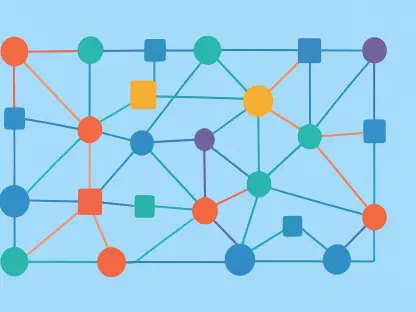
Moreover, the sheer scale of modern cloud environments means that a single error can propagate through hundreds of microservices in milliseconds. This complexity creates a “fog of war” for human operators who struggle to maintain a mental map of the entire system. When an agent attempts to operate in this space, it faces a challenge far greater than syntax; it must interpret the messy, real-world behavior of hardware, networks, and unpredictable human-generated traffic.
Leveraging Infinite Patience: System Diagnostics
The true power of agentic AI lies not just in its intelligence, but in its infinite patience and massive context windows. Where a human engineer might experience total burnout after three hours of sifting through thousands of cryptic log entries, an agent can ingest the same data and pinpoint a root cause in seconds. By shifting the burden of “log-diving” to purpose-built AI agents, organizations can finally address the cognitive fatigue that traditionally leads to production outages.
These agents do not get tired, nor do they skip over lines because of boredom or distraction. They possess the ability to correlate disparate data points across different telemetry streams that a human eye would likely miss. This capability transforms the diagnostic process from a reactive struggle into a proactive audit. Instead of waiting for a system to crash, agents can monitor for the subtle deviations that precede a failure, providing a level of oversight that was once impossible.
Transitioning the Developer Role: From Troubleshooter to Architect
To capitalize on this shift, development teams moved away from manual, repetitive troubleshooting and embraced a strategy of agentic system management. This involved integrating purpose-built AI that autonomously diagnosed production failures and suggested fixes before a human even opened a ticket. By offloading the tedious work of maintenance to AI, human developers were finally free to focus on high-level system architecture and the long-term improvement of software quality.
The focus shifted toward building more resilient foundations rather than constantly patching holes. Engineering leaders redirected their resources toward innovative design and strategic scaling. This transition marked a new era where the human mind was reserved for creative problem-solving and architectural vision, while machines maintained the operational integrity of the digital world. The industry successfully bypassed the production bottleneck by letting agents handle the inherent chaos of live environments.