
The rapid transition from decentralized legacy systems to unified digital ecosystems has fundamentally altered the expectations for modern enterprise technology management. Organizations no longer view their servers and networks as isolated utilities but as the very backbone of their competitive survival. This Managed IT Infrastructure review analyzes the convergence of cloud orchestration, cybersecurity, and operational automation, assessing how these integrated frameworks serve as a catalyst for growth. By shifting from reactive maintenance to a philosophy of proactive lifecycle management, the technology seeks to eliminate the traditional friction between rapid innovation and system stability.
Evolution and Core Principles of Managed Infrastructure
The landscape of enterprise IT has transitioned from a model of “break-fix” maintenance to one characterized by continuous optimization and architectural resilience. Historically, managed services focused on hardware upkeep and local network troubleshooting, but the emergence of the global digital economy necessitated a broader scope. Today, the core principles of managed infrastructure center on the concept of high availability and the seamless integration of disparate technology stacks. This evolution reflects a movement toward seeing IT as a dynamic asset rather than a static expense, allowing businesses to offload the cognitive burden of technical management to specialized entities.
This transformation is particularly relevant in a broader technological landscape where data sovereignty and operational speed define market leaders. By centralizing the management of networking, storage, and computing power, managed infrastructure provides a unified foundation that supports everything from global logistics to high-frequency financial transactions. The principle here is simple yet profound: by standardizing the underlying environment, organizations can focus entirely on their specific business logic. This shift has turned infrastructure into a competitive differentiator, where the quality of the management layer is just as critical as the hardware itself.
Technical Architecture and Core Capabilities
Managed Cloud and Hybrid Ecosystems
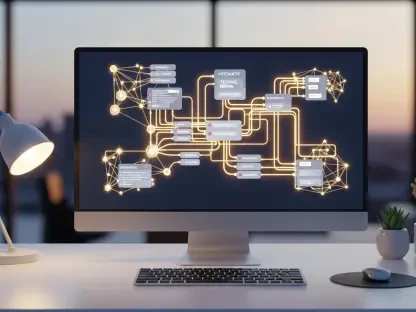
Modern technical architecture relies heavily on the ability to bridge the gap between private on-premise hardware and public cloud scalability. Managed infrastructure excels by creating a hybrid ecosystem where data flows securely across various environments without manual intervention. This functioning is governed by sophisticated orchestration layers that monitor workload demands and automatically adjust resource allocation. Unlike traditional setups, this hybrid approach ensures that performance remains consistent even during massive traffic spikes, providing a level of elasticity that was previously unattainable for mid-sized enterprises.
The significance of this hybrid model lies in its ability to balance cost-efficiency with uncompromising control. While the public cloud offers vast resources, certain sensitive workloads require the isolation of a private environment. Managed infrastructure providers harmonize these two worlds through advanced software-defined networking, ensuring that the user experience is seamless regardless of where the data physically resides. This capability allows for a more nuanced strategy where businesses can optimize for both latency and budget simultaneously, avoiding the “all-or-nothing” trap of early cloud migrations.
Proactive Network Operations Centers (NOC)
A core pillar of this infrastructure is the integration of the Network Operations Center, or NOC, which functions as the central nervous system of the entire IT environment. Operating on a perpetual cycle of monitoring and response, the NOC utilizes real-time telemetry to detect anomalies in server health, application performance, and bandwidth utilization. The performance characteristic that sets this apart is proactivity; the system identifies a failing hard drive or a memory leak before the end user even notices a slowdown. In real-world usage, this means that a fintech platform can maintain uptime during peak trading hours because the NOC team has already mitigated potential bottlenecks.
Beyond mere monitoring, the NOC serves as an escalation management hub that ensures technical accountability. By maintaining continuous visibility, it eliminates the “blind spots” that typically lead to catastrophic outages. This integrated oversight is unique because it combines automated alerting with human expertise, creating a dual-layer defense against system degradation. Consequently, the infrastructure moves from a state of constant firefighting to one of predictable, steady-state performance, which is essential for any business operating in a high-stakes, real-time environment.
Integrated DevOps and CI/CD Automation
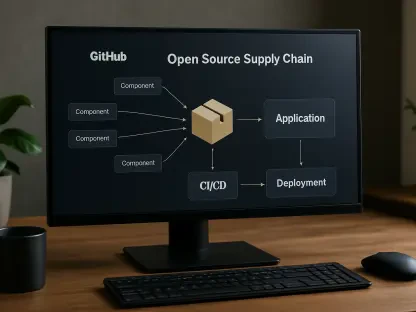
Automation has redefined the software development lifecycle by removing the manual handoffs that often cause errors and delays. In the context of managed infrastructure, Integrated DevOps focuses on building Continuous Integration and Continuous Deployment (CI/CD) pipelines directly into the architecture. This allows for code changes to be tested, validated, and deployed into production environments with minimal human interference. The result is a dramatic increase in delivery speed, as developers no longer have to wait days or weeks for infrastructure provisioning.
Moreover, this automation strengthens infrastructure stability through the practice of “Infrastructure as Code.” By treating the environment configuration the same way one treats application code, businesses can ensure that every deployment is identical and repeatable. This eliminates the risk of “configuration drift,” where small, manual changes over time lead to unpredictable system behavior. For the enterprise, this means that security patches and feature updates can be rolled out across thousands of nodes simultaneously, ensuring that the entire network remains current and protected against emerging vulnerabilities.
Current Trends and Industrial Shifts
The trajectory of managed infrastructure is increasingly defined by the shift toward a “single-pane-of-glass” management philosophy. In the past, security, cloud operations, and networking were managed in separate silos, often leading to communication breakdowns and security gaps. The current trend is the radical consolidation of these functions into a unified dashboard. This shift is driven by the demand for total visibility, as business leaders require a holistic view of their technical health to make informed strategic decisions.
Another major development is the democratization of high-end compliance and security tools. Innovations that were once reserved for the largest multinational corporations, such as automated vulnerability scanning and real-time threat intelligence, are now being integrated into standard managed service packages. This industrial shift is democratizing digital resilience, allowing startups and mid-market firms to compete on the same technical footing as industry giants. As consumer behavior becomes more privacy-centric, this trend toward “security-by-default” is becoming the new baseline for market entry.
Real-World Applications and Sector Integration
Managed infrastructure has seen significant deployment within the fintech and logistics sectors, where downtime is measured in lost revenue per second. In the financial world, specialized implementations focus on meeting the rigorous standards of the Payment Card Industry Data Security Standard (PCI DSS). By integrating these compliance requirements directly into the infrastructure layer, fintech firms can secure their payment gateways while accelerating their time-to-market. This sector integration shows that managed technology is no longer just about hardware; it is about providing a pre-certified environment for innovation.
In the SaaS and enterprise sectors, the technology is used to manage the complexity of global user bases. Logistics companies, for instance, utilize managed infrastructure to track assets across continents in real-time. The unique use case here involves the deployment of edge computing, where processing power is moved closer to the source of the data to reduce latency. This ensures that critical supply chain data is processed instantly, allowing for more agile decision-making in a world where global shipping routes and warehouse inventories change by the minute.
Adoption Challenges and Risk Mitigation
Despite the benefits, the adoption of advanced managed infrastructure faces hurdles, particularly regarding the complexity of legacy migrations. Many organizations struggle to move away from deeply entrenched on-premise systems, fearing that the transition will disrupt critical business processes. Furthermore, the global regulatory environment is becoming increasingly fragmented, with different regions requiring varying levels of data localization and privacy controls. These regulatory obstacles can slow down the deployment of unified global infrastructures.
To mitigate these risks, the industry is focusing on more modular adoption strategies. Rather than a total “rip-and-replace” approach, managed providers are offering phased migrations that allow companies to modernize their most critical systems first. Ongoing development efforts in automated compliance tools also help businesses navigate complex legal landscapes by automatically updating security protocols to meet local laws. By reducing the technical debt and regulatory burden, these mitigation strategies are making it easier for traditional industries to embrace modern IT architectures.
Future Trajectory and Technological Breakthroughs
The future of managed infrastructure lies in the transition toward “self-healing” systems powered by advanced machine learning. We are moving toward an era where the infrastructure will not only detect a problem but will also independently execute the necessary repairs or optimizations. Breakthroughs in predictive analytics will allow systems to anticipate hardware failures or traffic surges hours before they occur, adjusting their own configuration to prevent any impact on the end user. This level of autonomy will redefine the role of the IT professional, shifting their focus from maintenance to high-level strategy.
Looking further ahead, the long-term impact on society will be the total invisibility of the technical layer. As managed infrastructure becomes more reliable and pervasive, it will function much like a traditional utility—always on and largely unnoticed. This will facilitate the growth of emerging technologies like autonomous transportation and widespread smart-city initiatives, which require an unfailing digital foundation. The breakthrough will not be a single piece of hardware, but the perfection of the management layer that allows complex global systems to run with zero human intervention.
Assessment and Final Verdict
The evaluation of modern managed infrastructure revealed a technology that has matured into an essential strategic asset. By combining proactive monitoring, automated deployment, and rigorous security testing, these frameworks provide a safety net that is both robust and flexible. The analysis showed that the real value lies in the integration of these services; a cloud environment is only as good as the NOC that monitors it and the DevOps pipeline that populates it. This holistic approach has effectively lowered the barrier to entry for complex digital operations.
The move toward consolidated management and automated resilience has proven to be a successful response to the escalating demands of the digital age. While challenges remain in migrating legacy systems and navigating global regulations, the ongoing innovations in self-healing architectures suggest a trajectory toward even greater stability. Ultimately, managed infrastructure has transitioned from being a supportive service to a primary driver of enterprise agility. The verdict was clear: for any organization aiming to thrive in an increasingly volatile digital landscape, adopting an integrated, managed approach is no longer optional—it was the definitive step toward operational excellence.