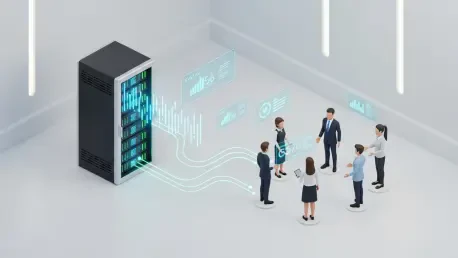

The assumption that a company requires a dedicated site reliability engineer to maintain high uptime is a persistent myth that often distracts small startups from achieving their true operational potential. While the methodologies pioneered by massive tech conglomerates offer a robust blueprint for stability, these frameworks frequently collapse under their own weight when applied to organizations with fewer than twenty employees. In these lean environments, the luxury of a specialized infrastructure team simply does not exist, yet the pressure to maintain high availability remains as intense as it is for global giants. Instead of chasing a headcount-heavy model, successful small teams treat reliability as a cultural value woven into the fabric of daily development. This shift requires an embrace of automated, low-overhead processes that allow every engineer to contribute to system health without becoming bogged down in administrative bureaucracy or complex rituals that slow progress.
Bridging the Gap: Enterprise Principles in Lean Teams
Adapting Big-Tech Standards: A Start-Up Reality
The foundational principles of Site Reliability Engineering were forged in high-pressure environments where thousands of microservices operate simultaneously under the watch of massive departments. When a lean team attempts to mirror the rigid structures described in enterprise-level documentation, the resulting administrative overhead often consumes more time than the actual coding of new features. Instead of establishing a separate department with its own hierarchy, small engineering groups find that reliability is best maintained by stripping these concepts down to their core essentials. Implementing an “error budget” in a startup should not involve a complex legalistic negotiation between product and operations teams. Rather, it serves as a high-level agreement that if the system is unstable, everyone shifts focus from feature development to stabilization. This pragmatic adaptation allows small teams to benefit from the wisdom of giants without being crushed by the weight of their specific organizational complexities.
Adapting these principles requires a focus on blameless postmortems that prioritize learning over punishment, which is especially critical when the team is small and every individual’s contribution is vital. In a larger corporation, a single mistake might be buried under layers of management, but in a startup, a production error is immediately visible to everyone. By creating a safe environment where engineers can discuss failures openly, a small team can rapidly iterate on their infrastructure and prevent the same mistake from occurring twice. This cultural foundation replaces the need for a dedicated SRE by making every developer hyper-aware of the operational consequences of their code. It transforms reliability from a checkbox on a deployment list into a core engineering discipline that is respected across the entire organization. Through this lean approach, startups can achieve a level of stability that belies their small size, proving that disciplined habits are more valuable than a high headcount.
Fostering Collaborative Ownership: The Operator-Developer
Successful startups prioritize a culture of integrated ownership where the boundary between a software developer and a system operator is intentionally blurred to maximize efficiency and accountability. This model demands that the same person who writes the logic for a payment gateway is also responsible for ensuring its performance in the production environment. While this might seem like a heavy burden for a junior engineer, it actually reduces the cognitive load by eliminating the need for extensive handoffs and documentation between different teams. When every developer understands the infrastructure their code inhabits, the quality of that code naturally improves because the cost of failure is felt directly by the person who created it. This direct feedback loop is the primary engine of reliability for organizations that lack the budget for a dedicated specialist. It fosters an environment where operational health is not viewed as a separate task but as an inherent requirement of the professional engineering craft.
This shared responsibility model is supported by the “you build it, you run it” philosophy, which ensures that operational knowledge is distributed throughout the entire engineering organization. By avoiding the creation of an operational silo, startups prevent the bottleneck that occurs when a single specialist becomes the only person capable of fixing a production issue. Every team member participates in the deployment process and shares the responsibility of monitoring system health, which leads to more resilient software architectures that are easier to maintain. This approach also encourages engineers to build better internal tooling and documentation, as they know they might be the ones responding to an alert in the middle of the night. The result is a more cohesive and versatile team that can adapt to technical challenges without waiting for external intervention. Integrated ownership turns every developer into a guardian of the user experience, ensuring that reliability is never sacrificed for the sake of rapid feature delivery.
Sustaining Operations: Advanced Tooling and Strategic Growth
Optimizing On-Call Rotations: Human-Centric Systems
To prevent the inevitable burnout that accompanies high-stakes infrastructure management, small teams must implement sustainable on-call rotations that prioritize the long-term mental health of the staff. A rotation involving a pool of four to six engineers provides a balance between frequency and expertise, ensuring that no single individual is perpetually tied to their laptop during off-hours. Many teams have moved toward a weekly handoff model, where the primary responder changes every Tuesday morning to allow for a clean break between work cycles. Furthermore, the adoption of a “follow-the-sun” strategy has become increasingly popular for teams with remote members across different continents. By handing the pager off to a colleague in a different time zone, the primary responsibility for incident response remains during local daylight hours, significantly reducing the physical toll of late-night alerts. This human-centric approach to reliability ensures that the team remains energized and capable of solving complex problems.
Beyond schedule management, small teams utilize modern observability platforms that integrate directly with cloud providers to provide instant visibility into system performance without manual scripts. These tools function as a force multiplier, allowing a handful of engineers to manage a global infrastructure that would have required a dozens-strong operations department only a few years ago. By leveraging infrastructure as code, teams can ensure that their environments are reproducible and scalable with minimal manual intervention. This reliance on sophisticated automation allows the team to spend less time on the “plumbing” of their software and more time on high-impact initiatives that drive business value. The goal is to make the infrastructure so invisible and resilient that it requires human intervention only in the most exceptional circumstances. This “collapsed stack” simplifies the operational burden, allowing the team to maintain high standards of reliability with very little effort or specialized staff.
Recognizing Thresholds: When to Hire an Expert
Maintaining user trust during a technical crisis is just as important as fixing the underlying bug, and small teams can achieve this through strategic, automated communication strategies. Modern incident management platforms allow for the creation of status pages that update automatically based on real-time monitoring data, providing users with instant transparency without manual updates. When a team is honest about its struggles and provides regular, clear updates, customers are far more likely to remain loyal even during extended periods of downtime. This level of professional communication creates an impression of maturity and reliability that often exceeds the actual size of the engineering team. By treating transparency as a core defensive strategy, a small organization can build a reputation for reliability that rivals larger competitors. It turns a potential public relations disaster into an opportunity to demonstrate technical competence and commitment to customer success, ensuring that outages do not lead to long-term churn.
Despite the success of shared responsibility, there is an inevitable point where the operational burden begins to hinder innovation, signaling the need for a dedicated reliability specialist. This threshold is often reached when the amount of repetitive, manual work—frequently referred to as “toil”—begins to consume more than half of the engineering team’s total capacity. Other clear indicators include persistent alert fatigue, where engineers begin to ignore notifications, or a recurring pattern of failures that are patched but never truly resolved at the root. Recognizing these signals allows a growing company to make a strategic hire at exactly the right time, rather than hiring as a premature status symbol. The first dedicated reliability hire should focus on building the internal tools and processes that make the rest of the team more efficient. This transition ensures that the company’s growth is supported by a stable technical foundation that can scale alongside increasing user demands.
The evolution of reliability management for small teams demonstrated that success was never about the size of the department but the discipline of the individuals. Organizations that focused on automating their integration glue and fostering a culture of blameless postmortems found they could maintain impressive uptime without specialized hires. Moving forward, engineering leaders should have prioritized the reduction of toil by auditing their weekly incident reports to identify patterns of wasted effort. They also benefited from standardizing their tech stack around managed services that reduced the cognitive load on individual developers. By the time companies reached the scale where a dedicated SRE became a necessity, they had already established a resilient operational baseline. This proactive stance on system health ensured that technical debt did not accumulate to the point of structural failure. Ultimately, the decision to hire a specialist became an act of strategic expansion rather than a desperate attempt to fix a culture.