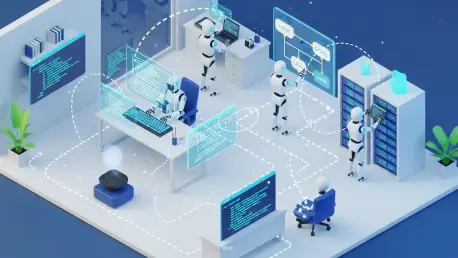

The release of Meta Muse Code signifies a fundamental transformation in how developers interact with artificial intelligence, moving beyond simple autocomplete functions to a system capable of handling entire lifecycles. This launch, orchestrated by the Meta Superintelligence Labs, serves as a direct challenge to the established dominance of industry giants. By introducing the Muse Spark 1.2 foundation model, the company shifted its focus from general-purpose models to specialized, high-utility agents designed specifically for the rigorous demands of professional software engineering.
The Genesis of Meta’s Agentic Engineering Ecosystem
Meta Muse Code represents a pivot toward agentic systems that move beyond the limitations of basic code completion. While traditional tools suggest snippets, this ecosystem is designed to understand the broader context of a project, enabling it to act as an autonomous contributor. This transition is built upon the Muse Spark 1.2 foundation, a model refined to prioritize logical reasoning and architectural integrity over general conversation.
The timing of this release is a strategic move to position Meta Superintelligence Labs as a formidable competitor against OpenAI and Anthropic. By focusing on a specialized niche rather than broad-spectrum AI, the company seeks to capture the loyalty of technical professionals who require deeper integration. This shift underscores a broader technological trend where autonomy in software creation is becoming the new standard for productivity and innovation.
Technical Architecture and Specialized Components
The architecture of Muse Code is built to handle the complexities of modern development environments through a multi-layered approach. It bridges the gap between raw model intelligence and practical application by utilizing a specialized framework that facilitates seamless communication between the AI and the existing codebase.
End-to-End Agentic Workflow Management
This component manages comprehensive software engineering tasks, ranging from initial project planning to the execution of complex coding sequences. Unlike simple assistants, the agent can map out dependencies and project requirements before writing a single line of code. This proactive approach ensures that the generated output aligns with the overall structural goals of the software.
Furthermore, the system includes autonomous validation of results, which allows it to test and refine its own work. By identifying errors during the generation phase, the agent significantly reduces the time spent on manual debugging. This feedback loop creates a more reliable workflow, allowing human developers to focus on high-level design rather than routine troubleshooting.
The Muse Spark 1.2 Foundation Model
At the heart of this technology is the Muse Spark 1.2 foundation model, a specialized engine optimized for technical benchmarks. Its training data focuses heavily on high-quality source code and engineering documentation, which allows it to outperform general-purpose models in coding accuracy. This focus ensures that the system provides frontier-level performance for even the most demanding developer workloads.
The model functions as the primary reasoning engine, interpreting complex instructions and translating them into functional software components. Its ability to maintain coherence across large files makes it a superior choice for enterprise-level projects. This specialization is what differentiates the Muse family from previous iterations of the Llama series, which were often seen as too broad for deep technical tasks.
Integration: The Specialized Coding Harness
The inclusion of a specialized coding harness allows for single-command integration into professional development environments. This feature eliminates the need for extensive manual configuration, making the technology immediately accessible to engineering teams. By operating within familiar IDEs, the system minimizes friction and encourages rapid adoption across different platforms.
Moreover, the harness provides a secure layer that manages how the agent interacts with sensitive data and local files. It ensures that the AI remains within the boundaries set by the user, providing a controlled environment for autonomous operations. This seamless integration is critical for maintaining developer velocity in fast-paced production cycles.
Economic Disruption: Strategic Market Shifts
The release highlights a significant shift in the AI roadmap, moving away from general models toward the specialized Muse family. This transition is supported by a massive capital expenditure projected to reach billions, reflecting the high costs of the hardware required to sustain these systems. By prioritizing specialized engineering agents, Meta is making a long-term bet on the high-value segment of the AI market.
To capture market share, the company introduced aggressive pricing structures, including a contributor tier and competitive token rates. At $1.25 per million input tokens, the model is positioned to undercut the pricing of established competitors. This economic strategy is designed to democratize access to advanced agentic tools while simultaneously pressuring other major players to lower their own costs.
Real-World Applications in Software Production
Engineering teams are already utilizing Muse Code for high-utility automation in complex project management scenarios. The agent’s ability to handle repetitive refactoring and legacy code migrations has proven invaluable for maintaining large-scale systems. These applications demonstrate the potential for AI to act as a force multiplier, allowing smaller teams to tackle ambitious projects.
In the corporate sector, the availability of zero-data-retention options has addressed major concerns regarding enterprise-grade security and privacy. Large organizations can now implement autonomous engineering tools without the risk of leaking proprietary information to external servers. This focus on privacy has accelerated the adoption of Muse Code in industries with strict regulatory requirements, such as finance and healthcare.
Challenges: Barriers to Implementation
Despite the technical prowess of Muse Code, the accuracy of agentic decision-making remains a significant hurdle. Autonomous systems can still make errors that are more difficult to detect than those in simple code snippets, requiring a high degree of oversight. Ensuring that the agent remains grounded in the specific logic of a unique codebase is a constant challenge for the development team.
Additionally, the immense hardware costs and energy requirements needed to run these models pose a sustainability risk. Meta faces the difficult task of balancing high performance with the need for cost-effective operations. Market saturation also presents a barrier, as the company must convince developers to switch from established tools that are already deeply embedded in their daily workflows.
The Future of Autonomous Development
The outlook for the Muse family suggests a move toward even more specialized breakthroughs in technical industries. Future iterations will likely focus on enhancing the “frontier-level” performance of agents in specialized fields like cybersecurity and embedded systems. This progression could lead to a future where AI agents manage the majority of low-level coding, leaving humans to act as architects.
The long-term impact on the global software engineering workforce will be profound, as the barrier to creating complex software continues to lower. While some fear the displacement of traditional roles, others see an opportunity for a more diverse tech economy where individuals can build sophisticated tools with minimal resources. The focus will eventually shift from writing code to managing the agents that produce it.
Final Assessment of Meta Muse Code
The industry recognized that the transition to Muse Code was less about replacing human ingenuity and more about reallocating it toward higher-level system design. Organizations that integrated these agentic systems early discovered a significant reduction in technical debt and a streamlined path to deployment. The shift in pricing structures forced competitors to reconsider their proprietary barriers, ultimately democratizing access to high-performance engineering tools.
Future success for these agents depended on their ability to operate within diverse and legacy infrastructure. While the initial adoption faced technical hurdles, the overall impact on software creation became undeniable as the technology matured. The focus for subsequent developments gravitated toward ensuring that these autonomous systems could collaborate effectively with human teams in increasingly complex environments.