
Listen to the Article
Waves of technological change have always defined the software industry. From the emergence of high-level programming languages and integrated development environments to the rise of cloud computing and DevOps practices, each innovation has changed how software is conceived, built, tested, and maintained.
But in the current era, the industry is transforming at an unprecedented speed and scope. Artificial intelligence (particularly generative AI and large language models) is reshaping software development in ways that extend far beyond simple automation. It is influencing developers’ daily work, changing team structures, redefining productivity metrics, and even challenging long-standing assumptions about what it means to be a software engineer.
How Humans Interact With Code Is Changing
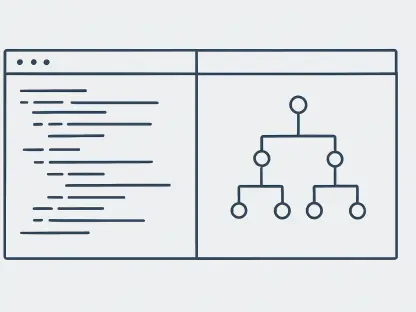
The impact of artificial intelligence on software development is not merely an evolution of existing tools. Beyond that, it represents a significant shift in how humans interact with code. That’s because for decades, software development required developers to translate business requirements into precise instructions that computers could execute. Every function, class, and algorithm had to be carefully crafted by hand. Artificial intelligence shifts expectations, creating a reality in which developers increasingly describe intent rather than implementation.
Instead of writing every line of code from scratch, developers can now collaborate with intelligent systems that can generate, review, debug, and explain code in real time.
Faster Coding and Shorter Cycles to Delivery
One of the most visible effects of artificial intelligence is the acceleration of coding itself. Modern AI coding assistants can generate substantial portions of code from natural language prompts. Developers can describe a desired feature, algorithm, or functionality in plain English and receive working code within seconds. It’s an edge that dramatically reduces the time required for routine programming tasks. Boilerplate code, configuration files, data models, API integrations, and repetitive functions can often be generated almost instantly, allowing developers to spend less time on mechanical code and more time on higher-level design decisions.
Productivity gains can be significant when security tooling is used effectively to mitigate vulnerabilities. Artificial intelligence reduces time-to-PR by up to 58%, according to research assessing 250,000+ developers across 60+ enterprises.
Tasks that previously required hours of research and implementation may now take minutes. A developer building a web application, for example, can generate authentication systems, database connections, user interfaces, and testing frameworks with the assistance of artificial intelligence. This does not eliminate the need for expertise, but it changes where expertise is applied. Rather than focusing primarily on syntax and implementation details, developers increasingly focus on architecture, validation, optimization, and business requirements.
However, the relationship between AI and developer productivity is more nuanced than simple speed improvements. While artificial intelligence can generate code rapidly, the code it produces is not automatically correct, secure, or maintainable. Therefore, all responsible developers must still evaluate outputs critically. In many cases, AI acts as a highly capable junior developer: fast and knowledgeable, but prone to mistakes and occasional misunderstandings. The most effective engineers can accept AI-generated suggestions, but only after identifying weaknesses, validating assumptions, and guiding the system toward better outcomes.
Another significant change occurred in software design and problem-solving. The legacy path meant professionals would spend significant time searching documentation, reviewing examples, and consulting online resources when approaching unfamiliar technologies. AI systems now serve as interactive knowledge assistants that can explain concepts, compare frameworks, generate examples, and answer technical questions in conversation. It’s a process that reduces friction in the learning process and shortens the time required to become productive with new processes, programming languages, or architectural patterns.
Democratizing Development Without Replacing Valuable Expertise
The democratization of software development may ultimately become one of artificial intelligence’s most profound effects. Historically, building software required specialized technical knowledge that could take years to acquire. While that expertise remains valuable, artificial intelligence is lowering barriers to entry. Entrepreneurs, designers, analysts, and domain experts can increasingly create prototypes and functional applications without extensive programming backgrounds. Through natural language interfaces, individuals can describe desired functionality and receive working software components, expanding the population of people who can participate in software creation.
Yet democratization does not necessarily mean the disappearance of professional developers. It simply changes the nature of professional expertise. As artificial intelligence makes coding more accessible, the value of software engineers may increasingly lie in areas such as system architecture, security, scalability, performance optimisation, user experience, and strategic decision-making. Building a small application may be easier, but designing reliable systems that serve millions of users remains a complex challenge that requires deep technical judgment.
How AI is Changing Critical Parts of Software Development
Artificial intelligence is also transforming software testing and quality assurance. Testing has traditionally been one of the most time-consuming aspects of software development. Writing test cases, identifying edge cases, and maintaining test frameworks often require substantial effort. Artificial intelligence systems can now automatically generate unit tests, integration tests, and end-to-end testing scenarios, analysing codebases to identify untested areas, suggest missing test coverage, and generate realistic test data.
And beyond just generating the tests, artificial intelligence is becoming increasingly capable of identifying bugs before software reaches production. Advanced models are increasingly tasked with identifying code patterns, detecting potential vulnerabilities, highlighting logical inconsistencies, and recommending improvements. This shifts quality assurance from a reactive process toward a more proactive approach. Rather than discovering issues after deployment, teams can efficiently pinpoint and address many problems during development.
Debugging itself is experiencing enhancements due to artificial intelligence. Software engineers frequently spend considerable time investigating unexpected behavior, tracing execution paths, and interpreting error messages. AI tools can analyze logs, explain stack traces, identify likely failure causes, and recommend solutions. What once required hours of investigation may now be resolved in minutes. This improvement has substantial implications for development velocity, particularly in large and complex systems where troubleshooting can consume a significant portion of engineering resources.
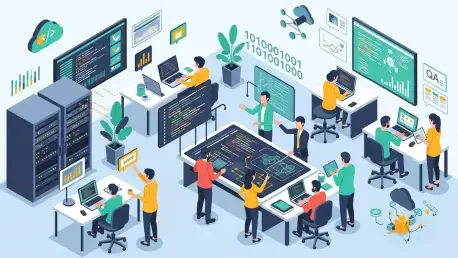
The impact of AI extends beyond individual developers to the structure of software organizations themselves. Historically, software teams have often scaled by hiring additional engineers. As AI amplifies developer productivity, organizations may find that smaller teams can accomplish work that previously required larger groups. This does not necessarily imply widespread job displacement, but it does suggest a shift in hiring priorities. Companies may place greater emphasis on adaptability, problem-solving, and domain expertise rather than solely on coding proficiency.
In Closing
Ultimately, artificial intelligence is not simply another tool in the software developer’s toolkit. It is a transformative force reshaping every aspect of software engineering. It accelerates coding, enhances learning, improves testing, streamlines productivity, and expands access to software creation.
The future of software development will likely belong to those who learn to work effectively alongside artificial intelligence. Success will depend not on competing with intelligent systems, but on leveraging them as partners. Developers who cultivate strong problem-solving skills, future-focused thinking, domain expertise, and critical judgment will remain indispensable. As AI continues to evolve, the defining skill of software engineers may no longer be their ability to write code line by line, but their ability to guide, evaluate, and direct increasingly capable machines toward meaningful human goals.