
The Current State of Agentic DevOps in Mission-Critical Environments
The rapid convergence of autonomous artificial intelligence agents and established software engineering practices has reached a critical juncture where the primary challenge is no longer technological capability but the integration of these tools into decades-old legacy environments. In the current landscape of 2026, the industry has transitioned away from basic autocomplete functions toward sophisticated agentic workflows that act as autonomous participants in the software development lifecycle. These agents do not merely suggest lines of code; they interpret intent, analyze existing architectures, and coordinate complex tasks across heterogeneous toolchains. This shift is particularly significant in mission-critical sectors like telecommunications, where the infrastructure is a complex tapestry of modern microservices and legacy signaling protocols such as SS7 and Diameter.
The significance of this evolution lies in its potential to revitalize brownfield engineering projects that were previously considered too fragile for rapid iteration. Modern market players are no longer satisfied with marginal gains in developer speed; they are seeking systemic improvements in reliability and throughput. Technological influences such as Large Language Models and specialized Model Context Protocols allow these AI agents to interface with on-premises repositories and proprietary source code that once remained siloed. Furthermore, the regulatory environment has tightened, requiring that any autonomous involvement in software delivery maintains strict adherence to safety standards and telecom-grade quality requirements.
Currently, the industry sees a clear divide between organizations utilizing AI as a simple assistant and those architecting entire DevOps pipelines around agentic orchestration. The latter group utilizes specialized agents for distinct phases of the lifecycle, including requirement analysis, technical planning, and automated testing. This orchestrated approach ensures that the systemic knowledge often locked within the minds of senior engineers is captured and codified within agent instructions and engineering templates. As these practices become standard, the focus has shifted toward ensuring that these agents can operate within the constraints of existing on-premises systems, such as GitLab, Jira, and Jenkins, without requiring a total overhaul of the technological stack.
Emerging Trends and Market Dynamics in AI-Assisted Engineering
Transforming Software Lifecycles Beyond Simple Code Completion
The most prominent trend affecting the engineering landscape is the migration toward end-to-end agentic orchestration that manages the entire flow from initial epic creation to final deployment. This move represents a departure from the fragmented use of AI tools toward a unified environment where GitHub Copilot and similar platforms serve as the central control plane. In this new paradigm, custom agents are assigned specific roles, such as a story-breakdown agent or a code-planning agent, which allows for a more granular and controlled application of machine intelligence. This specialization prevents the errors often associated with general-purpose models by providing each agent with only the specific tools and context necessary for its assigned task.
Evolving consumer behaviors among enterprise developers indicate a growing preference for tools that respect architectural constraints rather than just generating functional snippets. Modern engineering teams demand that AI agents understand the weight of legacy codebases and the importance of preserving established design patterns. Consequently, new opportunities have emerged for organizations to develop repository-specific instructions that ground AI behavior in the unique reality of their own products. This grounding ensures that generated code is not only correct in a vacuum but is also compatible with the specific nuances of a global, distributed signaling network or a proprietary data processing engine.
Moreover, the integration of agentic workflows with internal documentation and version-controlled instruction sets is becoming a standard market driver. As teams look to scale their operations through 2027 and 2028, the ability to store engineering “skills” as code is proving to be a competitive advantage. This trend allows for a more resilient knowledge management strategy where the logic used to break down complex epics into manageable tasks is no longer lost during personnel transitions. Instead, these processes are encoded into the agentic framework, creating a repeatable and improvable team capability that grows more effective with every completed sprint.
Measuring the Economic Impact of Productivity Gains
Recent market data from frontrunner implementations suggest that the economic impact of agentic DevOps is far more substantial than initially projected at the start of the decade. Performance indicators from high-stakes environments show a consistent two-fold improvement in feature implementation speeds when agents handle the cognitive load of requirement analysis and boilerplate generation. This doubling of productivity is not just a measure of lines of code written; it reflects a drastic reduction in the lead time from a business requirement being identified to a functional piece of software entering the production pipeline. In mission-critical deployments, these gains translate directly into faster response times for market demands and significant cost savings in labor-intensive documentation and unit testing.
Looking forward from 2026 to 2029, the industry anticipates a compounding effect as these AI agents become more adept at identifying edge cases and technical debt. Forecasts suggest that by 2028, the cost of maintaining legacy telecom software could decrease by as much as thirty percent as automated agents take over the heavy lifting of error report analysis and defect remediation. These agents can search through decades of logs and stack traces more efficiently than human teams, identifying root causes across multiple repositories in seconds. This capability allows human engineers to focus on high-value architectural decisions and innovation rather than the routine maintenance of 3G and 4G legacy systems.
The growth projections for the agentic engineering market indicate a steady climb as more enterprises realize that the true value of AI lies in workflow orchestration. Productivity gains are no longer viewed as a way to reduce headcount but as a means to expand the scope of what existing teams can achieve. By 2027, it is expected that the majority of enterprise-level software projects will utilize some form of agentic planning to ensure that development stays aligned with business goals. The economic narrative is shifting from one of simple efficiency to one of strategic agility, where the ability to pivot and deliver new features in a brownfield environment becomes a defining characteristic of market leadership.
Overcoming Obstacles in Mature Infrastructure and Legacy Systems
Transitioning to an agentic DevOps model within a mature infrastructure presents a unique set of challenges that are both technological and cultural. Many legacy systems were never designed to be interfaced with by autonomous agents, leading to friction when AI tools attempt to navigate proprietary build systems or antiquated version control structures. In contrast to greenfield projects, brownfield engineering requires a delicate balance between adopting new automation and respecting the stability of systems that have been in operation since the 1990s. The primary hurdle is often the lack of structured documentation for older components, which leaves AI agents without the necessary context to make informed decisions.
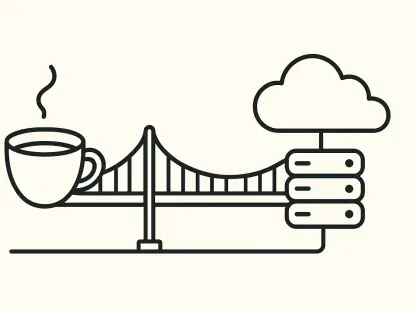
To overcome these obstacles, organizations are turning toward hybrid architectures that use Model Context Protocol servers to bridge the gap between cloud-based AI and on-premises data. This strategy allows the agent to access the necessary information to understand the codebase without requiring the organization to move its entire intellectual property to a public cloud. Furthermore, the implementation of repository-specific instructions provides a way to feed the agent the “unwritten rules” of a legacy system. By codifying these rules into Markdown files that the AI can ingest, teams can ensure that the agent follows established coding standards and respects the architectural boundaries of the existing product.
Another significant challenge is the inherent skepticism of engineering teams who have spent decades maintaining high-availability systems. For these professionals, the idea of an agent having write access to a mission-critical repository is often met with resistance. The solution has been the introduction of rigorous “human-in-the-loop” checkpoints where every output from an agent is treated as a proposal rather than a finished product. This approach preserves human accountability while still reaping the benefits of the agent’s speed. By separating the planning phase from the implementation phase, engineers can review and approve a technical approach before a single line of code is changed, ensuring that the AI remains a tool for the engineer rather than a replacement for them.
Governance, Compliance, and Security in Autonomous Workflows
The regulatory landscape for software engineering is undergoing a significant transformation as autonomous agents take a more central role in production environments. Compliance is no longer just about the final product; it is about the entire process that led to its creation. In sectors like telecommunications, where reliability is a matter of national security, the use of AI must be transparent and auditable. Significant laws and standards now require that any code generated or modified by an agent must be clearly tagged and traceable back to the specific model and instruction set used at the time. This ensures that if a defect is discovered, the organization can perform a thorough root-cause analysis that includes the AI’s decision-making process.
Security measures must also evolve to protect against the unique risks introduced by agentic workflows, such as prompt injection or the unintentional exposure of sensitive internal data. Effective governance involves strictly limiting the scope of what an agent can do through role-based access controls. For example, a planning agent should operate with read-only permissions, while an implementation agent should only be able to write to a temporary branch that is subject to mandatory human review and automated CI/CD gates. This layered security model ensures that even if an agent behaves unexpectedly, the damage is contained and the integrity of the main codebase is never compromised.
Moreover, the role of industry standards is becoming more critical in defining how agents interact with external tools and internal repositories. As organizations move toward 2027, the adoption of standardized templates for requirement analysis and implementation records is helping to create a consistent audit trail. These templates ensure that every action taken by an agent is documented in a way that is easily understood by both humans and regulatory bodies. By embedding compliance directly into the agentic workflow, companies are finding that they can actually improve their security posture, as the AI is less likely than a human to skip a mandatory step or forget to update a piece of documentation.
The Evolution of Hybrid Architectures and Intelligent Orchestration
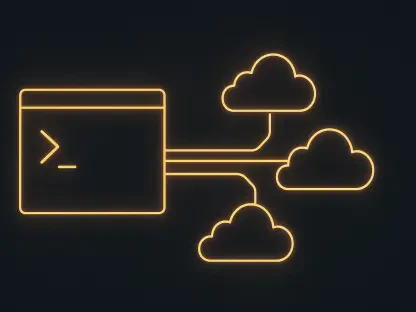
As the industry looks toward the next several years, the evolution of hybrid architectures is expected to be a major driver of innovation. The ability to orchestrate intelligent workflows across a mix of public SaaS platforms and private on-premises servers will define the next generation of DevOps. This trend is fueled by the realization that while the compute power for Large Language Models resides in the cloud, the most valuable engineering data often lives behind a corporate firewall. Intelligent orchestration layers will act as the traffic controllers for this ecosystem, ensuring that the right data reaches the right agent at the right time while maintaining strict data sovereignty.
Emerging technologies such as federated learning and decentralized AI models may also begin to play a role, allowing organizations to train agents on their own proprietary data without that data ever leaving their premises. This would represent a major disruptor in the market, as it would lower the barrier to entry for companies in highly regulated industries that have been hesitant to adopt cloud-based AI. Consumer preferences are already shifting toward platforms that offer this kind of flexibility and privacy. In contrast to the early days of AI assistance, the current market demands a high degree of customization and a focus on localized intelligence that understands the specific context of a company’s unique technology stack.
Global economic conditions and the ongoing shortage of specialized engineering talent will likely accelerate this transition. Organizations will increasingly rely on intelligent orchestration to fill the gaps in their teams, using agents to handle the routine aspects of software delivery while reserving their human experts for the most complex problems. This will lead to a new era of “super-engineers” who oversee fleets of agents, managing the software lifecycle at a scale that was previously unimaginable. The future growth of the industry will depend on the successful integration of these technologies into the legacy systems that continue to power our global infrastructure, ensuring that the old and the new can work together in a seamless, agent-driven environment.
Strategic Recommendations for Scaling Agentic DevOps
The comprehensive analysis of agentic workflows within brownfield environments revealed that the most successful implementations were those that treated AI as a structural enhancement rather than a superficial add-on. This report determined that the transition to agentic DevOps required a shift in focus from individual productivity to systemic orchestration. The data gathered from 2026 initiatives demonstrated that organizations which established clear repository-specific instructions and utilized specialized agents achieved more reliable results than those relying on generic AI prompting. The investigation showed that the integration of Model Context Protocols was instrumental in allowing these agents to safely interact with on-premises legacy systems, thereby bridging the gap between modern AI and established infrastructure.
The findings suggested that the most effective way to scale these capabilities was through a phased approach that prioritized the codification of engineering standards into version-controlled assets. The analysis highlighted that by creating a repeatable framework of agents, templates, and automated gates, companies reduced the variability of their software delivery and improved overall quality. It was also noted that the inclusion of rigorous human-in-the-loop checkpoints was essential for maintaining the high standards required in telecom-grade environments. The report established that the economic benefits of these workflows extended beyond simple time savings, contributing to a more resilient knowledge base and a more agile engineering culture.
Based on these results, the strategic recommendation for enterprises is to begin by mapping their existing software lifecycles and identifying the points of highest friction where agents can provide the most value. Organizations should invest in developing custom MCP servers to connect their internal toolchains to agentic platforms, ensuring that AI has the context it needs to be effective. It is critical to maintain a hybrid architecture that protects intellectual property while leveraging the orchestration capabilities of modern AI environments. Finally, the focus must remain on the long-term evolution of the engineering process, treating the development of agentic “skills” as a core competency that will drive competitive advantage in the years following 2026.