
Today we’re diving deep into how procurement is evolving from a back-office cost center into the central nervous system of a modern enterprise. We’ll explore the journey of Forest Lawn Memorial Parks & Mortuaries, a company that transformed its operations by weaving together its procurement platform, Vroozi, with its NetSuite ERP and even its customer-facing Shopify store. This conversation will cover the shift from manual processes to a digital marketplace, the complexities of orchestrating a multi-platform integration, and how automating everything from inventory replenishment to specialized service orders has created a truly unified operational backbone.
Forest Lawn transitioned from paper-based purchasing to a digital “Marketplace” in 2018. What were the biggest operational challenges that prompted this shift, and what immediate benefits did your team see after moving to a digital procurement environment? Please share an early win from that period.
The move in 2018 was driven by necessity. The old paper-based system was incredibly cumbersome and opaque, especially for an organization of our scale. Imagine trying to manage purchasing across numerous locations with stacks of paper requisitions, purchase orders, and invoices. It was slow, prone to errors, and gave us almost zero real-time visibility into our spending. The biggest challenge was simply a lack of control and the sheer amount of manual effort required to keep things moving. The immediate benefit of launching the “Forest Lawn Marketplace” was clarity. Suddenly, we had a centralized digital environment where we could see and manage spend across our entire network of over 1,000 suppliers. An early win that I vividly remember was the first time we could pull a comprehensive spend report in minutes rather than days of manual consolidation. It felt like turning on the lights in a dark room; we finally knew exactly where our money was going.
In 2023, you integrated Vroozi with a new NetSuite ERP and Shopify. Can you walk me through the key steps and challenges of orchestrating these three distinct platforms? How did you ensure a smooth transition, especially while supporting temporary integrations with other systems?
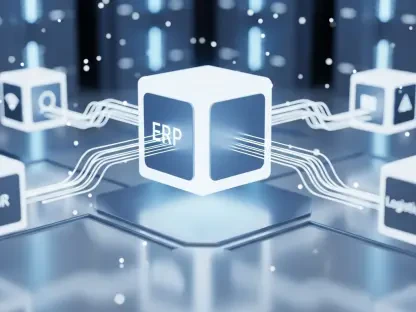
That 2023 integration was a massive undertaking, far more complex than our initial digitization. We were essentially performing open-heart surgery on our core business systems, migrating to NetSuite as our new ERP while simultaneously connecting it to both our procurement platform and our e-commerce front end. The biggest challenge was managing the transition in phases to avoid disrupting daily operations. We used our procurement platform as the stable core. While we were migrating to NetSuite, we had to build temporary bridges, like the integration with Bill.com, to handle accounts payable. The key was a very deliberate, phased approach, ensuring each connection was stable before moving to the next. It was a carefully orchestrated sequence: establish the procurement-to-AP link, then methodically migrate the ERP connection to NetSuite, and finally, build the API-based link to Shopify. It required meticulous planning to ensure data flowed correctly, even when some underlying systems were in flux.
Your inventory replenishment is now driven by NetSuite reorder points, which automatically trigger purchase orders. Could you describe the impact this has had on stockouts and manual workload for your team? What metrics do you track to measure the success of this closed-loop system?
The impact of automating inventory replenishment has been transformative. Before this, our teams spent an enormous amount of time on manual inventory checks and creating purchase requisitions. It was a constant battle to avoid stockouts on critical items, which directly affects our ability to serve families. Now, the system works for us. NetSuite is our single source of truth for inventory; once stock for an item hits its reorder point, a purchase order is automatically generated in Vroozi and sent to the supplier without anyone lifting a finger. This has dramatically reduced the manual workload and, more importantly, has significantly decreased stockout incidents. We primarily track two key metrics to measure success: our stockout rate, which has fallen sharply, and our inventory turnover. We also monitor the number of manually adjusted orders, which serves as an indicator of how well the automated system is performing. The goal is to get that number as close to zero as possible.
Connecting customer-facing Shopify orders directly to your procurement backend is an advanced step. Could you explain how a customer’s flower order actually triggers actions in Vroozi and NetSuite? What advice would you give a company looking to build a similar sales-to-procurement workflow?
This connection is where the system truly becomes a unified operational backbone. When a customer places an order for flowers on our Shopify site, that sales event triggers a series of automated actions via API integrations. First, the order information flows into NetSuite, which updates our sales records and checks inventory levels. Simultaneously, that fulfillment request is routed through Vroozi, which ensures that our procurement and inventory systems are perfectly synchronized with the sale. If the flowers need to be sourced from a supplier, this process can trigger the necessary procurement actions. It’s a seamless flow from the customer’s click to our back-end operations. My advice for any company attempting this is to start with a rock-solid data model. You must have clean, consistent data across all platforms—sales, inventory, and procurement. Without that, the automation will fail. Start small, perhaps with a single product category, and prove the concept before expanding.
You manage specialized services like Dove Releases and musicians through the same platform used for goods. What was the process for standardizing the procurement of these unique services, and how has it improved compliance and visibility compared to how they were managed previously?
Treating services like physical goods within our procurement platform was a strategic decision to gain total spend visibility. Previously, booking a musician or a Dove Release service was often an informal, ad-hoc process with inconsistent approvals and payment methods. The first step was to catalog and define these services just like we would an inventory item, creating standardized service descriptions and pricing within the Vroozi marketplace. We then established clear workflows for requesting, approving, and invoicing these services. Now, when a team needs to book an interpreter, they follow the same compliant process as ordering office supplies. This has been a game-changer for compliance and visibility. Every service is now tied to an approved purchase order, giving us a complete, auditable trail and ensuring we are using preferred, vetted service providers.
Your goal was to bring all spend under management, but you’ve noted that procurement has now become woven into daily operations. Beyond cost control, could you provide a specific example of how this integration has improved service consistency or the customer experience?
Absolutely. While gaining control over our spend was the initial goal, the real payoff has been in operational consistency. A perfect example is how we manage floral arrangements for services. Before the integration, the process relied on manual communication between the sales team and the floral department, which could lead to delays or inconsistencies, especially during busy periods. Now, with the Shopify integration, a customer’s floral order is tied directly to our inventory and procurement systems in real time. This ensures that the exact flowers and materials needed are available and allocated the moment the order is placed. This direct link between a customer’s choice and our back-end fulfillment process has eliminated guesswork and improved the reliability and consistency of our service delivery, which is incredibly important in our line of work.
What is your forecast for the role of procurement in service-based industries?
My forecast is that procurement will become completely invisible yet absolutely essential—it will be the operational infrastructure that enables service delivery, not just a department that buys things. In service industries, the “product” is an experience, which depends on the timely coordination of people, materials, and specialized services. The future of procurement is to be the intelligent, automated orchestrator of these components. We’ll see procurement platforms move beyond just managing spend to triggering workflows based on real-time operational needs, whether it’s automatically dispatching a technician based on a service ticket or ordering supplies based on a project timeline. The focus will shift entirely from transactional cost-cutting to enabling strategic, consistent, and high-quality service execution.