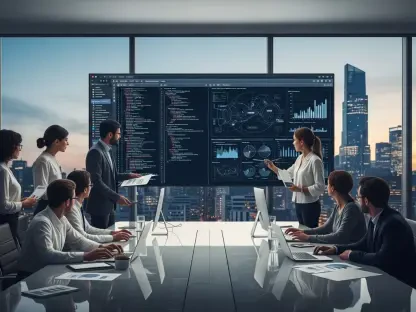

The sophisticated cloud infrastructure of a global manufacturing giant often grinds to a halt the moment a worker picks up a physical clipboard to record a production shift. While executives and analysts sit in glass offices fueled by real-time dashboards and predictive modeling, the individuals responsible for the physical output of the company frequently operate in a digital vacuum. This disconnect represents a profound systemic friction where high-level corporate intelligence meets the manual reality of the factory floor, resulting in a fractured flow of information that compromises the entire organizational architecture.
A multi-million dollar Enterprise Resource Planning (ERP) suite offers negligible value if the data it relies on remains trapped in a paper logbook or a local spreadsheet. The “last-mile” problem is not merely a technical inconvenience; it is a structural failure that isolates the frontline workforce from the digital core of the business. Bridging this gap requires a fundamental shift in how organizations perceive the interaction between humans and machines at the edge of operations.
The Invisible Barrier: Challenges in the Modern Enterprise
The modern enterprise often suffers from a digital divide that separates administrative staff from the frontline workforce. While back-office employees have seamless access to integrated tools, those on the production line or in the warehouse are often forced to use outdated methods for communication and data entry. This isolation prevents the ERP system from receiving the granular, real-time data it needs to provide accurate insights into productivity and resource allocation.
When the flow of information is disrupted at the source, the entire organizational intelligence begins to decay. Managers are forced to make decisions based on day-old reports or manual entries that are prone to human error. This lack of visibility creates a “black box” around frontline operations, making it impossible for the enterprise to respond quickly to supply chain disruptions or sudden shifts in production demands.
Efficiency Drivers: Why the Last-Mile Problem Dictates Performance
The disparity between digital sophistication in the boardroom and administrative friction on the floor is a significant financial drain that many companies struggle to quantify. When frontline staff lack direct access to the enterprise ecosystem, the burden of data retrieval and entry falls heavily on middle management and human resources. This creates a reactive operational environment where leaders spend more time correcting errors than optimizing workflows or driving innovation.
In large-scale operations, these inefficiencies manifest as massive cost leaks that prevent a company from ever achieving the full return on investment from their digital transformation initiatives. Labor law violations, “punch disputes,” and payroll errors are common symptoms of a system that lacks a direct digital link to the point of work. Without a streamlined way to capture labor data, organizations remain vulnerable to compliance risks that could be easily avoided with better connectivity.
Intelligent Interaction: Transforming Passive Hardware into Strategic Nodes
The evolution of workforce management hinges on moving beyond the traditional, transactional time clock that has remained largely unchanged for decades. Modern enterprise architecture now requires a dynamic interaction layer that serves as a bridge between the physical workspace and the digital core. By evolving these devices into AI-powered kiosks, companies can create a sophisticated interface that handles complex queries and processes in real-time.
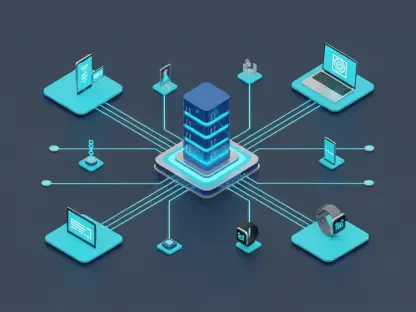
This shift from transactional to strategic hardware involves more than just a touchscreen upgrade. These interaction nodes allow for job transfers, leave management, and real-time policy validation directly at the edge. By utilizing a three-tier workforce model, the interaction layer (AI kiosks) communicates with the integration layer (APIs) to feed the core intelligence layer (ERP). This structure ensures that the workforce is not just monitored, but is actively participating in the digital ecosystem of the company.
Real-time policy enforcement at the kiosk prevents unauthorized overtime and labor law violations at the point of entry rather than weeks later in the payroll office. Furthermore, data democratization allows frontline employees to access their own accrual balances and schedules immediately. This transparency fosters a sense of autonomy and trust, which has been shown to improve employee retention and overall morale in high-pressure industrial environments.
Quality Control: High-Fidelity Data and the Expert Perspective
Industry experts emphasize that the value of any centralized system is directly proportional to the quality of the data it receives from the source. AI-powered kiosks act as a rigorous “cleaner” for the enterprise data stream, automating the allocation of labor hours across different cost centers without the need for manual intervention. By embedding artificial intelligence at the point of contact, organizations ensure that every minute of labor is accounted for and categorized with surgical precision.
This level of precision allows for more accurate forecasting and a deeper understanding of operational costs that was previously impossible with siloed systems. When the ERP receives high-fidelity data, the predictive analytics tools can identify patterns in labor performance and equipment downtime much earlier. This transition from retrospective reporting to proactive management allows leaders to optimize their workforce based on actual evidence rather than historical approximations.
Linking the Frontline: A Framework for the Enterprise Core
To successfully bridge the gap between workers and centralized systems, organizations should adopt a structured approach to deployment that prioritizes connectivity and user experience. The first step involved auditing every interaction point where frontline workers encountered friction while reporting time or accessing information. Identifying these bottlenecks allowed for the targeted implementation of intelligent edge devices that offered more than a simple “clock-in” button.
The framework further required the establishment of seamless middleware connectivity to ensure that data captured at the kiosk flowed through robust APIs directly into the ERP. This eliminated the need for manual data entry and ensured that the centralized core remained a “single source of truth.” Real-time feedback loops were also configured, providing workers with instant confirmation of schedule changes or time-off approvals, which effectively closed the communication gap that often plagued large-scale industrial operations.
The final phase of this transformation focused on the continuous refinement of data quality through advanced analytics. Organizations examined the insights provided by the ERP to identify remaining operational bottlenecks and adjusted the kiosk interfaces to capture even more granular data. This proactive strategy ensured that the workforce management system remained resilient and adaptable to changing business needs. Leaders who prioritized this integrated approach found that the entire workforce became more synchronized, and the strategic value of the enterprise infrastructure was finally realized through a fully connected employee base.