
Countless organizations have poured billions into developing sophisticated artificial intelligence models, only to watch them falter at the final hurdle, unable to permeate the rigid core of their day-to-day business operations. The predictive algorithms are brilliant, the data science teams are world-class, yet the promised revolution in efficiency and insight remains just out of reach. This frustrating gap between potential and performance stems not from the AI itself, but from the crumbling, outdated digital foundations upon which most enterprises are built. The critical challenge of the modern era is realizing that true AI transformation is not an application to be installed but an architectural reality to be constructed.
Why Brilliant AI Models Fail to Impact the Business Core
Many enterprises find themselves in a state of digital paradox. They possess advanced AI capabilities, often developed in isolated innovation hubs, that can forecast demand, detect fraud, and optimize supply chains with remarkable accuracy. However, these intelligent tools often operate on the periphery of the business. They struggle to connect with the live, operational data flowing through core systems that manage finance, manufacturing, and human resources. This disconnect effectively neuters the AI, forcing it to work with stale, incomplete, or batch-processed information, rendering its real-time decision-making potential useless.
The consequences of this integration failure are severe and multifaceted. It leads to a disillusioned workforce, as data scientists see their groundbreaking work underutilized and business leaders see a poor return on substantial AI investments. More critically, it creates a growing competitive disadvantage. Companies that cannot embed intelligence directly into their core operational workflows will be outmaneuvered by competitors who can. The problem is not a lack of intelligent software but a lack of an intelligent infrastructure capable of harnessing it.
The Foundational Flaw When Legacy Architecture Meets Modern Intelligence
The primary culprit behind this disconnect is the monolithic architecture of traditional Enterprise Resource Planning (ERP) systems. These platforms were designed decades ago for stability and predictability, engineered as single, indivisible units where every component is tightly interwoven. While this design provided reliability in a slower-paced business world, it has become a significant barrier to innovation. For modern AI, which thrives on agility, massive datasets, and constant iteration, the monolith is an insurmountable obstacle.
This “monolithic barrier” creates fundamental bottlenecks that stifle AI deployment. Because the entire system is a single block of code, any attempt to update one component—such as integrating a new machine learning model for inventory management—requires a massive, high-risk, and expensive overhaul of the entire ERP. Furthermore, these legacy systems inherently create data silos, locking critical information within separate modules. This fragmentation prevents AI from achieving the holistic, cross-functional view of the business it needs to deliver truly transformative insights.
Deconstructing the Monolith a Blueprint for an AI Ready Enterprise
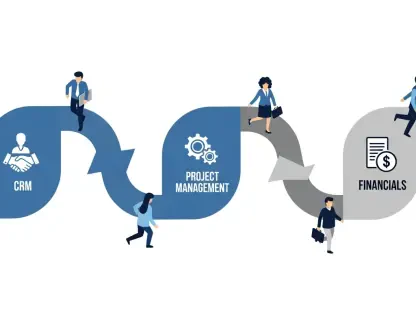
The solution lies in a radical but necessary reimagining of enterprise architecture, a vision championed by leading architects like Bhupendra Kumar Mishra. This blueprint involves carefully deconstructing the monolith and re-architecting it as a collection of independent, interconnected microservices operating in a cloud-native environment. In this model, core business functions like financials, procurement, and inventory are no longer entangled. Instead, each operates as a self-contained, containerized service that communicates with others through standardized APIs, creating a flexible and “composable enterprise.”
This modern architecture provides three distinct advantages crucial for AI success. The first is scalability on demand. By leveraging the natural elasticity of the cloud, organizations can dynamically allocate immense computational power for resource-intensive tasks like AI model training without investing in costly permanent hardware. This allows data science teams to experiment and build more complex models without infrastructure constraints. Second, it enables rapid iteration and deployment. With microservices, a team can improve a single fraud detection algorithm and redeploy it in minutes without disrupting any other part of the business, a process known as “precision updating.”
Finally, this approach creates resilient and unified data pipelines. It dismantles the data silos inherent in monolithic systems by implementing distributed data lakes and event-driven messaging protocols. When a sales order is processed in one microservice, that event can instantly trigger actions or analyses in the inventory, finance, and logistics services. This provides AI models with the continuous, clean, and holistic stream of real-time data essential for maximum accuracy and effectiveness in a dynamic business environment.
An Architects Perspective on Connecting AI to the Business
The strategic importance of this architectural shift is best summarized by the core insight from enterprise architect Bhupendra Kumar Mishr”The most brilliant AI model is worthless if it can’t connect to the beating heart of the business.” This statement reframes the AI challenge, moving the focus from algorithm development to infrastructural readiness. The most sophisticated neural network cannot optimize a supply chain if it cannot access real-time shipping, inventory, and manufacturing data. The architecture is the circulatory system that delivers the lifeblood of data to the intelligent brain.
Mishra’s expert viewpoint also emphasizes that the most formidable challenges in this transformation are often cultural, not technical. Moving from a monolithic, slow-moving system to an agile, microservices-based one requires a fundamental shift in organizational mindset. It demands breaking down departmental silos, fostering collaboration between business and technology teams, and embracing a culture of continuous experimentation and improvement. Without this cultural evolution, the technology alone cannot deliver on its promise.
The future trajectory of this architecture points directly toward autonomous enterprise systems. This foundational layer is what will enable the transition from AI that analyzes and recommends to “AI that acts.” In a properly architected system, autonomous agents can be trusted to execute tasks directly within business workflows—automatically reordering inventory based on predictive models, adjusting prices in response to market shifts, or rerouting shipments to avoid delays, all without human intervention.
From Theory to Practice a Framework for Architectural Transformation
Successfully navigating this architectural transformation requires a deliberate and holistic strategy that extends far beyond the IT department. The first imperative is organizational. Enterprises must foster deeply integrated, cross-functional teams that combine profound business knowledge with technical expertise. This collaboration ensures that the new microservices are designed to solve real business problems and deliver measurable value. In parallel, new governance frameworks are needed to balance the speed and agility of innovation with the essential requirements of security, compliance, and stability.
This shift also demands strong, visionary leadership that champions the transition as a fundamental business model evolution, not merely an IT project. This involves communicating the strategic value of agility and intelligence across the organization and investing in the necessary reskilling and upskilling of the workforce. New roles, such as “microservices product owners,” become essential for managing the lifecycle of individual business capabilities as independent products. Finally, implementation should follow an iterative rollout strategy, starting with non-critical functions to demonstrate tangible business value at each stage, building momentum and securing buy-in for the broader transformation.
The architectural pivot from monolithic systems to a composable, cloud-native framework was ultimately a recognition that enterprise intelligence required a new digital foundation. Organizations that successfully undertook this journey did more than just modernize their technology; they re-engineered their operational DNA to be inherently more agile, data-driven, and responsive to change. This transformation was not just about preparing for AI, but about building an enterprise that could thrive in an increasingly autonomous future, ensuring their most brilliant innovations were deeply connected to the beating heart of the business.