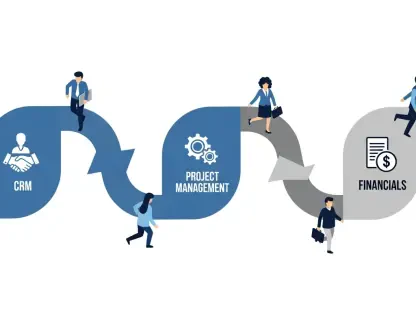

The past twelve months have served as a crucible for the finance industry, forging a definitive shift away from reactive data processing toward a proactive, AI-driven paradigm known as “agentic finance.” This transformation represents more than an incremental technological update; it is a fundamental reinvention of how finance teams function, generate strategic insights, and contribute to enterprise-wide goals. The acceleration and adoption of embedded and agentic AI capabilities within core financial systems have become the central theme of this evolution. Within this dynamic landscape, Oracle has firmly established its Fusion Cloud Enterprise Resource Planning (ERP) solution as the principal catalyst and market leader, pioneering a new era where intelligent agents automate complex processes, anticipate needs, and empower human decision-making with unprecedented speed and accuracy. This period has initiated a paradigm shift, solidifying the move from traditional financial management into an intelligent, autonomous future.
Pioneering Agentic Capabilities
Integrated AI Agents
Oracle’s commitment to tangible innovation was underscored by the introduction of new, seamlessly integrated AI agents within its Cloud ERP. These advanced tools represent a significant leap forward, architected to accelerate business insights and dramatically enhance operational efficiency. A key differentiator is their native design; the agents run on the secure Oracle Cloud Infrastructure (OCI) and are prebuilt into Oracle Fusion Cloud Applications at no additional cost. This approach effectively eliminates the friction, complexity, and security vulnerabilities often associated with integrating disparate third-party AI solutions. By embedding intelligence directly into core workflows, organizations can bypass lengthy implementation cycles and immediately leverage sophisticated automation. This strategy not only democratizes access to powerful AI but also ensures that these capabilities are governed by enterprise-grade security protocols, providing a trusted foundation for handling sensitive financial data and making critical business decisions with confidence.
These intelligent tools are engineered to address specific, high-impact financial functions, translating abstract AI potential into concrete operational value. The Payables Agent, for instance, is designed to automate the complete lifecycle of multi-channel invoice processing, a function historically burdened by intensive manual labor and a high propensity for error. By taking over these repetitive tasks, it strengthens regulatory compliance and frees human teams to focus on more strategic activities. Similarly, the Planning Agent serves the complex needs of financial planning and analysis (FP&A) teams by facilitating real-time trend and variance analysis through natural-language interactions. This conversational interface makes sophisticated data querying accessible to a broader range of users, thereby improving forecast accuracy and agility. Meanwhile, the Payments Agent provides treasury and cash management professionals with the tools to optimize cash outflows and strategically expand payment choices, directly improving working capital and financial resilience in a dynamic economic environment.
An Extensible AI Ecosystem
While the delivery of powerful, prebuilt agents provides immediate value, Oracle’s strategy extends further, aiming to cultivate a vibrant and customizable AI ecosystem. A central component of this vision is the Oracle AI Agent Studio for Fusion Applications, a comprehensive platform that empowers both customers and partners to build their own bespoke AI solutions. The studio supports the entire agent lifecycle, from initial creation and extension to final deployment and ongoing management. Throughout the year, this platform received significant updates, including expanded support for a variety of Large Language Models (LLMs), giving developers greater flexibility and choice. Furthermore, Oracle has cultivated a vast network of certified AI agent experts and provided new agent-building resources, ensuring that organizations have the support and expertise needed to translate their unique business requirements into powerful, functional AI agents. This move signifies a strategic shift toward a more open and extensible AI framework where innovation is not limited to the vendor but is actively driven by the community it serves.
This commitment to an open ecosystem is further solidified by the launch of the Oracle Fusion Applications AI Agent Marketplace. This curated environment directly addresses a common challenge for enterprises: the difficulty of discovering and implementing reliable, secure, and effective AI tools. The marketplace serves as a trusted hub where customers can confidently find and deploy validated, partner-built AI agents that are guaranteed to integrate seamlessly with their existing Oracle applications. By connecting customers with Oracle’s extensive network of trusted partners, the marketplace leverages deep, industry-specific expertise to deliver innovative and enterprise-ready AI solutions. This model not only accelerates an organization’s time to value but also fosters a collaborative environment where partners are incentivized to develop cutting-edge solutions for niche challenges, ultimately enriching the entire Oracle ecosystem. The marketplace transforms the process of AI adoption from a risky exploration into a strategic and reliable procurement of proven capabilities.
Validated by Industry Authorities
Consistent Leadership in Analyst Reports
The efficacy of Oracle’s strategy and technological advancements has been powerfully substantiated by widespread accolades from leading industry analysts. This external validation serves as a critical proof point, confirming the company’s position at the forefront of the agentic finance movement. Most prominently, the technology giant was once again named a Leader in four separate and highly influential Gartner® Magic Quadrant™ reports. This recognition covers the entire spectrum of modern finance capabilities, including Cloud ERP for Service-Centric Enterprises, Cloud ERP for Product-Centric Enterprises, Financial Planning Software, and Financial Close and Consolidation Solutions. Achieving a Leader position in even one of these competitive assessments is a significant accomplishment; to do so across all four demonstrates an unparalleled breadth and depth of capability. This consistent leadership validates the company’s cohesive, end-to-end platform strategy and reinforces its ability to meet the complex and evolving needs of modern finance organizations across diverse industries.
In each of these critical reports, Oracle was specifically recognized for its high placement on both the “Ability to Execute” and “Completeness of Vision” axes. This dual recognition is particularly meaningful. “Ability to Execute” reflects the company’s success in delivering tangible results for its customers today, affirming the maturity, reliability, and real-world performance of its solutions. It speaks to the strength of its global operations, customer support, and proven track record. Simultaneously, being ranked highly for “Completeness of Vision” highlights the company’s forward-thinking strategy, its deep understanding of market trends, and its relentless commitment to innovation, particularly in the realm of embedded AI and machine learning. This consistent, dual acknowledgment by Gartner is interpreted as a powerful affirmation of Oracle’s core message: that the future of agentic finance is not just a concept but a present-day reality being delivered through its comprehensive and integrated suite of applications.
Expert Commentary on Market Dominance
Beyond formal analyst reports, commentary from respected industry experts has added further weight to Oracle’s claims of market leadership, providing qualitative insights into its competitive advantages. Albert Pang of Apps Run the World highlighted a landmark achievement, stating, “Oracle surpassed SAP as the No. 1 ERP applications vendor for the first time.” This declaration is monumental, signaling a significant power shift in a market long dominated by an established incumbent. It positions Oracle not merely as an innovator but as the definitive market force, a status earned through strategic execution and a clear vision for the future of enterprise software. This milestone reflects a broader trend of customers choosing integrated, cloud-native platforms that can deliver the agility and intelligence required to navigate modern business complexities, validating Oracle’s long-term investment in its Fusion Cloud architecture and its aggressive push into AI.
Further analysis from industry veterans delves into the technical underpinnings of this success. Bonnie Tinder of Raven Intelligence pointed to a crucial architectural advantage, noting that all of Oracle’s applications run on a “singular database infrastructure.” This unified foundation, she explained, makes it significantly easier to integrate applications and embed AI capabilities consistently across the entire suite. This contrasts sharply with competitors who may rely on integrating disparate suites acquired over time, often resulting in data silos, integration challenges, and an inconsistent user experience. Building on this, Brian Sommer of TechVentive powerfully described Oracle’s market position as a “flywheel.” This metaphor aptly captures the self-reinforcing momentum created by the sheer breadth and depth of Oracle’s application portfolio. Each component strengthens the others, creating a virtuous cycle where a comprehensive solution attracts more customers, which in turn fuels further investment in innovation, attracting more partners and expanding the ecosystem, thereby accelerating its market dominance.
Driving Tangible Results and Expanding the Ecosystem
Proven Customer Success
The transition from technological capability and analyst praise to real-world impact is demonstrated by the thousands of organizations actively leveraging Oracle’s solutions. With over 11,000 Oracle Cloud ERP customers sharing their success stories, the widespread adoption of these AI-powered tools is evident across every sector. A prime example is the multinational professional services network PwC, which is utilizing Oracle’s embedded generative and agentic AI to strengthen financial controls, better align intricate planning processes, and streamline reporting across its vast global network. Neil Wilson, a partner at PwC, noted that the firm’s internal transformation on the platform not only yields direct benefits like simplified reporting and faster insights but also fundamentally enhances the experience and expertise they can offer their own clients. By modernizing its own operations, PwC gains firsthand knowledge that enriches its advisory services for other enterprises embarking on similar digital finance transformations.
This momentum is also exemplified by organizations whose missions extend deep into community service and development. The Choctaw Nation, the third-largest Indian Nation in the United States, is leveraging embedded AI within Oracle Fusion Applications to support its foundational mission of fostering growth and prosperity for its members. This application of advanced technology showcases how AI can be a powerful force for enabling mission-driven goals, not just corporate profit. Emily Crow, an IT director for the organization, confirmed the depth of this adoption, mentioning that the Choctaw Nation has already implemented over 40 distinct generative AI capabilities. Looking ahead, the organization plans to further leverage Oracle’s new AI agents and the AI Agent Studio to continuously improve operational efficiency. This strategic use of technology is aimed at better supporting their people and maximizing the resources dedicated to their community-focused programs, proving the versatility and impact of agentic finance.
Strategic Partnerships for Enhanced Value
The final pillar of Oracle’s strategy has been the deliberate and strategic expansion of its B2B partner ecosystem, with new collaborations designed to enhance the intrinsic value of Oracle Cloud ERP. These partnerships focus on embedding critical financial services directly into core workflows, particularly in the crucial domains of working capital and payments. A significant new collaboration with J.P. Morgan Payments resulted in the launch of a supply chain finance (SCF) solution integrated directly into Oracle Cloud ERP. This deep integration is a game-changer for treasury and procurement teams, allowing companies to manage their complex working capital programs within the very same system they use for day-to-day payables and supplier management. The solution has already garnered industry recognition, receiving the Working Capital Innovation Award primarily for its remarkable ability to reduce the implementation time for a new SCF program by as much as six months, a testament to the power of embedded financial services.
Further extending its capabilities in the payments space, Oracle also announced a key collaboration with Brex, marking the fintech issuer as the first to be embedded directly within the Oracle Cloud ERP environment. By leveraging Oracle’s existing deep integration with Mastercard, this partnership enables customers to seamlessly select and use Brex virtual cards from within their established payables workflows. This eliminates the need to switch between different systems, thereby streamlining supplier payments, simplifying expense management, and providing greater control and visibility over corporate spend. These strategic alliances with financial services leaders like J.P. Morgan and Brex exemplify a broader trend toward creating a unified, ecosystem-driven platform. Instead of forcing customers to piece together disparate solutions, Oracle is curating a comprehensive financial environment where best-in-class services are natively integrated, delivering a more cohesive, efficient, and powerful user experience for its global customer base.
A New Financial Paradigm
The developments of the past year solidified a new reality for finance professionals. Oracle’s focused efforts in uniting its comprehensive suite of applications with advanced, integrated AI empowered customers to act with greater speed, operate with enhanced precision, and unlock previously unseen business opportunities. The successful integration of agentic AI, validated by industry experts and proven through tangible customer outcomes, marked a definitive step forward. This journey, championed by a vast network of customers and partners, firmly established the foundation for an AI-powered future in finance, a future that has now become the present standard.