
The longstanding monopoly on software creation, once held firmly by specialized IT departments, is dissolving as business leaders and process experts step into the role of “citizen developers,” fundamentally reshaping how organizations build their digital infrastructure. This democratization of technology empowers those closest to the operational challenges to craft their own solutions, marking a significant departure from top-down, centrally managed software deployment. In a business landscape that prizes unprecedented speed and agility, this shift is not just a novelty but a competitive necessity.
The significance of no-code platforms becomes particularly clear when contrasted with the limitations of traditional systems like Enterprise Resource Planning (ERP). While powerful, these monolithic systems often impose rigid structures, forcing companies to adapt their processes to the software rather than the other way around. This rigidity creates operational friction and stifles innovation. No-code, in contrast, offers a flexible, responsive alternative that enables true customization at a fraction of the time and cost.
This analysis will dissect the key trends driving the no-code revolution, from its explosive market growth and real-world applications to the evolving expert consensus on its strategic role. By examining the data, use cases, and future trajectory of this technology, a clear roadmap emerges for understanding its profound and lasting impact on businesses of all sizes.
The Ascent of No-Code: A Data-Driven View
Market Expansion and Adoption Metrics
The growth of the no-code and low-code market has been nothing short of explosive, rapidly claiming a significant share of the business application development landscape. Industry forecasts, such as Gartner’s landmark prediction that 70% of new enterprise applications would be developed using these technologies by 2025, have proven remarkably prescient. Current data shows adoption rates continuing to soar as organizations recognize the immense value in empowering their teams to build solutions independently.
This expansion is visible across the business spectrum, but its effect is particularly transformative for Small and Mid-sized Businesses (SMBs). Historically, sophisticated business systems were the exclusive domain of large enterprises with deep pockets. No-code platforms have shattered this barrier, offering SMBs access to ERP-level control and automation without the prohibitive costs and lengthy implementation cycles. Consequently, these businesses are now able to develop robust, custom operating systems that were once financially and technically out of reach, leveling the playing field for digital transformation.
Practical Applications and Transformative Use Cases
In practice, the impact of no-code is tangible and diverse. Consider a mid-sized manufacturing firm that bypassed a multi-million dollar ERP implementation by building a custom, standalone operating system. Using a no-code platform, its operations team developed an integrated solution for managing everything from inventory and raw material orders to sales pipelines and final delivery logistics. The result was a system perfectly tailored to its unique workflows, delivering the single source of truth of an ERP without the associated complexity and financial burden.
Conversely, large enterprises are leveraging no-code not to replace their core ERPs but to augment them. A global corporation, for instance, used a no-code platform to build a custom application for managing regional marketing budget approvals—a process too specific and dynamic for its rigid, centralized finance ERP. In another case, an HR department created a specialized onboarding application to handle country-specific paperwork and training modules, filling a critical gap left by the company’s standardized HR system. These applications serve as a flexible, agile layer around the stable ERP core.
Beyond full-scale systems, the most immediate benefit companies experience is the radical acceleration of the development lifecycle. The ability to move from an idea to a functional prototype in a matter of days, rather than months, fosters a culture of rapid innovation and experimentation. Business units can quickly test new processes, build tools to solve immediate problems, and iterate on solutions in real-time based on user feedback, an agility that traditional development methodologies simply cannot match.
Expert Consensus: The New Paradigm of Business-Led Development
A clear consensus has emerged among industry experts: no-code technology is driving a fundamental decentralization of software development. This trend represents a paradigm shift, moving creation capabilities from the exclusive control of centralized IT departments to the business units and managers who possess deep, firsthand knowledge of operational needs. This business-led development model breaks down the traditional barriers and bottlenecks that have long slowed innovation.
This decentralization directly empowers non-technical users, enabling domain experts to translate their process knowledge into functional, purpose-built applications. An accountant can build a custom auditing tool, or a logistics manager can design a real-time tracking dashboard, all without writing a single line of code. This fosters a stronger sense of operational ownership and allows teams to adapt their tools with the same speed at which their business needs evolve, creating a more resilient and agile organization.
Furthermore, experts increasingly advocate for hybrid architectural models where no-code and traditional systems coexist strategically. In this framework, a stable, robust ERP continues to manage core, standardized functions like finance and global supply chain. Layered on top, a suite of flexible no-code applications handles the dynamic, custom, or peripheral processes unique to specific departments or regions. This approach combines the best of both worlds: the unshakeable stability of an ERP with the bespoke agility of no-code.
The Future Trajectory: Evolution and Industry-Wide Implications
Looking ahead, the evolution of no-code platforms is set to accelerate, driven largely by deeper integration with Artificial Intelligence. The next generation of these tools will allow users to build increasingly complex systems using natural language instructions, effectively enabling anyone to describe a desired workflow or data model and have the platform generate the application automatically. This will further lower the barrier to entry and expand the scope of what citizen developers can achieve.
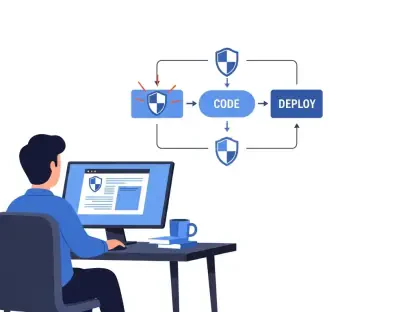
The benefits of this trajectory are profound. It promises to dramatically accelerate digital transformation initiatives, reduce organizational reliance on expensive external consultants, and cultivate a more agile and responsive posture to market shifts. However, this empowerment is not without its challenges. The proliferation of user-built applications raises valid concerns around governance, security, and data integrity. Without a clear strategy, organizations risk creating a new wave of unmanaged “shadow IT,” leading to data silos and security vulnerabilities.
These challenges are reshaping the role of the traditional IT department. Rather than serving as the sole builders and gatekeepers of technology, IT professionals are transitioning into a more strategic role. They are becoming the enablers, governors, and facilitators of citizen development, responsible for selecting the right platforms, establishing security protocols, ensuring data integrity, and training business users on best practices. This evolution positions IT as a crucial partner in fostering innovation while mitigating risk.
Conclusion: A Strategic Imperative for Modern Business
The rise of no-code platforms has effectively resolved the long-standing “ERP paradox.” For SMBs, these tools provided an affordable and scalable pathway to the sophisticated system controls once reserved for large corporations. For enterprises, they delivered a much-needed layer of flexibility, allowing them to extend and customize the functionality of their rigid, monolithic ERP systems without compromising the core.
Ultimately, this analysis confirmed that no-code is far more than a simplistic “ERP lite.” It has matured into a powerful and robust technology capable of creating highly customized, scalable, and mission-critical business systems, serving as either a viable alternative or an essential complement to traditional software. Businesses that viewed no-code as merely a tool have already begun to harness its potential; those that recognize it as a strategic imperative for fostering innovation, agility, and operational efficiency are the ones who will define the competitive landscape of tomorrow.