
With us today is Anand Naidu, our resident development expert who brings deep insights into both frontend and backend technologies. We’ll be discussing the evolving ERP landscape, particularly for project-based industries like architecture and engineering. Our conversation will explore how unifying critical business functions can drastically improve financial control and operational speed. We’ll also touch on why authentic customer feedback is becoming a cornerstone of trust in a market increasingly influenced by AI, and what this means for firms seeking clarity and confidence in their technology choices.
Vantagepoint is purpose-built for project-based firms in sectors like architecture and engineering. How does unifying CRM, project management, and financials into one system specifically help these organizations improve visibility and financial control?
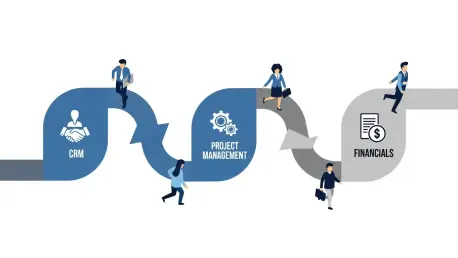
That’s really the core of its value proposition. For firms in architecture or consulting, projects aren’t just a part of the business; they are the business. When you have separate systems for winning work, managing the project, and handling the books, you create blind spots. Unifying them into a single ERP environment like Vantagepoint means the data flows seamlessly through the entire project lifecycle. Imagine an architecture firm wins a new contract. That information from the CRM immediately populates the project management and resource planning modules. As work is completed and expenses are incurred, the financial data is updated in real-time. This eliminates the lag and guesswork, giving leaders a live, holistic view of project health, which is absolutely critical for maintaining financial control and making informed decisions on the fly.
This recognition from G2 is driven entirely by verified customer feedback. Beyond the award itself, how does Deltek actively use this stream of user input to evolve the platform’s usability and help clients navigate increasing project complexity?
This is where the rubber really meets the road. An award is nice, but the underlying feedback loop is what drives real product evolution. This stream of verified customer input is essentially a direct line to the daily realities of the people using the software. Deltek’s President, Bob Hughes, mentioned their goal is to deliver intuitive solutions, and you can’t achieve that in a vacuum. This feedback allows them to pinpoint specific usability challenges and address the growing complexity their clients face. For example, if users consistently report difficulty in forecasting resource needs for complex, multi-phase projects, that becomes a clear signal for the development team to enhance those specific features, ensuring the platform not only meets current needs but also anticipates future challenges.
A core benefit mentioned is the elimination of operational silos. Can you walk us through how connecting the entire project lifecycle—from winning work to analyzing performance—empowers a firm to improve its execution speed and maintain control over margins?
Eliminating silos is all about creating momentum and preventing value leakage between different phases of a project. When you connect how a firm wins work with how it plans and executes, you create a powerful, unified workflow. For instance, the data from a successful sales proposal in the CRM can automatically generate the initial project plan and budget. This dramatically cuts down on manual setup time, allowing teams to start executing faster. More importantly, as the project progresses, real-time data on costs and timelines is constantly checked against the initial plan. This allows project managers to immediately see if they’re drifting off budget or schedule, giving them the chance to correct course long before margins are seriously threatened. This tight integration is what allows a firm to maintain both speed and control.
As buyers increasingly use AI for research, authentic user experience becomes critical. In this environment, how does a customer-validated solution help project-based businesses operate with more clarity and confidence?
The point made by G2’s CEO, Godard Abel, is spot-on. In an age of AI-powered research, buyers are looking for “credible proof.” An award based on thousands of authentic user reviews provides exactly that. It cuts through the marketing noise and tells a prospective buyer, “This solution has been tested and validated by peers in your industry.” This builds a tremendous amount of confidence. For a project-based business, clarity comes from having intelligent insights at your fingertips, which a platform like this is designed to deliver. It’s not just about collecting data; it’s about connecting it in a way that reveals trends and potential issues, allowing leaders to operate with a much higher degree of certainty and precision in their decision-making.
What is your forecast for the evolution of ERP systems for project-based industries over the next five years?
I believe we’ll see a continued and accelerated move away from one-size-fits-all ERPs toward these highly specialized, purpose-built platforms. The unique demands of project-based work—managing resources, tracking profitability on a per-project basis, and connecting disparate phases of a long lifecycle—are simply not well-served by generic systems. The future is about even deeper integration, more predictive analytics powered by AI to forecast project outcomes and resource needs, and an even greater focus on user experience to drive adoption. As project complexity continues to grow, firms will demand ERP systems that don’t just record what happened, but actively help them manage what’s next with greater precision and foresight.