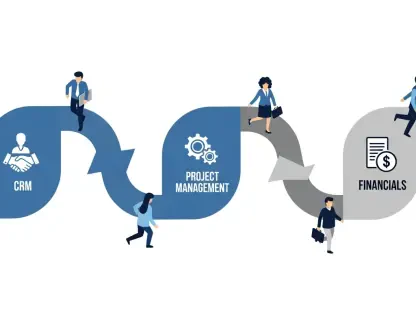
The operational backbone of the modern global enterprise, the ERP system, is currently straining under the weight of manual processes and disconnected data streams, pushing businesses toward an inflection point where automation is no longer a strategic advantage but a fundamental prerequisite for survival. Once the undisputed digital core, traditional ERPs are now being tested by unprecedented market velocity and complexity. For leaders navigating this environment, the conversation has shifted from if they should automate to how quickly they can implement a comprehensive strategy.
The Modern Enterprise Landscape: A Digital Core Under Pressure
The global business environment operates on a web of interconnected processes where a delay in one department can trigger a cascade of disruptions across the entire organization. At the center of this web sits the Enterprise Resource Planning (ERP) system, designed to be the single source of truth that coordinates all critical business functions. It is the digital heart of the enterprise, pumping data between finance, the supply chain, human resources, and manufacturing to ensure operational coherence.
However, the complexity of managing these interdependent functions has grown exponentially. Global supply chains, multifaceted financial regulations, and the demands of a distributed workforce have placed immense pressure on this digital core. When ERP processes rely on manual input and intervention, this complexity translates into friction, creating bottlenecks that slow down decision-making and hinder growth. The challenge is no longer just about managing resources but about orchestrating a highly synchronized, responsive, and resilient enterprise.
This pressure has accelerated a necessary technological evolution. The era of siloed, legacy systems that operate in isolation is definitively over. Today, competitive enterprises are built on integrated digital ecosystems where the ERP communicates seamlessly with CRM, e-commerce platforms, and business intelligence tools. This shift from isolated data islands to a connected digital continent makes automation not just possible but essential for harnessing the full power of enterprise data.
The Unstoppable Momentum: Key Drivers and Market Realities
From Lagging Reports to Real-Time Intelligence
In today’s fast-paced market, the value of data depreciates rapidly. Decisions based on last month’s or even last week’s reports are often too late to be effective. Consequently, there is a critical demand for immediate data visibility, allowing leaders to understand business performance, identify risks, and seize opportunities in real time. This need for agility has rendered traditional, batch-processed reporting obsolete.
Automation serves as the primary mechanism for achieving this level of insight. By automating data collection, consolidation, and reporting workflows within the ERP, organizations can break down the information silos that have historically plagued large enterprises. This creates a unified, single source of truth that is continuously updated, providing stakeholders with a reliable and current view of operations. When finance, sales, and logistics all work from the same real-time data set, strategic alignment becomes the norm, not the exception.
This push for operational speed is not merely an internal preference but a direct response to external forces. Evolving consumer expectations, where instant gratification is the baseline, and dynamic market conditions, where competitors can emerge overnight, have fundamentally shortened the decision-making cycle. Businesses that can analyze data and act instantly gain a significant competitive edge, making real-time intelligence a non-negotiable asset.
The Growth Imperative: Scaling Operations in a Digital-First World
Market data reflects a clear trend: the adoption of ERP automation is accelerating across all major industries. Projections for the period from 2025 to 2027 show double-digit growth in automation-related ERP spending, particularly in sectors like manufacturing, retail, and financial services where operational efficiency is directly tied to profitability. This is not a speculative investment but a strategic response to the realities of a digital-first economy.
The true power of automation is revealed when a business scales. Manual processes that are manageable for a small company become unsustainable and prohibitively expensive during periods of rapid growth. Automated workflows, in contrast, allow an enterprise to handle a significant increase in transaction volume, customer orders, and supply chain complexity without a proportional increase in operational overhead. This ability to scale efficiently is what separates market leaders from their stagnant competitors.
The return on investment for ERP automation is both clear and compelling. Key performance indicators consistently show significant improvements, including a marked reduction in operational costs due to fewer manual errors and lower labor requirements. Furthermore, efficiency gains are realized through accelerated process cycles, such as faster order-to-cash and procure-to-pay timelines, which directly improve cash flow and organizational agility.
The High Cost of Inaction: Overcoming Operational Bottlenecks
Continuing to rely on manual ERP processes creates a host of operational bottlenecks that actively erode an organization’s performance. The most common obstacles include persistent data entry errors that corrupt financial records, lengthy approval delays that stall critical projects, and reporting inconsistencies that lead to flawed strategic planning. These are not minor inconveniences; they are systemic weaknesses that expose the business to significant risk.
The financial and reputational damage caused by these inefficiencies can be substantial. A single data entry error in a purchase order can lead to incorrect inventory levels, production delays, and ultimately, dissatisfied customers. Similarly, slow, manual approval processes can cause a company to miss out on time-sensitive opportunities or fail to respond to a competitive threat. Over time, these process failures degrade customer trust and employee morale, creating a cycle of declining performance.
Migrating from these fragile manual systems to a resilient, automated framework is therefore a critical priority. The first step involves identifying and mapping the most impactful manual processes, from invoice processing to employee onboarding. From there, organizations can implement automation solutions in a phased approach, focusing first on high-volume, rule-based tasks to secure quick wins and build momentum for a broader, enterprise-wide transformation.
Navigating the Maze: Compliance, Security, and Governance in an Automated Era
The landscape of global regulations is becoming increasingly complex, placing a heavy burden on enterprises to maintain compliance with standards like SOX, GDPR, and IFRS. These regulations demand meticulous record-keeping, transparent reporting, and verifiable process controls, all of which are difficult and costly to manage through manual means. Failure to comply can result in severe financial penalties and long-term damage to a company’s reputation.
ERP automation provides a powerful solution to these compliance challenges. By standardizing processes, it ensures that every transaction is handled consistently and according to predefined rules, dramatically reducing the risk of non-compliant actions. Moreover, automated systems create immutable audit trails, providing a clear, chronological record of all activities that can be easily accessed and verified by internal and external auditors. This inherent data integrity is foundational to good governance.
Beyond compliance, automation plays a crucial role in strengthening enterprise security. Manual data handling is a significant vulnerability, creating opportunities for both accidental data exposure and malicious insider threats. Automation minimizes this risk by limiting human interaction with sensitive data. Automated workflows can enforce strict access controls, monitor for suspicious activity, and ensure that security protocols are applied uniformly across the organization, protecting critical business information from an ever-expanding array of threats.
The Next Frontier: From Automated Tasks to Intelligent Enterprises
The evolution of ERP automation is moving beyond simple, rule-based task execution toward a future defined by intelligent systems. The integration of artificial intelligence and machine learning is transforming ERPs from passive record-keeping systems into proactive, predictive engines. These technologies can analyze historical data to forecast demand, identify potential supply chain disruptions, and recommend optimal financial strategies, providing insights that were previously unattainable.
This technological shift is fundamentally reshaping the role of human capital within the enterprise. As automation handles the mundane, repetitive tasks of data processing and reconciliation, employees are liberated to focus on higher-value activities. Their roles are evolving from data entry clerks to strategic analysts, innovators, and problem-solvers who use the insights generated by automated systems to drive business growth and create a competitive advantage. This not only boosts productivity but also enhances job satisfaction and employee engagement.
Ultimately, this trajectory is leading to the rise of the intelligent enterprise, where adaptive, self-learning systems can manage increasingly complex workflows with minimal human intervention. These intelligent ERPs will be capable of optimizing processes on the fly, responding autonomously to changing market conditions, and continuously improving their own performance. This represents the next frontier of operational excellence, where technology and human talent converge to create a truly agile and resilient organization.
The Verdict: Why a Unified, Automated Core is the Future of Business
The evidence overwhelmingly confirms that ERP automation is no longer a forward-thinking initiative but a foundational requirement for any business aspiring to compete in the modern economy. The pressures of global competition, the demand for real-time intelligence, and the complexities of regulatory compliance have rendered manual processes unsustainable. Automation stands as the definitive solution to these challenges, enabling the operational speed, scalability, and resilience necessary for survival and growth.
For business leaders, the path forward is clear. Prioritizing a comprehensive automation strategy must be at the top of the corporate agenda. This involves conducting a thorough assessment of existing processes to identify key automation opportunities, investing in the right technologies, and managing the organizational change required to transition the workforce toward higher-value roles. The goal should be to build a seamlessly integrated digital ecosystem with an automated ERP at its core.
A fully automated ERP system does more than just improve efficiency; it creates a resilient and future-proof digital foundation. It transforms the enterprise from a reactive entity, constantly struggling to keep up, into a proactive and intelligent organization capable of anticipating change and shaping its own future. In the end, the companies that thrive will be those that embrace this transformation, solidifying their position as leaders in the digital age.