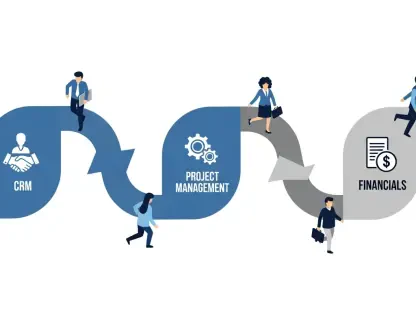

The long-held corporate playbook of treating software development as a commoditized expense to be minimized is rapidly becoming a direct path to competitive obsolescence. As businesses navigate an increasingly complex digital landscape, the conversation in boardrooms has shifted dramatically. The crucial question is no longer “How can technology reduce our costs?” but rather “How can our technology strategy accelerate our growth and create defensible moats around our business?” This fundamental pivot is reshaping how organizations approach innovation, build products, and engage with technology partners.
The New Digital Imperative: From Tactical Outsourcing to Strategic Partnerships
The practice of engaging external software development expertise has undergone a profound transformation, moving beyond simple resource augmentation. Historically, outsourcing was a tactical decision driven primarily by cost arbitrage—a way to complete a project for less. Today, it is a strategic maneuver designed to acquire critical intellectual capital. The primary driver for chief technology officers and other C-suite executives is now the urgent need to access partners with deep, specialized architectural knowledge that is difficult and time-consuming to cultivate in-house.
This new model of partnership demands capabilities that far exceed basic coding proficiency. Modern partners are expected to demonstrate mastery over complex technological paradigms, including the design of highly distributed systems, the implementation of edge computing infrastructure, and the non-negotiable architectural principles of zero-trust security. Consequently, the relationship has evolved from a transactional, project-based engagement to a long-term collaboration where the external team functions as an integrated extension of the core business, contributing directly to strategic planning and technology roadmapping.
Decoding the Future: Key Trends and Performance Metrics for 2025
Architecting for Agility: The Rise of Microservices, API-First Design, and Applied AI
Constructing a scalable and resilient Software as a Service (SaaS) platform now requires an unwavering commitment to architectural discipline. The default standard is an architecture based on microservices, orchestrated by containerization platforms like Kubernetes. This approach is essential for achieving granular scalability, as it allows individual system components—such as authentication services or billing engines—to be scaled independently in response to demand. This modularity prevents the performance bottlenecks inherent in traditional monolithic designs and provides a foundation for rapid, independent deployment of new features.
Beyond the application layer, performance is often dictated by the database. While practices like sharding and implementing read replicas are considered baseline requirements, true competitive advantage is found in advanced query optimization and the strategic use of caching layers with technologies like Redis. The goals are unambiguous: achieve drastic latency reduction and maintain high availability, with an aspirational target of 99.999% uptime. Furthermore, this entire ecosystem must be built on an API-first design philosophy. A platform’s long-term value is increasingly defined by its extensibility, and a well-documented, robust API transforms a standalone tool into a central hub that integrates seamlessly with a constellation of third-party applications.
The integration of Artificial Intelligence and Machine Learning has also matured beyond superficial implementations. A development partner that merely wraps existing third-party APIs offers little differentiating value. Instead, true innovation comes from the ability to train custom models on proprietary datasets. This advanced work demands a practical understanding of MLOps, a discipline ensuring that AI models are systematically retrained, versioned, and deployed into production environments in an automated and repeatable manner. This introduces a unique engineering challenge, as the behavior of AI models is probabilistic, not deterministic. It necessitates a new breed of engineering focused on the rigorous testing and validation of these stochastic systems, whether they are powering computer vision for quality control or Natural Language Processing for customer sentiment analysis.
Measuring What Matters: Why ‘Velocity of Value’ Is the New ROI
The metrics used to evaluate software development success have shifted decisively away from antiquated measures of output toward sophisticated measures of outcome. Counting “lines of code” or tracking story points are relics of a bygone era; the contemporary benchmark is “velocity of value.” This new standard demands that all development efforts be directly and demonstrably tied to tangible business outcomes, requiring a holistic product mindset from everyone involved. Success is no longer measured by how much is built, but by how much a new feature moves a key business metric.
This value-centric approach is enabled by the deep integration of DevOps best practices throughout the entire development lifecycle. A robust continuous integration and continuous deployment (CI/CD) pipeline is not a luxury but a prerequisite for delivering value quickly and reliably. Moreover, this philosophy mandates a proactive approach to managing technical debt. Instead of allowing it to accumulate until it causes a system failure or grinds future development to a halt, it is addressed systematically as part of the ongoing development process. This discipline ensures that the platform remains agile and capable of evolving with the business.
Navigating the Gauntlet: Overcoming Modern Software Development Hurdles
The scope of modern software development now extends far beyond the initial build, encompassing the entire digital product lifecycle. The role of a development partner has transformed into a long-term strategic relationship that spans from initial ideation and user research all the way through launch, ongoing maintenance, and eventual sunsetting. This holistic management is fueled by continuous feedback loops, where user analytics and behavioral data are systematically collected and analyzed. This data-driven approach drives an empirical feature prioritization process, ensuring that development resources are focused on what users actually need and value.
A cornerstone of this modern methodology is the “Discovery Phase.” This intensive period of market research, user interviews, and technical feasibility studies occurs before any significant capital is invested in development. This crucial upfront work serves to de-risk the entire project by validating assumptions and identifying potential roadblocks early. By reducing the likelihood of building unwanted features or committing to technologies that cannot scale, the discovery phase ensures that capital is deployed with maximum efficiency and that the final product is primed for market success from day one.
The Compliance Mandate: Security, Standards, and Navigating the Regulatory Maze
In an environment of increasing regulatory scrutiny and sophisticated cyber threats, security and compliance are no longer features to be added late in the development cycle. They are foundational architectural constraints that must be designed into the system from its inception. In high-stakes sectors like HealthTech, adherence to regulations such as HIPAA and GDPR is non-negotiable, mandating practices like end-to-end encryption for all Patient Health Information (PHI). This requires a security-first mindset that permeates every aspect of design and implementation.
A significant technical hurdle in many industries is achieving interoperability between new platforms and legacy systems. In healthcare, this means securely integrating with existing Electronic Health Record (EHR) systems through complex standards like HL7 and FHIR, all while maintaining impeccable audit trails for every data transaction. Similarly, in enterprise systems, ensuring absolute data integrity through strict adherence to ACID (Atomicity, Consistency, Isolation, Durability) principles in all database transactions is critical for maintaining operational stability and trust. Navigating this maze of standards and regulations requires deep domain expertise and a meticulous approach to systems architecture.
Forging the Future: Industry-Specific Blueprints for Digital Dominance
The application of these high-level strategies manifests differently across various industries, each presenting a unique set of challenges. In Logistics and Supply Chain, where efficiency is paramount, software acts as the central nervous system. This involves leveraging Internet of Things (IoT) devices for real-time asset telemetry, creating immense data ingestion challenges that require specialized time-series databases. Concurrently, optimizing last-mile delivery routes—a notoriously complex computational problem—is addressed using a blend of heuristic algorithms and machine learning to account for dynamic variables. In Real Estate, digitization demands robust platforms that integrate advanced technologies like virtual reality for property tours and blockchain for transparent smart contracts, while solving the complex challenge of integrating with fragmented Multiple Listing Service (MLS) data standards.
In contrast, the MarTech sector revolves around synthesizing vast, unstructured datasets to enable personalization at scale. The cornerstone of this effort is the Customer Data Platform (CDP), which unifies user identities across disparate touchpoints to build accurate attribution models and execute effective programmatic advertising. For online Marketplaces, the challenge is one of economic engineering: creating algorithms that balance supply and demand to achieve liquidity. Trust must be codified directly into the platform through features like escrow payments and verified profiles, while high-performance search technologies are essential for helping users navigate millions of listings.
Finally, industries with deeply embedded and complex business logic, such as healthcare and enterprise resource planning, face their own distinct architectural demands. HealthTech platforms must prioritize security and interoperability above all else, navigating a labyrinth of regulations and legacy systems. For custom ERP development, which serves as the operational core of an enterprise, event-driven architectures are key to ensuring data consistency across modules. A modular, composable design allows for independent upgrades of components like finance or inventory, ensuring the system can evolve without requiring a complete overhaul.
Your Strategic Playbook: Building a Future-Proof Software Strategy Today
The evidence is clear: the criteria for success in software development have been fundamentally redefined. A strategy rooted in tactical cost-cutting and legacy architectures is no longer viable. Instead, future-proofing a business requires a proactive and strategic approach that treats technology not as a cost center, but as the primary engine of value creation. This means cultivating partnerships that provide genuine intellectual capital, not just additional headcount.
Building a resilient digital future depends on embracing the architectural principles of agility, scalability, and security. It requires a cultural shift toward measuring what truly matters—the velocity of value delivered to the business and its customers. Organizations must internalize that every industry, from logistics to healthcare, has its own unique digital DNA. A one-size-fits-all approach is a recipe for failure. The ultimate playbook is one of continuous adaptation, deep domain expertise, and a relentless focus on aligning every line of code with a strategic business objective.