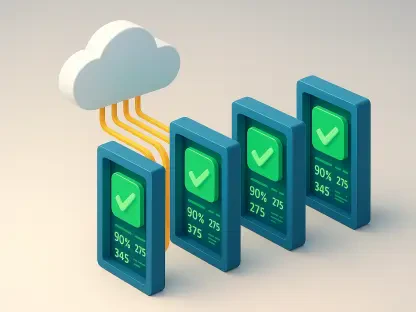

Navigating the Modern Landscape of Software Quality Assurance The unprecedented acceleration of software development caused by generative technologies has forced a complete re-evaluation of the traditional barriers that once separated rapid coding from reliable validation. As organizations strive

The traditional bottleneck in modern software delivery has shifted from application logic to the underlying persistence layer, where rigid database schemas often clash with the fluid nature of continuous integration and delivery pipelines. While application code has benefited from the agility of

The sophisticated architecture of modern software delivery pipelines has inadvertently created a vast and lucrative playground for threat actors who specialize in subverting trust rather than breaking encryption. On July 14, 2026, the global developer community witnessed a striking example of this

The persistent challenge of managing massive enterprise codebases has often been hindered by the inherent speed limitations of the traditional TypeScript compiler, which until recently operated within the constraints of a single-threaded JavaScript environment. This architecture, while

The evolution of large-scale web applications has reached a critical threshold where the overhead of transmuting millions of lines of source code into executable JavaScript often dictates the entire pace of a development cycle. For years, the reliance on a JavaScript-based compiler meant that as

The traditional boundary between software creation and system maintenance has dissolved into a landscape where speed and stability are no longer competing priorities but unified objectives. Today, the role of a DevOps professional has transitioned from a specialized niche into a foundational