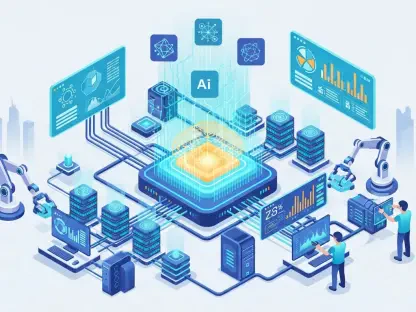

The staggering acceleration of software production has triggered a structural crisis where the speed of code generation now vastly exceeds the human capacity to verify its safety and functionality. In this high-velocity environment, traditional quality assurance (QA) has transitioned from a necessary checkpoint to a dangerous bottleneck. Agentic software testing has emerged as the definitive answer to this “velocity trap,” particularly in sectors like global finance where a single line of unverified code can result in catastrophic operational failure. This review examines how this technology shifts the paradigm from manual script management to autonomous, cognitive validation, ensuring that digital resilience keeps pace with artificial intelligence.
The Foundation of Agentic Testing and the Emerging QA Gap
Traditional verification methods were designed for a world where humans wrote code at a manageable cadence. Today, AI-assisted development tools have compressed years of work into weeks, leaving QA teams struggling with a “resilience risk” that grows with every deployment. This gap is not merely a matter of labor shortages but a fundamental mismatch in technical capability. While developers have integrated generative models into their daily workflows, the testing side has historically remained tethered to rigid, manual scripts that break the moment a user interface element shifts by a single pixel.
Agentic testing addresses this disparity by introducing the concept of the autonomous agent—a specialized software entity capable of perceiving its environment and making goal-oriented decisions. Unlike legacy automation, which follows a linear path, agentic systems interpret the intent behind a test. They understand that a “payment button” is a functional requirement rather than just a specific coordinate on a screen. This shift is critical for maintaining stability in an era where software environments are becoming increasingly ephemeral and complex, moving beyond the capabilities of human-driven oversight.
Core Pillars of the Agentic Testing Ecosystem
Autonomous Decision-Making and Self-Healing Scripts
The most transformative feature of agentic testing is its ability to perform self-healing on the fly. In conventional systems, a minor update to a website’s layout would typically “break” the automated tests, requiring a human engineer to manually identify the change and update the script. Agentic systems use computer vision and semantic understanding to recognize that while a button’s color or location has changed, its function remains the same. By automatically updating the underlying testing protocols without human intervention, these agents eliminate the most time-consuming aspect of maintenance.
This capability fundamentally changes the cost-benefit analysis of automation. Previously, the “maintenance tax” on complex testing suites often outweighed the initial benefits of automation. By delegating the burden of script upkeep to AI agents, organizations can achieve a level of coverage that was previously mathematically impossible. These agents do not just follow instructions; they evaluate the health of the test itself, ensuring that the verification layer is as dynamic as the application it is designed to protect.
Orchestration and Multi-Agent Collaboration
Modern enterprise environments are rarely unified, often consisting of a messy blend of legacy mainframes and cutting-edge cloud microservices. Tools like Agent Builder and Maestro allow for the coordination of multiple AI agents, each specialized in different layers of the technology stack. One agent might focus on API integrity, while another handles end-user experience across mobile platforms. This orchestration ensures that disparate systems are tested as a cohesive unit rather than in isolation, reflecting the true complexity of real-world workflows.
The unique value of this multi-agent approach lies in its ability to simulate complex, multi-step business processes that span across different departments and technologies. For instance, a loan approval process might involve three separate legacy databases and a modern front-end application. Agentic orchestration allows these agents to “hand off” tasks to one another, mimicking a human worker’s journey through the system. This level of cross-functional validation is what separates agentic testing from basic unit tests or simple browser automation.
Current Shifts in Quality Assurance Paradigms
The industry is currently witnessing a profound transition from “human in the loop” to “human on the loop” configurations. In the older model, humans were the primary operators, using tools to speed up their manual tasks. In the agentic era, the AI agent is the primary operator. The human professional moves to a supervisory role, setting high-level objectives, defining ethical guardrails, and providing the final “release stamp” for production. This shift allows human talent to focus on exploratory testing and strategic risk management rather than the drudgery of regression cycles.
Furthermore, there is a rising adoption of AI-driven validation tools that proactively search for vulnerabilities rather than just checking for known bugs. This “red teaming” approach by autonomous agents allows teams to discover edge cases that a human might never think to test. As these tools become more sophisticated, the focus of the QA professional shifts from “how to test” to “what to test,” emphasizing business logic and user impact over technical execution.
Real-World Implementation in Global Finance
In the high-stakes world of global banking, institutions like First Abu Dhabi Bank and Ikano Bank have pioneered the deployment of agentic frameworks to manage their vast digital estates. For these organizations, the primary driver is not just efficiency but regulatory survival. By integrating agentic testing, they ensure that every update to their mobile banking or trading platforms is validated against thousands of scenarios in minutes. This rapid feedback loop is essential for maintaining trust in a market where downtime or data leaks are unacceptable.
Beyond simple validation, some institutions are integrating process mining with automation to achieve true operational resilience. By analyzing real-time user data, banks can identify how processes are actually functioning and then deploy agents to test those specific paths. For example, if process mining reveals that a specific sub-set of customers is experiencing delays in mortgage processing, agentic testing can immediately simulate those conditions to find the root cause. This “hard-wires” quality into the delivery pipeline, making compliance a continuous state rather than a periodic audit.
Technical Hurdles and Governance Challenges
Despite the clear benefits, the transition to agentic testing is not without significant friction. There remains a glaring disparity in AI adoption between the “creators” (developers) and the “verifiers” (testers). Many QA teams still lack the data science literacy required to manage autonomous agents effectively. Additionally, there is the persistent “burden of correctness”—the reality that while AI can generate tests faster, a human must still be certain that the AI is testing the right things. If an agent autonomously validates a process based on an incorrect premise, it creates a false sense of security.
Data privacy and ethical oversight also present formidable hurdles. Training agents on production-like data requires rigorous anonymization to comply with international privacy laws. Moreover, autonomous agents need strict “guardrails” to prevent them from taking unintended actions in live environments, such as accidentally triggering real financial transactions during a performance test. Mitigating these risks requires a robust governance framework that defines exactly what an agent can and cannot do, ensuring that autonomy does not lead to a loss of control.
The Future of Digital Operational Resilience
Looking ahead, the integration of agentic testing will likely become the foundational layer for all software delivery. We are moving toward a future of “built-in” quality assurance, where the distinction between writing code and testing code disappears. In this ecosystem, the development environment itself will house autonomous agents that validate every line of code as it is written, providing instantaneous feedback. This deeper alignment with international regulatory acts like the Digital Operational Resilience Act (DORA) will make automated validation a legal prerequisite for doing business.
The long-term potential lies in fully autonomous systems that not only test code but also suggest architectural improvements to make software more resilient by design. These systems will eventually evolve from being reactive tools to proactive advisors, identifying potential failures before a single developer starts typing. As global economies become more dependent on software-defined infrastructure, the ability of these agents to maintain a stable digital environment will be the primary factor separating successful enterprises from those that succumb to technical debt.
Final Assessment of Agentic Testing Technologies
The move toward agentic software testing represented a necessary reaction to the unsustainable pace of AI-driven development. It successfully shifted the burden of repetitive maintenance from human engineers to autonomous agents, thereby closing the dangerous gap between code production and code verification. By providing a platform for orchestration and self-healing, this technology offered a scalable solution for enterprises struggling with legacy complexity and modern agility requirements. It became clear that manual QA was no longer viable for maintaining the stability required in a digital-first economy.
Ultimately, the verdict on agentic testing was that it functioned as an essential stabilizer for innovation. While it introduced new challenges regarding governance and the need for specialized human oversight, the trade-off was undeniably positive. The transition to a “human on the loop” model allowed organizations to achieve a level of digital resilience that was previously out of reach. Future advancements will likely focus on making these agents even more intuitive, further embedding them into the fabric of the software development lifecycle to ensure that quality is never sacrificed for speed.