
The rapid evolution of artificial intelligence is fundamentally reshaping cybersecurity, moving beyond theoretical applications to create practical tools that automate and enhance offensive security operations. This review explores the emergence of AI-powered penetration testing by examining the Zen-AI-Pentest framework, a technology that exemplifies this shift. It will analyze the framework’s core architecture, its innovative features, and its impact on modern security assessments to provide a clear understanding of its current capabilities and future potential.
An Introduction to Zen-AI-Pentest
Zen-AI-Pentest is an open-source framework conceived to automate and elevate security assessments by fusing artificial intelligence with a suite of standard penetration testing utilities. Its primary objective is to orchestrate the entire security testing lifecycle, from initial reconnaissance and vulnerability scanning to exploitation and final reporting, all under the guidance of AI-driven decision-making.
This platform has emerged as a direct response to the escalating complexity of digital infrastructures and the corresponding demand for more efficient, scalable, and intelligent security validation methods. The development of such frameworks highlights a major transition in the offensive security landscape, signaling a move away from purely manual efforts toward a hybrid model where human expertise is augmented by machine intelligence.
Core Architecture and Key Features
Multi-Agent System for Task Orchestration
At its core, Zen-AI-Pentest is constructed upon a multi-agent architecture, where distinct, autonomous agents are assigned to manage specific phases of a security assessment. This modular design includes a reconnaissance agent for comprehensive information gathering, a vulnerability agent for executing scans, an exploit agent for validating findings, and a report agent dedicated to compiling the results into a coherent format.
These specialized agents do not operate in isolation; instead, they function collectively within a broader state machine that governs the sequence of actions. This system ensures a logical and comprehensive testing workflow, moving methodically from one phase to the next based on the outputs of the previous agent. This structured approach mimics the disciplined process of a human penetration tester but executes it at machine speed and scale.
LLM-Driven Decision-Making Engine
A central component of the framework is its sophisticated use of Large Language Models (LLMs) to influence and direct the decision-making process throughout the assessment. The integrated AI interacts with the state machine to intelligently guide which tools and strategies to employ, adapting its approach based on the intermediate findings and the evolving context of the test.
To enhance the reliability of its AI-driven insights and mitigate the risk of error, the system incorporates a unique voting mechanism. This feature compares outputs from multiple AI models to cross-validate conclusions and reduce the likelihood of “hallucinations” or false positives. By requiring a consensus among different models, the framework ensures that its automated decisions are based on more dependable and accurate results.
Integrated Tooling and Risk Analysis
The framework’s effectiveness is amplified by its seamless integration of a suite of established, industry-standard tools. It leverages utilities such as Nmap for network discovery and mapping, SQLMap for identifying and exploiting SQL injection vulnerabilities, and the Metasploit Framework for executing exploits. This integration allows Zen-AI-Pentest to perform a wide range of actions without reinventing foundational testing capabilities.
Beyond mere vulnerability discovery, Zen-AI-Pentest includes a robust risk engine designed to manage and prioritize findings effectively. This engine quantifies the potential impact of identified vulnerabilities using standard metrics like the Common Vulnerability Scoring System (CVSS) and the Exploit Prediction Scoring System (EPSS). This functionality transforms raw scan data into clear, actionable insights that help security teams focus on the most critical threats first.
Secure Exploit Validation in Sandboxed Environments
To ensure safety and maintain control during the most critical phase of testing, exploit validation is conducted within isolated, containerized sandbox environments. This design is a crucial safeguard, allowing the framework to safely execute potentially disruptive exploits to confirm vulnerabilities without posing any risk to live production systems or sensitive data.
This controlled execution environment serves a dual purpose. It not only prevents unintended damage but also facilitates the capture of critical evidence, such as screenshots of successful exploits, network packet captures, and detailed logs. This evidence is invaluable for validating findings and providing development teams with the concrete information needed to replicate and remediate the identified security flaws.
Innovations and Emerging Trends
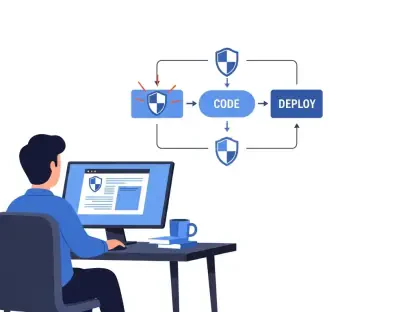
Zen-AI-Pentest stands as a clear example of the growing trend of integrating AI into DevOps, helping to cultivate a more dynamic and responsive DevSecOps culture. Its capability to automate intricate testing sequences and deliver rapid, actionable feedback enables organizations to embed security validation directly into their continuous integration and continuous delivery (CI/CD) pipelines.
This movement represents a significant innovation in how software is developed and secured. It marks a departure from traditional, periodic manual testing toward a model of continuous, AI-driven assessment. Consequently, security ceases to be a final, often rushed, step in the development process and becomes an integral, automated part of the entire lifecycle.
Real-World Applications and Use Cases
Streamlining DevSecOps Pipelines
The framework provides robust integration capabilities with leading CI/CD systems, including GitHub Actions, GitLab CI, and Jenkins. This connectivity allows development teams to automatically trigger security scans with every code commit or build, receiving almost immediate feedback on potential vulnerabilities. As a result, security issues can be identified and remediated much earlier in the development lifecycle, reducing both cost and risk.
Enhancing Security Team Efficiency
By automating routine and often time-consuming tasks like reconnaissance, vulnerability scanning, and initial triage, Zen-AI-Pentest significantly enhances the efficiency of security teams. This automation frees up highly skilled security professionals to concentrate on more complex threats, strategic security planning, and advanced threat hunting activities that require human intuition and creativity.
The platform offers multiple user interfaces to accommodate diverse team needs and workflows. These include a command-line interface (CLI) for practitioners who prefer scripting and automation, a REST API for deep integration with other security tools and platforms, and a web-based UI for visual reporting and management. This flexibility ensures that teams can interact with the framework in a manner that best suits their operational requirements.
Benchmarking and Comparative Analysis
A dedicated benchmarking section within the platform allows users to quantitatively evaluate its performance against both manual testing efforts and other automated security frameworks. This feature provides organizations with a data-driven basis for assessing the tool’s effectiveness, measuring its return on investment, and justifying its adoption within a broader security program.
Challenges and Developmental Hurdles
Ensuring Safe and Ethical AI-Driven Exploitation
A primary and persistent challenge is guaranteeing that AI-driven exploitation remains strictly controlled and does not cause unintended damage or disruption. While the sandboxed environment provides a critical safeguard, the continuous advancement of AI capabilities necessitates constant oversight and the refinement of ethical guardrails to prevent misuse and maintain responsible testing practices.
Mitigating AI Hallucinations and False Positives
Like all systems built on Large Language Models, Zen-AI-Pentest is susceptible to generating incorrect or nonsensical outputs, commonly known as AI hallucinations. Although the framework’s voting mechanism is specifically designed to mitigate this risk, the challenge of ensuring consistent accuracy remains a key focus for ongoing development. This is particularly true when the system encounters novel attack vectors or highly complex, multi-stage vulnerabilities.
The Future of AI in Offensive Security
The trajectory of frameworks like Zen-AI-Pentest points toward a future defined by fully autonomous red teaming, where AI agents can independently plan and execute sophisticated, multi-stage attack campaigns with minimal human intervention. As this technology matures, it will inevitably drive the development of equally advanced AI-powered defensive systems, sparking a new evolutionary arms race in the cybersecurity domain. Future advancements will likely include self-learning models that can adapt their attack techniques in real-time in response to new defense mechanisms.
Final Assessment and Conclusion
Zen-AI-Pentest stood out as a powerful demonstration of how artificial intelligence was transforming the field of penetration testing. Its innovative multi-agent architecture, combined with an LLM-driven decision engine and secure sandboxing capabilities, provided a robust platform for automating and scaling security assessments in a way previously unattainable. Although significant challenges related to operational safety and AI accuracy persisted, the framework’s seamless integration with modern development workflows and its open-source philosophy positioned it as a pivotal tool. It effectively bridged the gap between development and security, marking a critical step forward in the evolution of DevSecOps and the cybersecurity industry as a whole.